The Jakarta Post
Please Update your browser
Your browser is out of date, and may not be compatible with our website. A list of the most popular web browsers can be found below.
Just click on the icons to get to the download page.


Popular Reads
Top Results
No results found. Please check your search term and try again
Can't find what you're looking for?
View all search results
Popular Reads
Top Results
No results found. Please check your search term and try again
Can't find what you're looking for?
View all search resultsR2P in Myanmar is justified
The question, however, is to what extent General Min Aung Hlaing and his military force are able to sustain their coercive rule across a territory that is still plagued by ethnic-based conflicts.
Change text size
Gift Premium Articles
to Anyone
Share the best of The Jakarta Post with friends, family, or colleagues. As a subscriber, you can gift 3 to 5 articles each month that anyone can read—no subscription needed!
 Set as preferred source
W
e likely cannot categorize Myanmar as a failed state. The Tatmadaw military regime is still there and seems to be holding effective control of the country’s territory and the entire population, despite the latter’s fight for the restoration of democracy.
The country’s foreign relations are likely unharmed with two permanent United Nations members, Russia and China, taking its side.
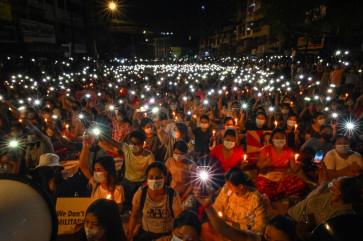
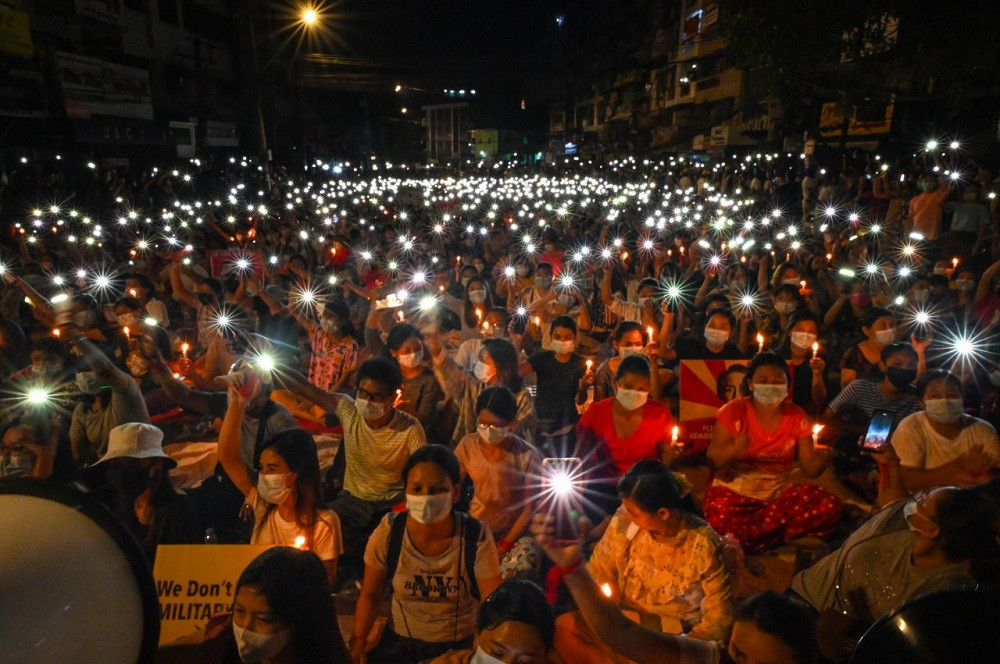
The question, however, is to what extent General Min Aung Hlaing and his military force are able to sustain their coercive rule across a territory that is still plagued by ethnic-based conflicts, while a majority of the people are taking to the streets to call for a civilian-led regime.
The military also has to deal with the Kayin of Karen state and the Arakan and Rohingya people, two main ethnic groups equipped with armed factions who fight for self-administered regions or special autonomy and political recognition. Continuing the suppression of its own people, who are challenging the Feb. 1 coup, will be exhausting and too costly for the Tatmadaw.
But it is increasingly common knowledge in the international community that the term “failed state” also — if not mainly — refers to the political will of a government to protect its own people. If the government shows no good intentions to protect and even displays indications of intentionally violating the rights of its people, the state is categorically called a failed state or at least a rogue state that mirrors a serious threat to international peace and security.
A state’s incompetence, failure and/or unwillingness to protect its people and uphold their human rights are categorically viewed as the reason for the international community to take responsibility.
In its practical sense, the term responsibility to protect (R2P) is a form of intervention taken by the global community in order to end massive human rights violations in a certain sovereign county. The global community might be represented by a group of countries in its ad hoc form or regional/universal organizations with institutionalized characteristics.