The Jakarta Post
Please Update your browser
Your browser is out of date, and may not be compatible with our website. A list of the most popular web browsers can be found below.
Just click on the icons to get to the download page.


Popular Reads
Top Results
No results found. Please check your search term and try again
Can't find what you're looking for?
View all search results
Popular Reads
Top Results
No results found. Please check your search term and try again
Can't find what you're looking for?
View all search resultsNo ‘mudik’, no cry
While travel for Indonesians is discouraged, no further restrictions have been placed on international travelers during the holiday.
Change text size
Gift Premium Articles
to Anyone
Share the best of The Jakarta Post with friends, family, or colleagues. As a subscriber, you can gift 3 to 5 articles each month that anyone can read—no subscription needed!
T
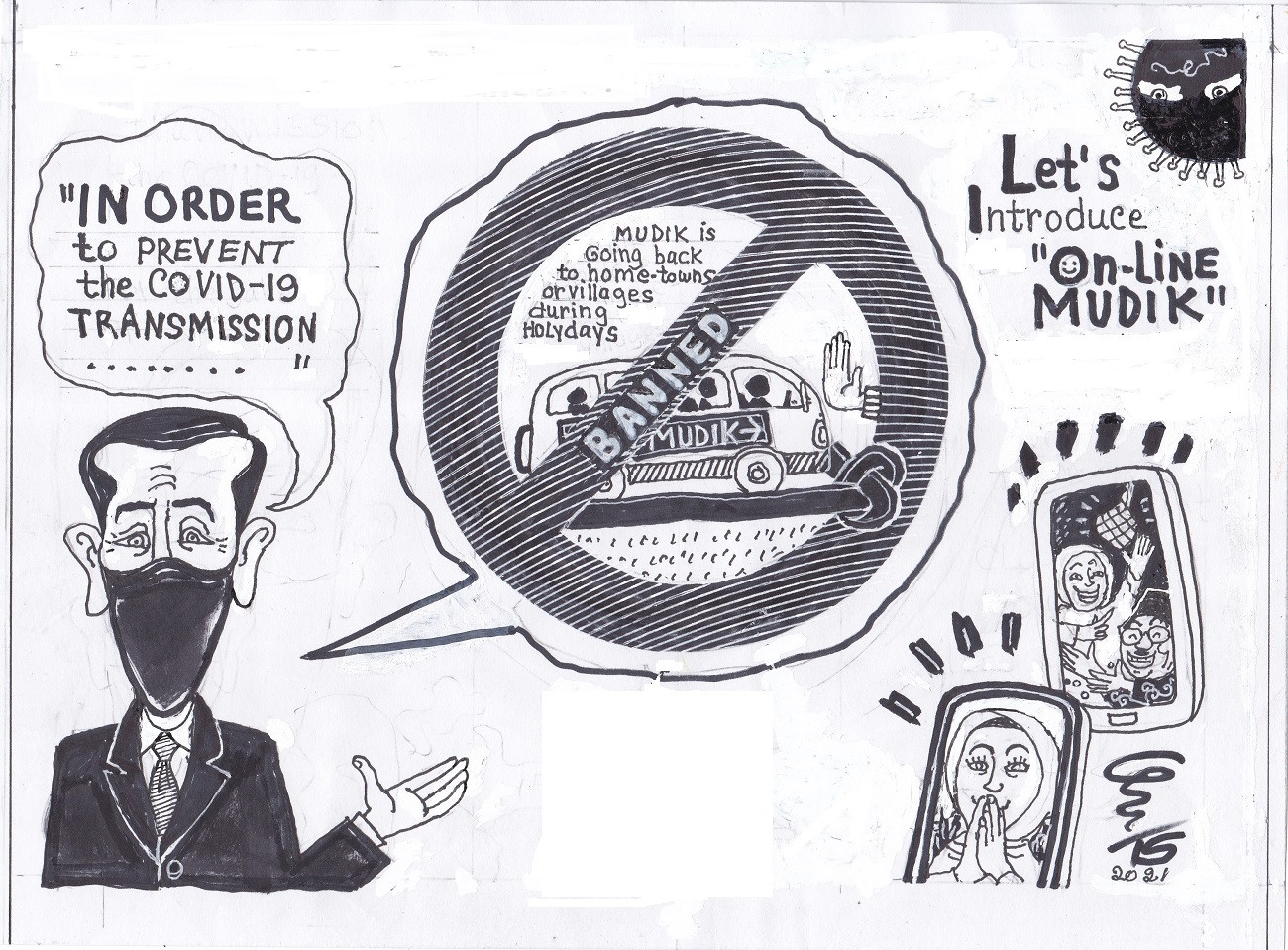
he government’s decision to ban the Idul Fitri mudik (exodus) for the second time in as many years should be appreciated.
Unlike last year when the restriction was announced after hundreds of thousands of people had already traveled to their hometowns, this year’s ban was made public about a month before the Ramadan fasting month. It prevents travelers from buying a train or plane ticket only to face the hassle of asking for a refund later.
This year, Idul Fitri will fall on May 12 or 13, depending on the sighting of the moon. Coordinating Human Development and Culture Minister Muhadjir Effendy said the ban would be in effect from May 6 to 17. He urged people to avoid nonessential travel outside of their cities of residence during the period to prevent a spike in COVID-19 cases.
The classic problem is indeed implementation. It is not known yet how the government would prevent millions of people, especially in urban areas like Greater Jakarta, to travel to nearby cities to see their relatives.
It has remained undisclosed if there will be zero trips for modes of public transportation like trains, ships and planes, or limits on the number of passengers each mode of transportation can carry. What is known is that the government has started using the GeNose coronavirus breathalyzer test on domestic passengers at airports, though studies have shown that it is less accurate than antigen or antibody tests.
There have been no calls made to halt tourism-related activities, which the government has been vigorously campaigning. So, while travel for Indonesians is discouraged, no further restrictions have been placed on international travelers during the holiday.
State-owned toll road operator PT Jasa Marga reported a 62 percent drop in the number of vehicles traveling during last year’s mudik ban to 465,000 vehicles. Mass modes of transportation experienced a more extreme fall in passenger numbers.