The Jakarta Post
Please Update your browser
Your browser is out of date, and may not be compatible with our website. A list of the most popular web browsers can be found below.
Just click on the icons to get to the download page.


Popular Reads
Top Results
No results found. Please check your search term and try again
Can't find what you're looking for?
View all search results
Popular Reads
Top Results
No results found. Please check your search term and try again
Can't find what you're looking for?
View all search resultsBreaking the chain of online radicalization
It is possible that ZA committed her “suicide” attack because she was exposed to materials glorifying other suicide attackers.
Change text size
Gift Premium Articles
to Anyone
Share the best of The Jakarta Post with friends, family, or colleagues. As a subscriber, you can gift 3 to 5 articles each month that anyone can read—no subscription needed!
 Set as preferred source
O
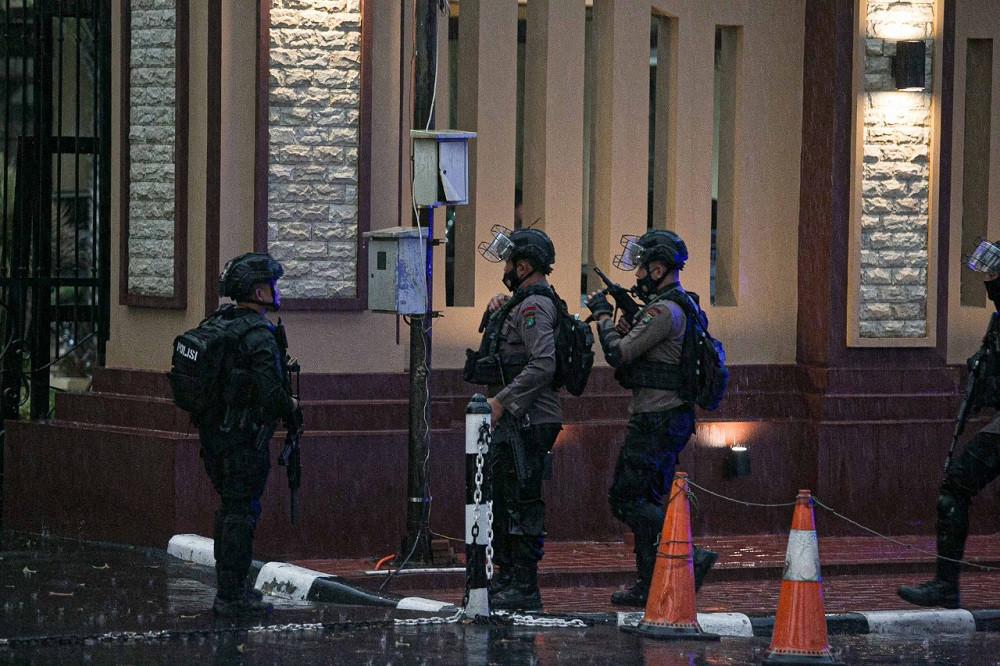
n March 31, a gun-brandishing 25-year-old woman — identified only as ZA — walked into the National Police headquarters in South Jakarta and threatened to shoot officers. In a matter of minutes, she was shot dead. It is believed she acted alone and was not connected to any known terrorist network.
But she left a note which suggested she was following the violent extremist ideology of the Islamic State (IS) movement. The lack of connections to existing networks, the tone and content of her farewell letter and initial police information about her social media use suggest the strong possibility that she was self-radicalized by exposure to extremist materials on the internet. Extremist materials on social media likely played an important part in forming her worldview.
Articles or materials on extremist thinking are accessible on a wide range of platforms – including websites and personal blogs. But social media has the greatest influence because people can find and directly connect with others who share and support their extremist views.
It is possible that ZA committed her “suicide” attack because she was exposed to materials glorifying other suicide attackers, such as those recently in Makassar, South Sulawesi, and elsewhere, on the social media networks of which she was part.
The phenomenon of “instant radicalization” characterized by social media actually has its roots in al-Qaeda's (AQ) early use of the internet to spread its “global jihadist” ideology. AQ sought to promote this ideology as part of its long-term strategy to wage war on the United States and its allies. It needed the presence and support of extremist groups across the globe to establish itself as a popular movement throughout the Islamic world.
I and my friends, at the time, were among those impressed by AQ's concept of global jihad. We believed that globalizing jihad was a good approach: whatever we did at the local level would contribute to the broader global jihadist movement initiated by AQ. As a result, every directive and propaganda release from AQ became a reference for us in determining our own actions.
But strategy is essentially theoretical. Actors are forced to adapt and change their approach when the theory does not align with realities in the field. Or, in order to adapt to the changing conditions, improvisation is needed. This improvisation opened up the possibility that groups would diverge from the planned global strategy.