The Jakarta Post
Please Update your browser
Your browser is out of date, and may not be compatible with our website. A list of the most popular web browsers can be found below.
Just click on the icons to get to the download page.


Popular Reads
Top Results
No results found. Please check your search term and try again
Can't find what you're looking for?
View all search results
Popular Reads
Top Results
No results found. Please check your search term and try again
Can't find what you're looking for?
View all search resultsLow carbon development: An opportunity to step up on build back better
The summit was a critical milestone on the path to the upcoming United Nations climate conference (COP26) in Glasgow in November, by which point countries are expected to bring forward stronger 2030 climate targets under the Paris Agreement.
Change text size
Gift Premium Articles
to Anyone
Share the best of The Jakarta Post with friends, family, or colleagues. As a subscriber, you can gift 3 to 5 articles each month that anyone can read—no subscription needed!
 Set as preferred source
P
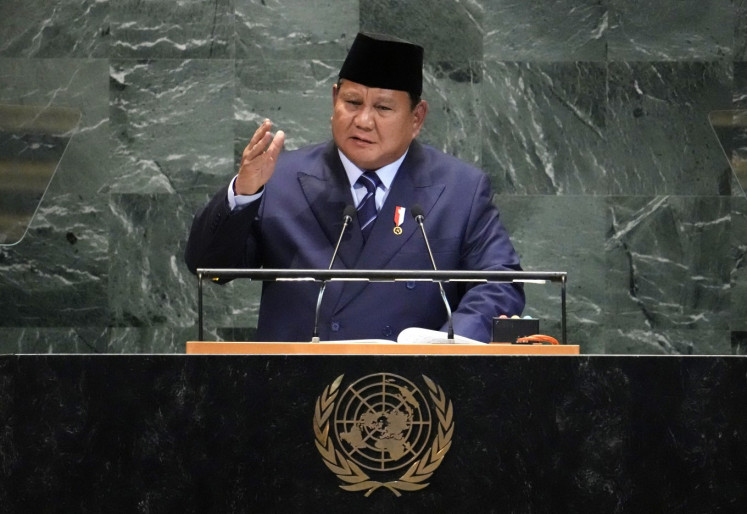
resident Joko “Jokowi” Widodo attended in April the virtual Leaders Climate Summit, which was organized by United States President Joe Biden as part of his administration’s efforts to restore the US climate leadership and encourage countries to act more aggressively to cut their greenhouse gas (GHG) emissions.
The summit was a critical milestone on the path to the upcoming United Nations climate conference (COP26) in Glasgow in November, by which point countries are expected to bring forward stronger 2030 climate targets under the Paris Agreement.
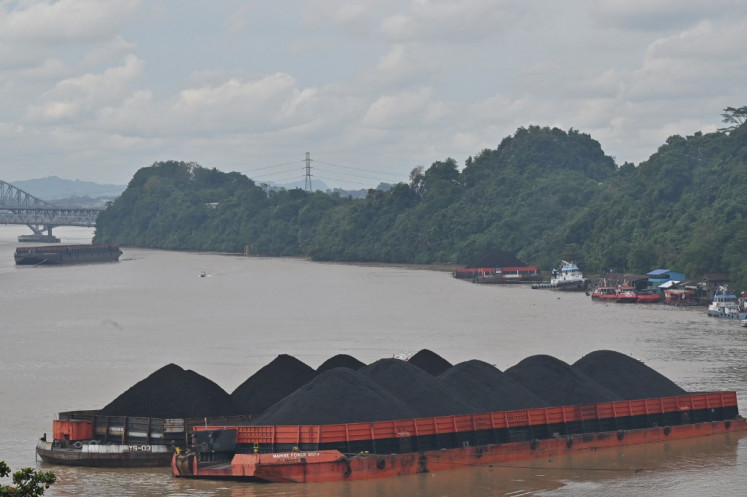
At the summit, Biden announced a new US climate commitment under the Paris Agreement in the form of Nationally Determined Contribution (NDC), including a target to cut GHG emissions by 50-52 percent below 2005 levels by 2030. Japan and Canada also significantly increased their climate targets, while South Korea and China made important announcements on coal.
Together with recent commitments to ambitious 2030 targets by the European and the United Kingdom, these announcements gave a jolt of momentum to global climate ambition, signaled that the US is serious about tackling the global climate crisis in partnership with other countries and laid down the challenge to other major emitters to step up their climate targets this year.
Science tells us that to limit global warming to 1.5 degrees Celsius and avert dangerous levels of climate change, we must halve global carbon emissions by 2030 and reach global net-zero emissions by 2050.
Ambitious climate action is also an opportunity for countries to boost jobs and economic growth, reduce health risks, further equity goals, and build resilience following the COVID-19 pandemic. Research shows that green investments like renewable energy and ecosystem restoration can have an economic benefit that is 2-7 times higher than unsustainable investments, and will often generate double or more the number of jobs as traditional, fossil fuel-based alternatives.
Net-zero targets for around mid-century are rapidly gaining pace with countries, companies and in the finance sector. To date, 59 countries have communicated a net-zero climate target, reflecting more than 54 percent of global emissions. More than 120 global financial institutions have policies to divest or to restrict investments in thermal coal. The new Glasgow Financial Alliance for Net Zero brings together 160 asset managers, asset owners and banks—together responsible for assets in excess of US$70 trillion—committed to align assets and investments to net-zero by 2050 or sooner. Those countries that have set net-zero targets are enhancing their 2030 NDC goals to align with the trajectories to get there.