The Jakarta Post
Please Update your browser
Your browser is out of date, and may not be compatible with our website. A list of the most popular web browsers can be found below.
Just click on the icons to get to the download page.


Popular Reads
Top Results
No results found. Please check your search term and try again
Can't find what you're looking for?
View all search results
Popular Reads
Top Results
No results found. Please check your search term and try again
Can't find what you're looking for?
View all search resultsLong-term TNI modernization plan makes sense
It is important to keep in mind that the current security context will evolve, and that anticipating threats in the mid to long-term is essential.
Change text size
Gift Premium Articles
to Anyone
Share the best of The Jakarta Post with friends, family, or colleagues. As a subscriber, you can gift 3 to 5 articles each month that anyone can read—no subscription needed!
D
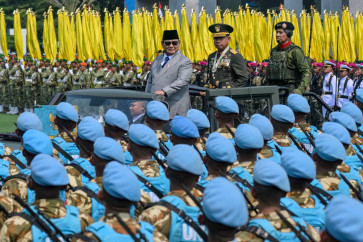
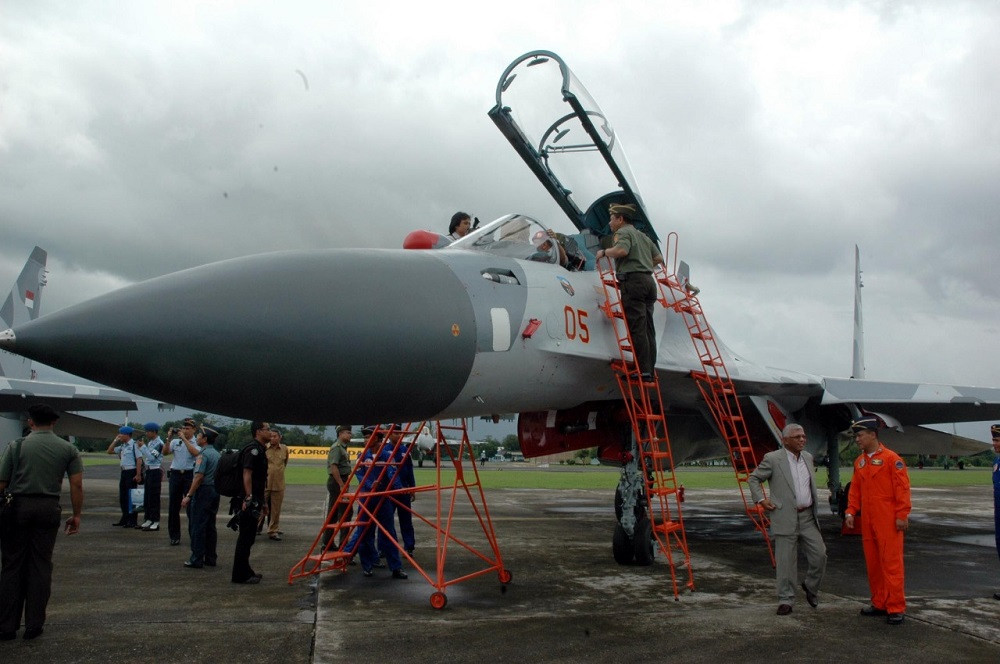
iscussions and debate on the draft presidential regulation (Perpres) to allocate special funding in order to support the modernization of the Indonesian Military (TNI) have been widespread in the media in recent weeks. While debate is necessary, observers must not forget how urgent the need for modernization of the TNI is.
The controversy over the Perpres could appear surprising as the final numbers have not been agreed yet by the government. Meanwhile, TNI modernization is still a topic that gathers a lot of support from civil society. A recent survey by Litbang Kompas shows that 92.8 percent of respondents support the idea.
As a matter of fact, the idea behind the draft Perpres is interesting to analyze. It is one of the few times that Indonesia has seemed to look forward and to adopt a proactive, forecasting strategy to adapt its needs to the evolution of the security context.
The first thing to keep in mind is that the Perpres seems to support the idea that the procurement plan will focus on several decades. Actually, Indonesia’s lack of strategic depth when it comes to defense planning has been a subject of unceasing criticism for years by observers and experts from all political sides. It could be the first time that the Defense Ministry has proposed a procurement strategy that could be reliable in the long term and actively participate in the modernization of the TNI. It is important to keep in mind that the current security context will evolve, and that anticipating threats in the mid to long-term is essential.
This evolution could take several forms, and it is not playing prophet of doom to anticipate it. The future security environment has been described by numerous think tanks around the world. It is little surprise that a large majority consider the Asia-Pacific region as one of the most conflict-prone areas in the future.
Actually China’s current military build-up and its aggressiveness shown in territorial disputes could expand, as has been seen in recent years. Beijing’s strategy of militarization in the South China Sea’s disputed atolls, shoals and other reefs should be taken seriously. In the meantime, state-sponsored illegal, unreported and unregulated (IUU) fishing has also surged in the past decade, exhibiting the willingness of several states to use force – or at least to proceed to shows of force – to secure resources.
Analysts agree that regional and global power competition could increase, mainly to secure resources, in a deteriorating context. It is fair to say that the region will continue to have a vital importance: in parallel, more crises might emerge in the mid to long-term, which could be related to climate change impacts (rising sea levels and competition for marine and coastal areas), food security and water scarcity, or as we are living through right now, a pandemic threat.