The Jakarta Post
Please Update your browser
Your browser is out of date, and may not be compatible with our website. A list of the most popular web browsers can be found below.
Just click on the icons to get to the download page.


Popular Reads
Top Results
No results found. Please check your search term and try again
Can't find what you're looking for?
View all search results
Popular Reads
Top Results
No results found. Please check your search term and try again
Can't find what you're looking for?
View all search resultsToward sustainable palm oil production and trade
This year, China and India are expected to lead the global palm oil demand, which has been affected by recent COVID-19 economic shocks.
Change text size
Gift Premium Articles
to Anyone
Share the best of The Jakarta Post with friends, family, or colleagues. As a subscriber, you can gift 3 to 5 articles each month that anyone can read—no subscription needed!

S
ince its inception for commercial purpose in early 1900s, palm oil has been promoted as a major agro-based industry in Southeast Asian economies like Indonesia, Malaysia, and Thailand. As the world market for multiple uses of palm oil expanded, a new-era of plantation growth started in Indonesia and Malaysia from the 1990s.
Currently, Indonesia and Malaysia are the biggest Crude Palm Oil (CPO) producers with about 75 percent of their combined annual production, estimated to be 60 million tons, going to international markets. Palm oil production in Indonesia, the world’s top producer of the commodity, is expected to rise 4.5 percent to 53.9 million tons in 2021.
Palm oil has a variety of uses in food, animal feed, oleochemicals and other cosmetic products. One significant use in Southeast Asia and other palm oil importing countries is biodiesel, which can replace imported diesel fuels in the transport sector. Indonesian, Malaysian and Thailand palm oil producers have been experiencing growing market demand domestically. Indonesia’s 30 percent oil mixed biodiesel or B30 Program is expected to drive further demand for palm oil in coming years.
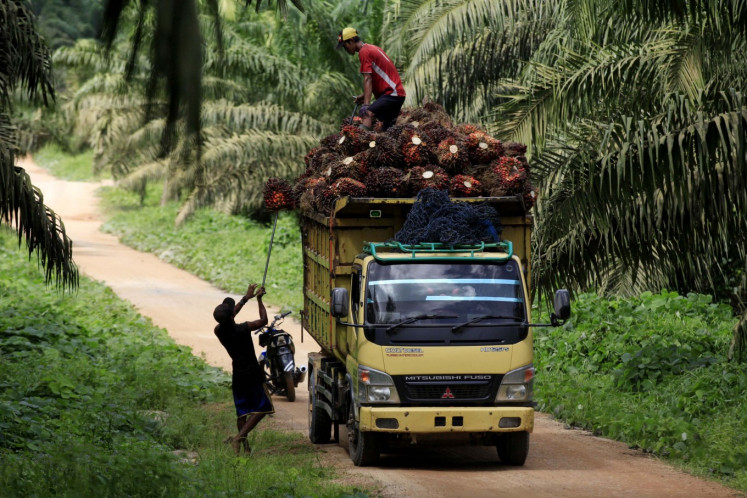
The European Union (EU) has historically imported large quantities of palm oil for use in biodiesel production. The consumption of palm oil as biofuel in many countries, especially in the EU, has largely been driven by national renewable energy targets, reduction of imported diesel oil, and directives, such as blending mandates. Palm oil contributes around 20 percent to the production of biodiesel in the EU and about 90 percent of palm oil consumption is imported from Indonesia and Malaysia. This year, China and India are expected to lead the global palm oil demand, which has been affected by recent COVID-19 economic shocks.
The positive impacts of the palm oil industry in Indonesia, Malaysia and Thailand include a foreign exchange income of about US$40 billion per year and employment of around 10 million workers, contributing to meeting the Sustainable Development Goals by 2030.
The reported negative impacts of aggressive palm oil plantation expansion comprise deforestation, bio-diversity loss, reduced capacity of carbon sinks, forest fire incidents and community conflict. As the plethora of palm oil expands and becomes an alternate source of energy in international markets, there is a necessity to map factors that either hinder or boost sustainable palm oil production and trade.
There are several unknowns regarding the sustainability debates surrounding palm oil production and trade. For example, what are the key tradeoffs and their net impact on increased use of biofuel and food security as well as other socio-economic impacts that are core values of the Sustainable Development Goals.