TheJakartaPost
Please Update your browser
Your browser is out of date, and may not be compatible with our website. A list of the most popular web browsers can be found below.
Just click on the icons to get to the download page.


Popular Reads
Top Results
No results found. Please check your search term and try again
Can't find what you're looking for?
View all search results
Popular Reads
Top Results
No results found. Please check your search term and try again
Can't find what you're looking for?
View all search resultsCOVID-19 in Indonesia: What should we expect in the coming months?
Behavioral changes at the individual, family and community level are needed to put coronavirus transmission under control.
Change text size
Gift Premium Articles
to Anyone
Share the best of The Jakarta Post with friends, family, or colleagues. As a subscriber, you can gift 3 to 5 articles each month that anyone can read—no subscription needed!
 Set as preferred source
S
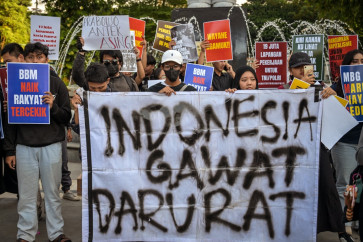
trict mobility curbs, initially called emergency public activity restrictions (PPKM Darurat) now is PPKM level 4, are a necessary and much-awaited response from the government, although this measure has come too late from the public health perspective.
Putting the controversy aside, the implementation of PPKM Darurat from July 1 to July 25 deserves appreciation because the government had repeatedly demonstrated reluctance to take tough measures and had even shown denial during the first wave of COVID-19 outbreak.
Yet stricter measures are only the first step to lessen virus transmission within the community. The government has a limited capacity to monitor micro-interactions in private spaces, where transmission risk is considerably high. The next step depends on community behavior and cooperation to achieve herd immunity or a low transmission rate.
The Institute for Health Metrics and Evaluation has calculated three scenarios for COVID-19 cases in Indonesia. The first scenario involves higher mobility among those who are vaccinated, resembling pre-COVID-19 levels, the second scenario is a current projection based on officially reported data, and the third scenario supposes nearly universal (95 percent) mask use in public.
Indonesia’s COVID-19 cases will hit a plateau (the same transmission level as before the second wave) in mid-October 2021, based on the first scenario, early October in line with the second scenario and mid-September for the third scenario. This means the higher the community adoption of preventive behavior, the faster the second wave will end.
On the other hand, monitoring the daily death rate is the best indicator of the progression of the pandemic, since it takes about 17 to 21 days from the start of the infection to the occurrence of deaths. According to the above institute, by mid-July of this year, Indonesia's total COVID-19 deaths had hit 70,000. By Oct. 1, the number is projected to reach 222,606 in the first scenario, 207,623 in the second scenario and 186,012 in the third scenario. This means the COVID-19 mortality rate will continue to accelerate in the next few months at paces never seen before.
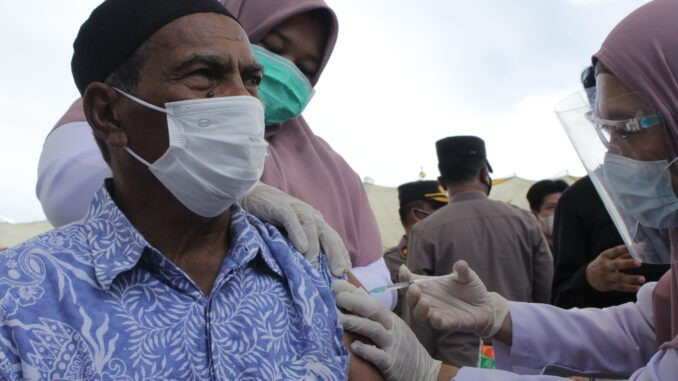
Public health experts from John Hopkins say herd immunity is achieved when 50 to 90 percent of the population is immune to the virus. Stopping the pandemic apparently lies in the majority of the population being vaccinated and keeping coronavirus transmission under control.