The Jakarta Post
Please Update your browser
Your browser is out of date, and may not be compatible with our website. A list of the most popular web browsers can be found below.
Just click on the icons to get to the download page.


Popular Reads
Top Results
No results found. Please check your search term and try again
Can't find what you're looking for?
View all search results
Popular Reads
Top Results
No results found. Please check your search term and try again
Can't find what you're looking for?
View all search resultsThe detriments of Papua separatist campaigns
These historical complexities are more often than not misunderstood by many people, leading to the false conclusion that Papua was colonialized by Indonesia.
Change text size
Gift Premium Articles
to Anyone
Share the best of The Jakarta Post with friends, family, or colleagues. As a subscriber, you can gift 3 to 5 articles each month that anyone can read—no subscription needed!
 Set as preferred source
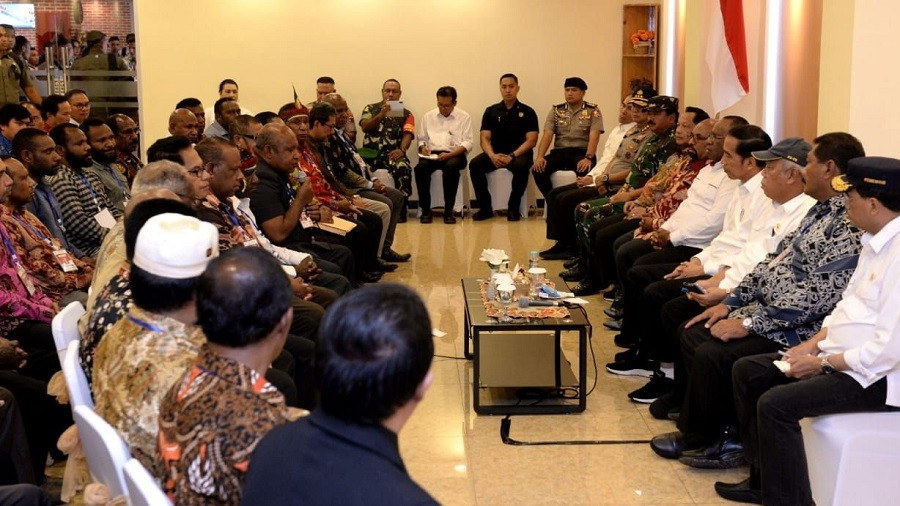
“If there was to be a consensus reached on historical facts with regard to Indonesia and West Papua, how would that change the conditions on the ground right now?” This question was part of a closing statement made in a webinar held by the Foreign Ministry in cooperation with The Jakarta Post on July 29.
To answer the provoking question, it is important to briefly recall the theme of the discussion, namely the historical and legal facts surrounding Papua, which is related to the long-standing voices of separatism there. The root of Papua’s separatist movement may be traced back to the Netherlands’ reluctance to return the land back to Indonesia even after the country’s independence. The former colonial master retained de facto control over Papua, setting aside Indonesia’s lawful de jure claims of Papua until it finally conceded and signed the New York Agreement in 1962.
These historical complexities are more often than not misunderstood by many people, leading to a false conclusion that Papua was colonialized by Indonesia and, therefore, must exercise the right to self-determination. Under international law, as was reaffirmed by the United Nations, Papua has been an integral part of Indonesia and as such, the premise of Indonesia’s colonization of Papua is a fallacy.
Five decades after the landmark agreement, however, advocates of separatism are still persisting to win the unwinnable, notwithstanding the unequivocal international society’s view on territorial integrity: There exists no right to secede under international law.
The opinions on why Papua should secede from Indonesia is usually based on two main arguments. First, Papua has an unfulfilled self-determination right because it was colonialized. This argument is invalid from the outset, and that is the very reason why the UN has never included Papua in the Non-Self-Governing Territories (NSGT) list, which groups colonial territories that have not yet exercised their right to self-determination. Second, there are a plethora of issues plaguing Papua, ranging from human rights abuses and discrimination to unequal development. This second argument is at times, unfortunately, accompanied by a flawed, if not detrimental, solution: separatism.
Why does separatism become the only solution to the aforementioned problems? The government has not yet been proven to be unwilling to solve these issues. Under Joko “Jokowi” Widodo’s presidency, many things have been improved. Just to name a few: the construction of the trans-Papua road that will incentivize development, the new presidential instruction to accelerate development in Papua and West Papua, and the newly enacted Law No. 2/2021, which extends the special autonomy for Papua and West Papua.
Separatism has always been frowned upon by international and national law alike. Former UN secretary-general U Thant even stated that “as an international organization, the United Nations has never accepted and does not accept and I do not believe will ever accept the principle of secession of a part of its member states”.