The Jakarta Post
Please Update your browser
Your browser is out of date, and may not be compatible with our website. A list of the most popular web browsers can be found below.
Just click on the icons to get to the download page.


Popular Reads
Top Results
No results found. Please check your search term and try again
Can't find what you're looking for?
View all search results
Popular Reads
Top Results
No results found. Please check your search term and try again
Can't find what you're looking for?
View all search resultsCan Papua build Indonesia anew?
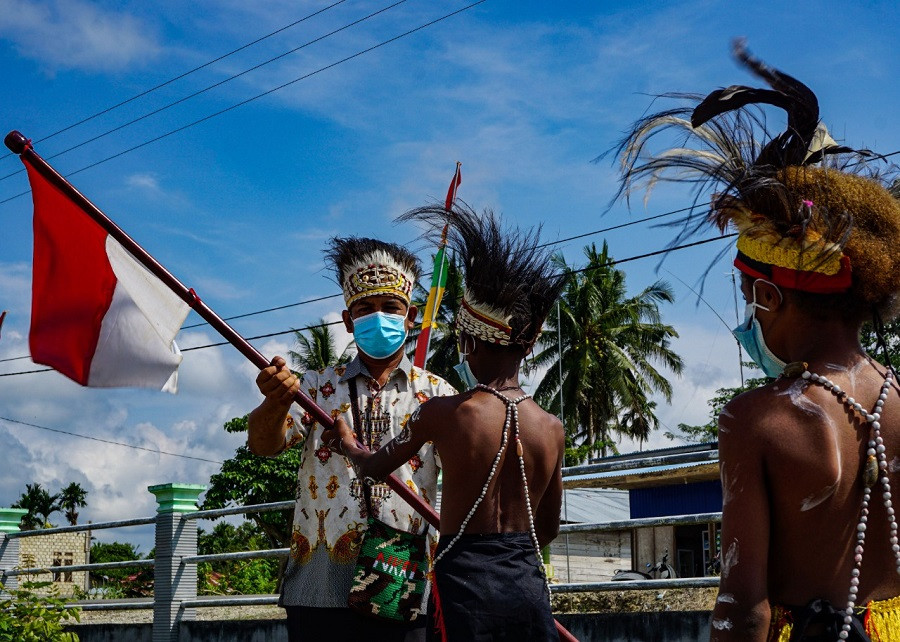
Neither political remedies, such as the power sharing features of the Papuan People’s Assembly, nor infrastructure development, have substantially advanced the idea of national motto Bhinneka Tunggal Ika (unity in diversity) as it relates to Papuan inclusion in the “big Indonesian family”.
Change text size
Gift Premium Articles
to Anyone
Share the best of The Jakarta Post with friends, family, or colleagues. As a subscriber, you can gift 3 to 5 articles each month that anyone can read—no subscription needed!
 Set as preferred source
T
he pantheon of values that make up the rich social tapestry of modern Indonesia does not yet include “Papuan values”. Might such values include respect for the natural environment? Or the veneration of elders? Or esteem for customary practices that have stood the test of time and which have found new relevance in the age of global deforestation, arable land degradation and climate change? Or even new and emerging values such as gender equality and opportunities for women and girls?
If so, then such values would certainly complement the broad evolving Indonesian national character, still “a work in progress” despite the passage of 76 years since the Indonesian proclamation of independence.
In revealing a profile of Papuan values, one must first consider what questions Papuans might regard as essential to be asked and answered. This is sound not only in terms of the complex field of human diversity but significantly it is also Indonesian government policy—from the very top.
In December 2015, President Joko “Jokowi” Widodo made these aspirations and intentions very clear when he said, “I want to listen to the people’s voices and I’m willing to open dialogue for a better Papua. The people of Papua don’t only need health care, education, and the construction of bridges and roads; they also need to be listened to.”
President Jokowi’s position was an acknowledgement that neither political remedies, such as the power sharing features of the Papuan People’s Assembly, nor infrastructure development, have substantially advanced the idea of national motto Bhinneka Tunggal Ika (unity in diversity) as it relates to Papuan inclusion in the “big Indonesian family”.
There has been considerable research on the matrix of value systems across the international border in neighboring Papua New Guinea (PNG). This especially includes the Wantok (Tok Pisin for “one talk”) system, which characterizes not only common social, cultural, and personal ideals and principles but also illustrates the practical advantages of shared language and ethnicity, often confined by district or provincial boundaries or even geographic isolation.
This is further characterized by what might be considered universal PNG values such as “reciprocity” (exchange for mutual benefit) and “keeping time with the sun” (or an orientation toward the natural cycles of day and night rather than imposed time frames such as “nine to five”).