The Jakarta Post
Please Update your browser
Your browser is out of date, and may not be compatible with our website. A list of the most popular web browsers can be found below.
Just click on the icons to get to the download page.


Popular Reads
Top Results
No results found. Please check your search term and try again
Can't find what you're looking for?
View all search results
Popular Reads
Top Results
No results found. Please check your search term and try again
Can't find what you're looking for?
View all search resultsFood security or disruption?
With one strike, the regulation has banned private companies from importing staple foods to build up the national supply.
Change text size
Gift Premium Articles
to Anyone
Share the best of The Jakarta Post with friends, family, or colleagues. As a subscriber, you can gift 3 to 5 articles each month that anyone can read—no subscription needed!
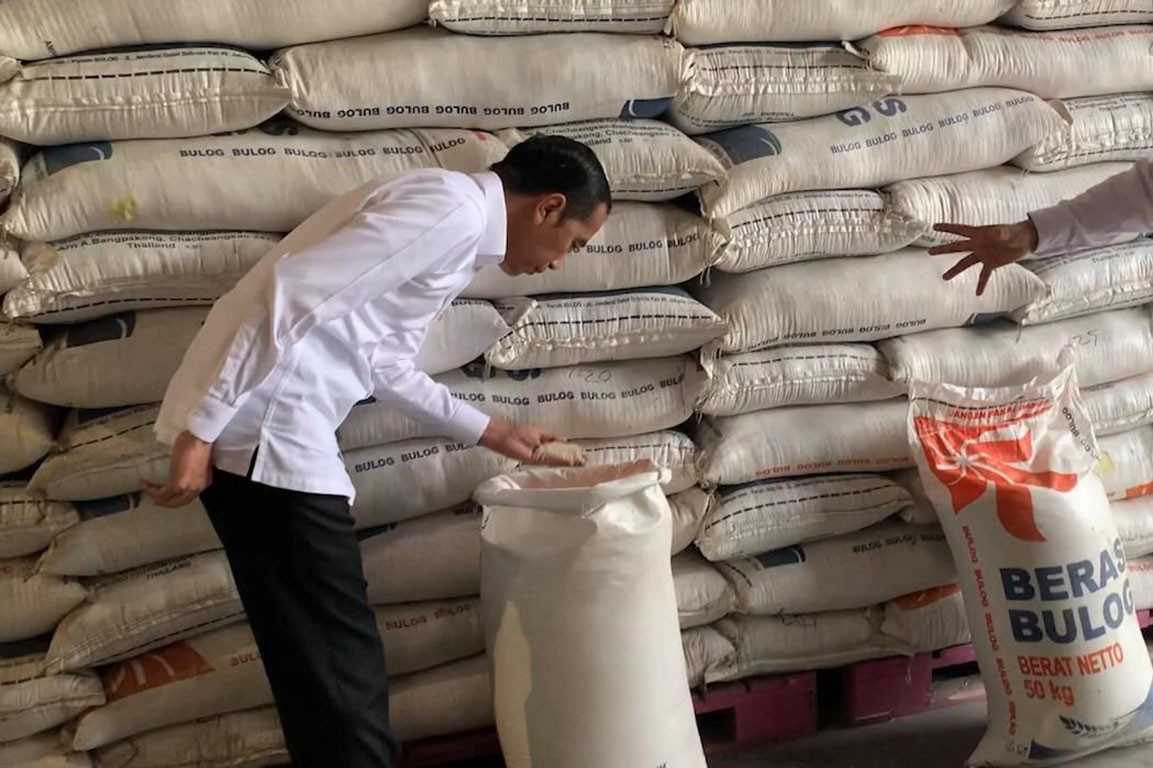
The government has finally implemented the provision in the 2012 Food Law that mandates the establishment of a National Food Agency.
The long wait does not, of course, mean that the new agency will become a good institution. The challenges that lay ahead will instead be all uphill as regards the scope of its duties and authority, as well as its effectiveness in developing food security and maintaining food price stability.
The National Food Agency, established in late July under Presidential Regulation No. 66/2021, is responsible for coordinating, formulating and implementing government policies on food availability, prices, security, diversification, safety and supply, as well as nutrition.
The agency’s authority covers nine staple foods: rice, corn, soybeans, sugar, onion and garlic, eggs, poultry and beef, and chilies. The agency is to cooperate with state-owned enterprises (SOEs) that operate in food production and food trade to manage the national food supply.
With one strike, the regulation has banned private companies from importing staple foods to build up the national supply. They are no longer able to collude with officials at the agriculture and trade ministries to obtain food import quotas. This is quite a big loss for business, especially since the 2020 Job Creation Law liberalized imports to build up the national supply and maintain stable prices for the nine food commodities.
Food commodity imports, which were needed to maintain price stability in the event of a domestic shortage, had become a lucrative business in the past two decades due to the high profit margin resulting from the much higher prices of local foods.
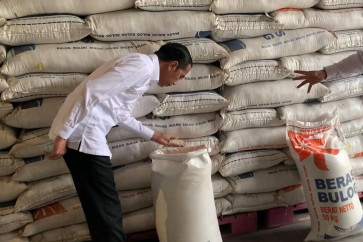
Now, the National Food Agency will have to rely on SOEs such as Bulog, which has been responsible for managing the rice supply so far, cattle and poultry farm PT Berdikari, and food traders PT Rajawali Nusantara and PT Perusahaan Perdagangan Indonesia, and food warehouse company PT Bhanda Ghara Reksa.