The Jakarta Post
Please Update your browser
Your browser is out of date, and may not be compatible with our website. A list of the most popular web browsers can be found below.
Just click on the icons to get to the download page.


Popular Reads
Top Results
No results found. Please check your search term and try again
Can't find what you're looking for?
View all search results
Popular Reads
Top Results
No results found. Please check your search term and try again
Can't find what you're looking for?
View all search resultsWhy cheap cooking oil comes at a high price
Subsidizing the commodity benefits producers, whose income is guaranteed, and the wealthy, who pay the same price as the poor.
Change text size
Gift Premium Articles
to Anyone
Share the best of The Jakarta Post with friends, family, or colleagues. As a subscriber, you can gift 3 to 5 articles each month that anyone can read—no subscription needed!
 Set as preferred source
T
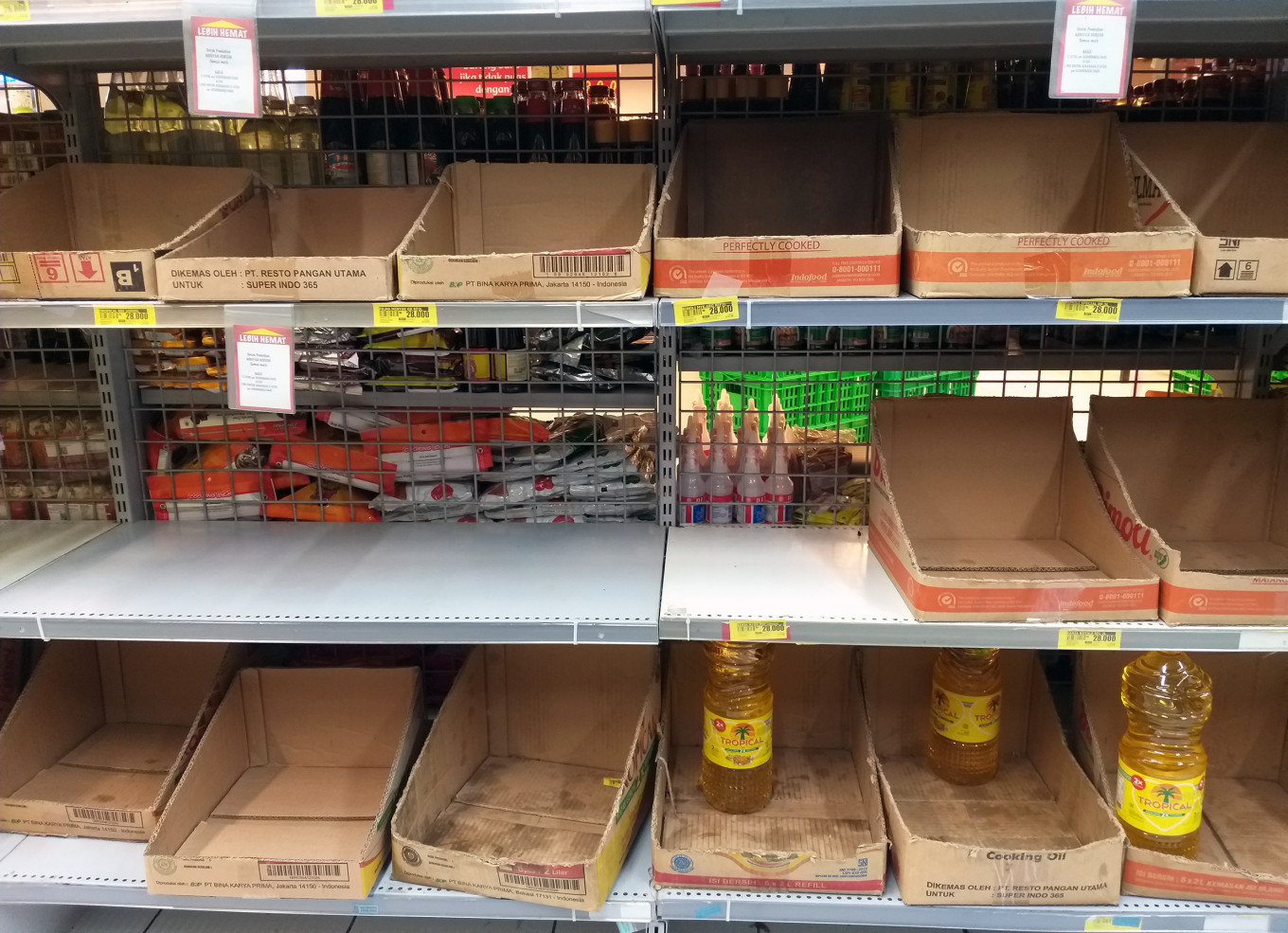
he single-price policy for all domestically produced, palm-fruit-based cooking oil came into force last week with little to no debate. To make cooking oil – an important staple in local cuisine – affordable to everyone, the government has fixed the price at Rp 14,000 (97 US cents) a liter nationwide for the next six months.
Without a thorough public discussion, we cannot know whether this is a good policy or not.
Soaring global prices of palm oil, the main ingredient for cooking oil in Indonesia, mean producers would rather sell abroad than on a home market where they cannot sell at market price.
Under the single-price policy, they are obliged to supply 1.5 billion liters of cooking oil at the government-set price, but they will be compensated handsomely.
It is a decision that makes both consumers and producers happy, while the government has no qualms about picking up the Rp 7.6 trillion bill for the subsidy.
But is it a good economic decision? Is it worth the price?
Where are the economists when we need them? Some have been coopted by the government, but what about the others? Their silence suggests either they have all gone socialist or they keep silent to avoid being bullied on social media for speaking against a populist policy.