The Jakarta Post
Please Update your browser
Your browser is out of date, and may not be compatible with our website. A list of the most popular web browsers can be found below.
Just click on the icons to get to the download page.


Popular Reads
Top Results
No results found. Please check your search term and try again
Can't find what you're looking for?
View all search results
Popular Reads
Top Results
No results found. Please check your search term and try again
Can't find what you're looking for?
View all search resultsRI lauded for keeping G20, ASEAN relevant
Indonesia has garnered praise for its sheer will to ensure that the upcoming Group of 20 Leaders' Summit commences as planned, but foreign policy analysts are still wary of the potential collapse of international cooperation.
Change text size
Gift Premium Articles
to Anyone
Share the best of The Jakarta Post with friends, family, or colleagues. As a subscriber, you can gift 3 to 5 articles each month that anyone can read—no subscription needed!
 Set as preferred source
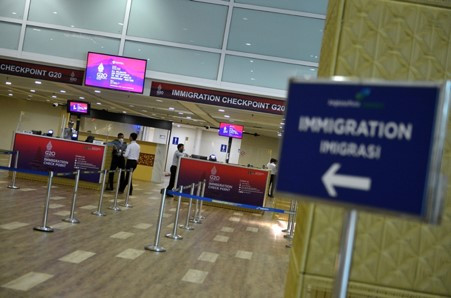
With the Group of 20 Summit commencing and Indonesia assuming the ASEAN chairmanship in about two weeks’ time, panelists at a global think tank conference have lauded the nation’s efforts in maintaining the relevancy of both groups on the global stage.
Indonesia’s G20 presidency has been eclipsed by Russia's war in Ukraine, which, on top of sparking global food and energy crises and a potential collapse of international cooperation, has fueled fears of deepening conflict closer to home, with Jakarta presiding over ASEAN next year under the shadow of the Myanmar coup crisis.
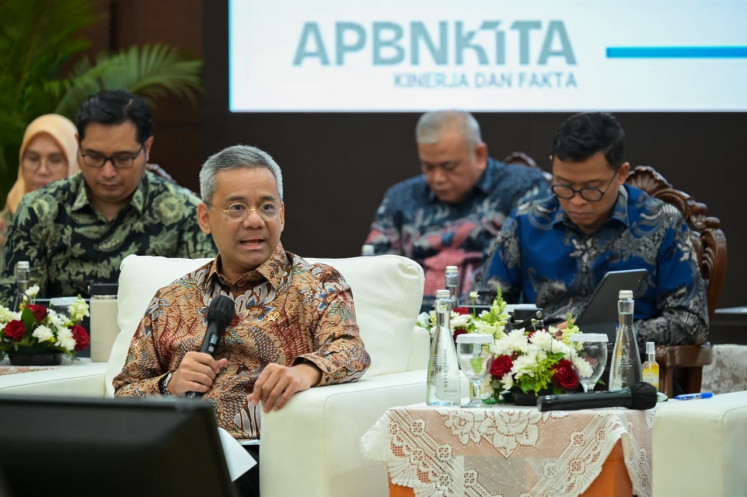
Yose Rizal Damuri, executive director of the Jakarta-based Centre for Strategic and International Studies (CSIS), said that while the G20 itself was a massive group that talked about “everything under the sky”, Indonesia had sought to keep the forums focused on issues of common concern.
He pointed out that parallel discussions were underway among 13 working groups under the Sherpa track and seven under the Finance track. For these discussions, Indonesia has tried to keep the focus on three priority agendas set early on in its presidency: global health architecture, digital transformation and energy transition.
“Indonesia was actually quite successful in directing discussions to focus on several important and critical agenda,” Yose said in a discussion held as part of the Council of Councils’ 13th Regional Conference that gathers think tanks from around the world, on Tuesday.
In spite of its best efforts, however, Indonesia had not been able to bridge the interests of G20 member states, the economist said, as most working groups and ministerial meetings in the lead-up to the G20 Summit later this month had failed to produce a joint statement. Instead, Indonesia has been issuing G20 chair statements.
Michael Fullilove, executive director of Australia’s Lowy Institute foreign policy think tank, acknowledged that the hosting of the G20 forum would be particularly hard, noting that Australia faced similar hardship during its presidency in 2014 that coincided with Russia’s annexation of Crimea.