The Jakarta Post
Please Update your browser
Your browser is out of date, and may not be compatible with our website. A list of the most popular web browsers can be found below.
Just click on the icons to get to the download page.


Popular Reads
Top Results
No results found. Please check your search term and try again
Can't find what you're looking for?
View all search results
Popular Reads
Top Results
No results found. Please check your search term and try again
Can't find what you're looking for?
View all search resultsdutch

Europe 11 months ago
PREMIUM
‘Java Man’ return marks Indonesia-Netherlands reconciliation: Foreign Ministers
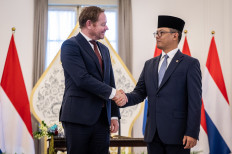
The return of more than 28,000 fossils unearthed by Dutch geologist Eugene Dubois was among highlights of Dutch Foreign Minister David van Weel’s first trip to Indonesia for a meeting with his Indonesian counterpart Sugiono in Jakarta.
Jakarta 11 months ago
PREMIUM
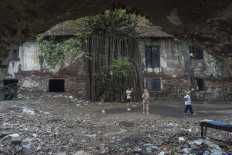
Lost to modernity: Urban expansion squeezes Batavia-era warehouse
Hidden behind toll road projects and container trucks to the capital’s north, a 17-century colonial structure stands in quiet decay, its walls overgrown with moss and tree roots, its history fading beneath Jakarta’s relentless modernization.

Archipelago 11 months ago
PREMIUM
Dutch man faces death penalty in Bali over alleged cannabis farm
Inside the second floor of the house, police reportedly found a large number of marijuana plants being cultivated using hydroponic methods. Authorities described the operation as highly organized, with separate zones for seed germination, nursery care and the cultivation of mature, harvest-ready plants.
Society 11 months ago
PREMIUM
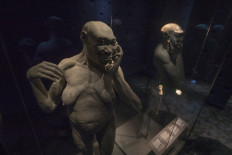
Return of ‘Java Man’ fossil hailed, may open door for more ancient human study
‘Java Man’, or remains of a Homo erectus unearthed by Dutch geologist Eugene Dubois in Java, were used to suggest the existence of early human in Asia, challenging prevailing theories that ancient human only emerged in Africa and Europe.
Art & Culture 1 year ago
PREMIUM
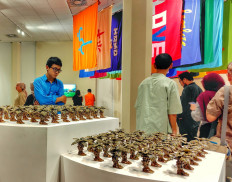
‘Beyond Unsettled Past’: Revisiting Indonesia’s colonial legacies
The exhibition, held at in Erasmus Huis in Jakarta, reexamines colonial legacies through a distinctly Indonesian lens. Curated by historian Sadiah Boonstra and artist Sukiato Khurniawan, the show features powerful works by six artists that confront the lingering imprints of colonialism on society.
Editor's Picks
Popular
- Recentralization concerns in fiscal, education heighten
- Twenty years on, BRICS faces a defining choice
- Indonesia calls for more representative UN amid changing world order
- Court decision tightens House oversight on free meals funding
- Safeguarding Indonesia's AI future
- Indian arrested for smuggling gold bars to Thailand via N. Sumatra airport
- Agrarian reform bill gets mixed reaction
- Singapore’s BDx launches 640MW data center project in West Java
- ASEAN warms to BRICS without sacrificing centrality
- Japanese automakers raise concern over local content rules


