The Jakarta Post
Please Update your browser
Your browser is out of date, and may not be compatible with our website. A list of the most popular web browsers can be found below.
Just click on the icons to get to the download page.


Popular Reads
Top Results
No results found. Please check your search term and try again
Can't find what you're looking for?
View all search results
Popular Reads
Top Results
No results found. Please check your search term and try again
Can't find what you're looking for?
View all search resultsprabowo

Regulations 4 months ago
PREMIUM
Potential state overreach rattles private sector confidence
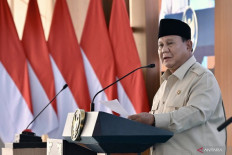
State takeovers, interventions and investments in the private sector as part of a broader policy direction have met with mixed reception, with some cautioning that potential overreach could dampen investor sentiment and the business climate.

Regulations 4 months ago
PREMIUM
Tighter state control over Gojek, Grab raises profitability concerns
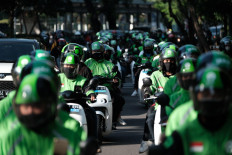
Deputy House Speaker Sufmi Dasco Ahmad said that Danantara has acquired stakes in ride-hailing platforms as the government orders tech firms to cut commissions and expand protections for on-demand drivers under a new regulation.
Politics 5 months ago
PREMIUM
Potential Gerindra-NasDem merger could reshape 2029 electoral landscape
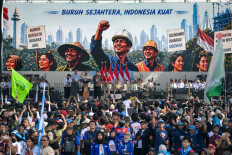
Talks about a potential merger between Gerindra and NasDem, two of the country’s five largest political parties, have recently emerged, a scenario that analysts said could alter the political landscape ahead of the 2029 presidential election and weaken prospects for opposition figures.

Regulations 5 months ago
PREMIUM
OJK to exclude small loans from credit score database to ease homebuying
The OJK emphasized that the information displayed in the SLIK system does not automatically determine whether a loan or financing application will be approved or rejected, noting that it only serves as a consideration in the credit analysis process.
Europe 5 months ago
PREMIUM
Prabowo to visit Russia in search of energy supply
President Prabowo Subianto is set to depart for Russia, the Foreign Ministry confirmed on Sunday, as he seeks to meet Russian President Vladimir Putin in search of fuel amid disruptions to global oil supplies caused by the United States-Israeli war on Iran.
Politics 5 months ago
PREMIUM
Removing president must follow constitutional process: Prabowo
President Prabowo Subianto has addressed recent calls from government critics for his early removal less than two years into his term, saying that he welcomes public criticism but insists that any attempt to unseat him must follow constitutional procedures.
Editor's Picks
Popular
- Not the Ministry of Magic
- PISA gains belie Indonesia’s persistent education crisis
- Safeguarding Indonesia's AI future
- Recentralization concerns in fiscal, education heighten
- Suahasil seen to prioritize fiscal discipline, continuity
- Jakarta water shortages worsen as dry season drags on
- Twenty years on, BRICS faces a defining choice
- Hundreds of flights cancelled as Typhoon Dujuan nears Japan
- Court decision tightens House oversight on free meals funding
- Indonesia doing 'everything' but struggling to curb fires


