The Jakarta Post
Please Update your browser
Your browser is out of date, and may not be compatible with our website. A list of the most popular web browsers can be found below.
Just click on the icons to get to the download page.


Popular Reads
Top Results
No results found. Please check your search term and try again
Can't find what you're looking for?
View all search results
Popular Reads
Top Results
No results found. Please check your search term and try again
Can't find what you're looking for?
View all search resultsclaims


Opinion 5 months ago
PREMIUM
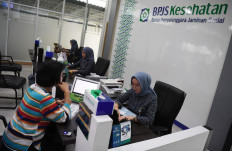
Analysis: BPJS Kesehatan under strain as claims outpace revenues
Indonesia’s universal healthcare program is coming under renewed strain as the Health Care and Social Society Agency (BPJS Kesehatan) revealed that claims have begun to outpace premium revenues. With the claim ratio reaching 111.86 percent as of February 2026, the imbalance signals growing pressure on the financial sustainability of the National Health Insurance (JKN) system.

Academia 8 months ago
PREMIUM
Beyond claims: Why Indonesia must anchor the South China Sea COC
Amid the resurgence of global power politics, Indonesia must continue to wield its unique geopolitical legitimacy, conferred by its geography, in pressing for the consistency of maritime norms in the South China Sea.

Academia 1 year ago
PREMIUM
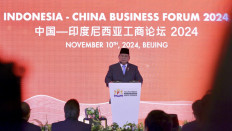
Prabowo’s new approach to RI-China relations
The President’s recent move as regards Beijing's claims in the South China Sea through the Indonesia-China JDA shows that he is boldly forging a new pathway toward mutually beneficial bilateral development with the Asian superpower.

Academia 2 years ago
PREMIUM
ASEAN and the South China Sea: Constraints and pathways
While ASEAN has no formal arrangements for de-escalating or resolving a conflict involving a member state, given that it is not a military alliance but a trade bloc, it has at least three cards up its sleeve: the bloc's TAC and ARF, as well as the EAS.



Editor's Picks
Popular
- Prabowo’s reshuffle bring ties with Jokowi back into focus
- New islands appear after Anak Krakatau volcano erupts
- New police chief orders major shake-up
- The agrarian reform law and investment prospects of palm oil
- Philippines arrests 244 foreign workers in online scam crackdown
- Bringing the military back in
- Public health measures urged amid El Niño's extreme heat
- Reshuffle shores up coalition support for 2029
- Danantara to invest in ethanol infrastructure over next three years
- A ministry restored


