The Jakarta Post
Please Update your browser
Your browser is out of date, and may not be compatible with our website. A list of the most popular web browsers can be found below.
Just click on the icons to get to the download page.


Popular Reads
Top Results
No results found. Please check your search term and try again
Can't find what you're looking for?
View all search results
Popular Reads
Top Results
No results found. Please check your search term and try again
Can't find what you're looking for?
View all search resultscurriculum


Academia 2 months ago
PREMIUM
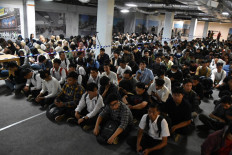
Predators in the classroom: We are leaving children defenseless
To restore broken public trust and shield children from institutional abuse, we must replace outdated taboos with mandatory classroom body literacy by embedding adolescent reproductive health education in school curricula.
Academia 2 months ago
PREMIUM
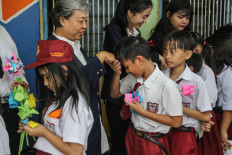
What Indonesian classroom never received
Indonesia’s chronic educational underperformance will never be solved by a top-down curriculum updates. Until policymakers focus on rebuilding foundational cognitive habits, like attention spans and reading stamina, long before students reach university, each new ministerial launch will simply deliver a fresh document to the same broken classroom.
Academia 3 months ago
PREMIUM
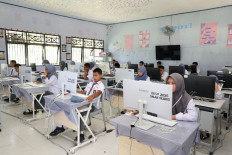
TKA 2026: An early warning for Golden Indonesia vision
TKA 2026 proves Indonesia can measure learning at a massive scale, but if the government cannot fix the stark literacy and numeracy deficits revealed by the data, the promise of "Golden Indonesia 2045" will give way to a staggering demographic burden.

Academia 4 months ago
PREMIUM
The wrong remedy: Evaluating university study program closures
Closing university programs based solely on immediate employment metrics mistakes a labor-market symptom for an educational diagnosis. Indonesia needs institutions that form human character and an economy capable of receiving them, not a policy that merely moves the burden of unemployment onto the students.
Academia 7 months ago
PREMIUM
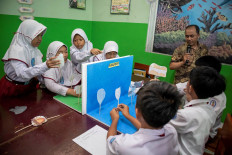
The hidden curriculum of domesticity and our STEM future
To unlock Indonesia’s STEM potential, we must dismantle the "hidden curriculum" that quietly trades a girl’s public authority for domestic virtue, turning classrooms into rehearsal spaces for expertise rather than compliance.


Editor's Picks
Popular
- Popular discontent is justified. Authoritarianism is not the answer
- Recentralization concerns in fiscal, education heighten
- Govt under pressure as 3 million home drive hits cracks
- Safeguarding Indonesia's AI future
- Batam residents protest data centers amid water crisis
- Canals full, roads submerged as Bangkok declares flood disaster
- Japan schoolboy, 11, wins gold while empty seats blight Asian Games
- Indonesian wildfires threaten critically-endangered orangutan: IUCN
- Jakarta international airport extends closure after Anak Krakatau eruption
- Indonesians still have low awareness against pneumonia: Survey


