The Jakarta Post
Please Update your browser
Your browser is out of date, and may not be compatible with our website. A list of the most popular web browsers can be found below.
Just click on the icons to get to the download page.


Popular Reads
Top Results
No results found. Please check your search term and try again
Can't find what you're looking for?
View all search results
Popular Reads
Top Results
No results found. Please check your search term and try again
Can't find what you're looking for?
View all search resultsgreenhouse-gas-reduction


Americas 11 months ago
US threatens visa restrictions, sanctions against nations backing shipping emissions plan
UN member nations are scheduled to vote next week on the International Maritime Organization's Net-Zero Framework proposal to reduce global carbon dioxide gas emissions from the international shipping sector, which accounts for close to 3 percent of global greenhouse gases.
Academia 2 years ago
PREMIUM
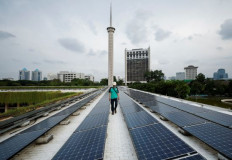
Energy security, international dimension and primary energy management
Economic resilience, public welfare and geopolitical stability are inherently linked to Indonesia's energy security as it forges its transition toward cleaner energy use through a variety of strategic steps.

Environment 6 years ago
Lockdown emissions fall will have 'no effect' on climate
The unprecedented fall in greenhouse gas emissions from lockdowns during the pandemic will do "nothing" to slow climate change without a lasting switch from fossil fuels, an international team of researchers said Friday.

National 6 years ago
Indonesia speeds up regulation on global carbon trading
The government is speeding up efforts to issue a regulation on carbon trading as part of Indonesia’s commitment to reducing global greenhouse gas emissions. The government has spent the last year preparing the emission-trading system for the future domestic carbon market, the Environment and Forestry Minister Siti Nurbaya Bakar said.
National 6 years ago
PREMIUM
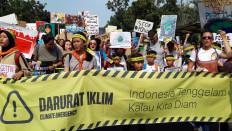
Indonesia finalizing new NDC, likely to keep old emissions cut target
The ministry is planning to outline Indonesia's pledge to reduce emissions by 29 percent independently -- or 41 percent if with international assistance -- by 2030, the same target outlined in the first NDC submitted in 2016 as a part of the Paris Agreement goals of limiting global warming to 1.5 degrees Celsius above pre-industrial levels.


Editor's Picks
Popular
- Mass poisonings cast doubt on free meals reforms
- Much ado about asset forfeiture
- New data rules could unlock cross-border data flows
- Children are no longer the priority, were they ever?
- Indonesia, Hong Kong to host new 14-team FIFA ASEAN Cup
- Free meals face seven-day ultimatum, possible lawsuit
- Assessing the merit of the strategic commodities bill
- Prabowo’s approval slide fuels warm-up to 2029 elections
- Volcanic eruptions take toll on economy
- Osama the gamer: A list of Bin Laden’s video games from his hard drive


