The Jakarta Post
Please Update your browser
Your browser is out of date, and may not be compatible with our website. A list of the most popular web browsers can be found below.
Just click on the icons to get to the download page.


Popular Reads
Top Results
No results found. Please check your search term and try again
Can't find what you're looking for?
View all search results
Popular Reads
Top Results
No results found. Please check your search term and try again
Can't find what you're looking for?
View all search resultspolitical-parties
Politics 3 weeks ago
PREMIUM
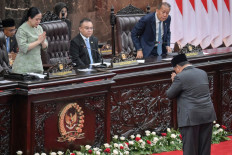
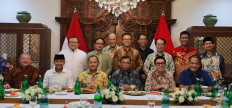
Gerindra rallies coalition partners amid Prabowo’s waning public support
Among topics discussed in the gathering of political parties’ senior officials hosted by Gerindra Party secretary-general Sugiono was the 2029 general election and the revision of elections-related regulations.

Politics 2 months ago
PREMIUM
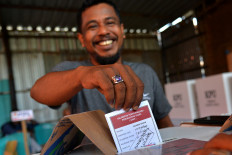
Political parties respect court ruling upholding direct regional elections
Several political parties have welcomed the Constitutional Court's recent ruling reaffirming that regional heads must continue to be elected directly by voters, a decision observers say effectively closes the door on renewed proposals to scrap direct regional elections.
Politics 3 months ago
PREMIUM
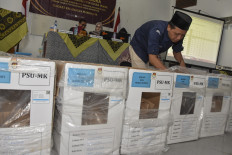
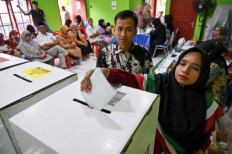
Top court rules to bar parties that breach 30% gender quota from legislative polls
The Constitutional Court has ruled in favor of a petition by university students, which pointed to a lack of sanctions in the General Elections Law for political parties that violated the minimum 30 percent requirement for female candidates.

Politics 3 months ago
PREMIUM
Small political parties warn against last-minute elections law revision
Parties with no seats in the House of Representatives also opposed ideas to raise the legislative threshold and proposed instead to abolish or lower the minimum votes needed for a political party to win a seat in the legislature.
Academia 4 months ago
PREMIUM
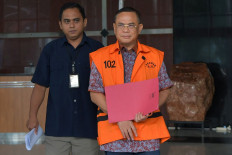
When the KPK enters the core of party power
While anticorruption efforts usually focus on handcuffs and press conferences, the KPK is finally looking "upstream" at the political parties that fuel the crisis. By challenging the corporate-style control of party elites, the KPK is no longer just chasing criminals—it is trying to rewrite the rules of power itself.
Editor's Picks
Popular
- Mass poisonings cast doubt on free meals reforms
- New data rules could unlock cross-border data flows
- Malaysia must not breathe Indonesia’s governance failure
- The state's new muscle
- Jakarta airport and others reopen after volcanic ash crisis
- Anak Krakatau eruption halts flights, schools, fishing
- Soekarno-Hatta airport extends closure after Anak Krakatau eruption
- Barelang Police, Japanese diplomat hold meeting on Batam security
- Travelers scramble as Anak Krakatau ash exposes gaps in contingency plans
- Jakarta international airport extends closure after Anak Krakatau eruption


