The Jakarta Post
Please Update your browser
Your browser is out of date, and may not be compatible with our website. A list of the most popular web browsers can be found below.
Just click on the icons to get to the download page.


Popular Reads
Top Results
No results found. Please check your search term and try again
Can't find what you're looking for?
View all search results
Popular Reads
Top Results
No results found. Please check your search term and try again
Can't find what you're looking for?
View all search resultsPro-government parties open to scrapping direct regional elections
Members of the ruling coalition are open to President Prabowo Subianto’s suggestion of scrapping the prevailing direct elections for regional heads, despite strong opposition from pro-democracy advocates who warned that would undercut democratic accountability and risk reversing hard-won reforms.
Change text size
Gift Premium Articles
to Anyone
Share the best of The Jakarta Post with friends, family, or colleagues. As a subscriber, you can gift 3 to 5 articles each month that anyone can read—no subscription needed!
 Set as preferred source
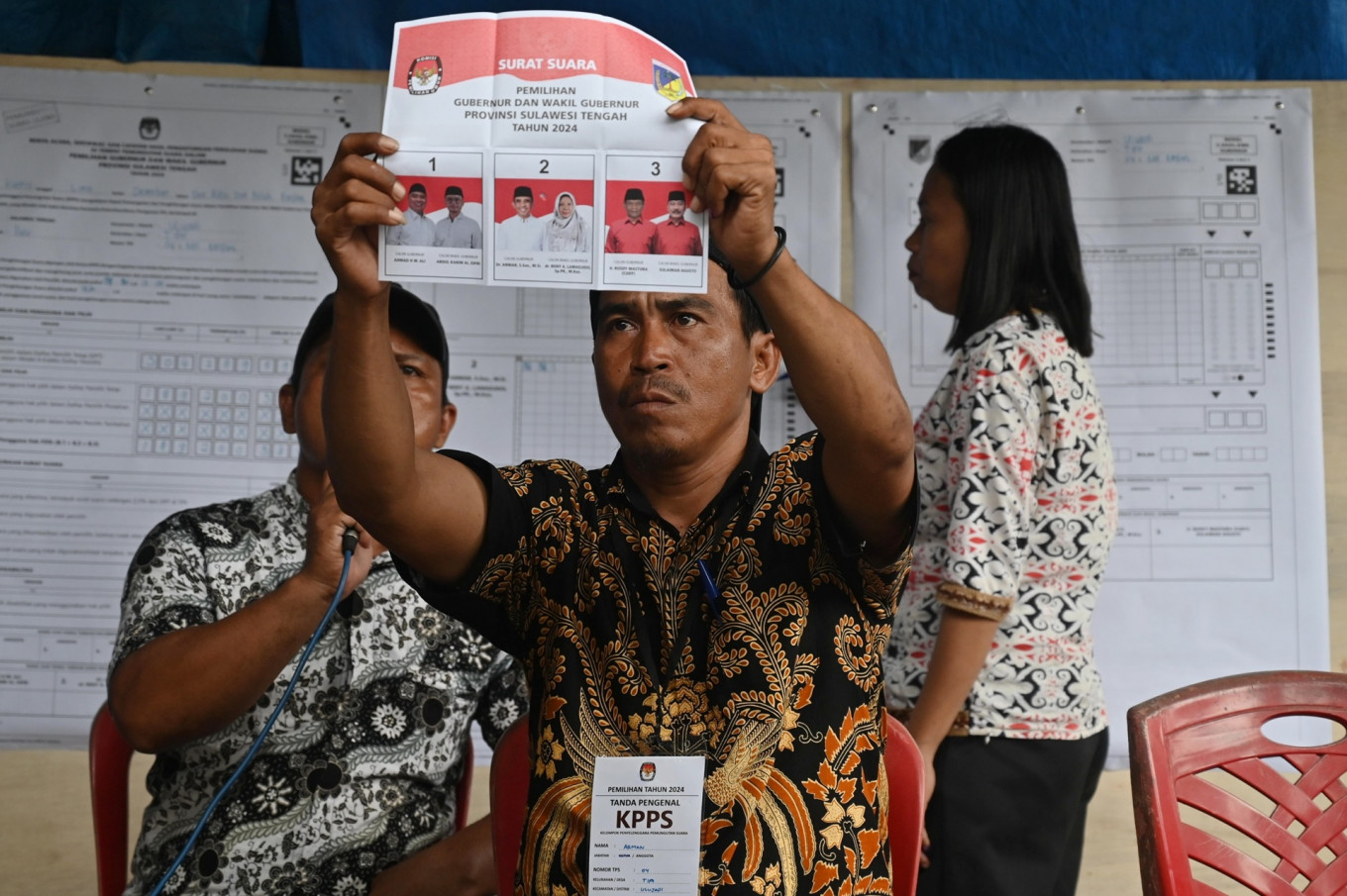 A local poll administrator (KPPS) shows a ballot to witnesses on Dec. 5, 2024, during the vote tabulation of the revote for the Central Sulawesi gubernatorial election in Palu. (Antara/Basri Marzuki)
P
olitical parties behind President Prabowo Subianto’s administration are open to his suggestion of scrapping the current system of direct elections for regional heads, despite strong opposition from pro-democracy advocates who warned that it would undercut democratic accountability and risk reversing hard-won reforms.
Prabowo has reignited debate over how the country chooses governors, mayors and regents after he, in a Golkar Party anniversary event earlier this month, told leaders of coalition parties to “be bold” in considering ditching direct regional head elections.
Returning to the old indirect polling in place during the authoritarian New Order regime, when governors, regents and mayors were selected by regional legislatures (DPRDs), would cut wasteful spending and curb vote buying, according to the President.
His suggestion came ahead of deliberations on amendment to election laws in the House of Representatives next year, with lawmakers planning to introduce sweeping changes to regional, legislative and presidential elections.
Most political parties in the government-controlled House signaled their willingness to revisit the current direct regional elections, citing their shared concerns over the financial burden the system places on both the government and the candidates, as well as its role in fostering vote-buying.
National Awakening Party (PKB) politician Muhammad Khozin told The Jakarta Post that his party was open to shifting from the current direct regional elections, arguing that indirect elections could preserve democratic principles while reducing political cost.

While acknowledging that every system has its pros and cons, Khozin said his party favored “a system with fewer drawbacks”, asserting that indirect polling would be less prone to vote-buying than direct elections.