The Jakarta Post
Please Update your browser
Your browser is out of date, and may not be compatible with our website. A list of the most popular web browsers can be found below.
Just click on the icons to get to the download page.


Popular Reads
Top Results
No results found. Please check your search term and try again
Can't find what you're looking for?
View all search results
Popular Reads
Top Results
No results found. Please check your search term and try again
Can't find what you're looking for?
View all search resultsreformasi
Politics 1 year ago
PREMIUM
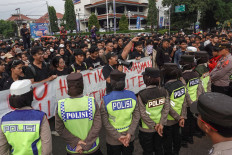
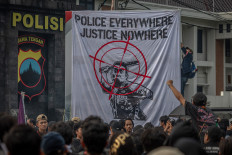
'RIP Reform': Democracy advocates sound alarm over return of New Order
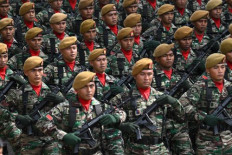
The Indonesian Military (TNI) law amendment, which has expanded military roles in the government, has raised concerns among civil groups who fear of the return of dwifungsi (dual function) of the armed forces, a critical pillar that had sustained Soeharto's New Order for more than three decades.
Politics 1 year ago
PREMIUM
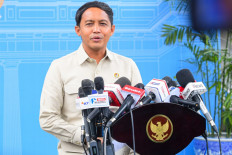
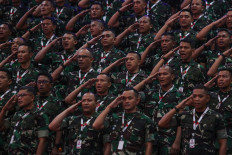
TNI Law revision raises ‘dwifungsi’ fears
President Prabowo Subianto’s decision to press forward with a revision to the 2004 Indonesian Military (TNI) Law has raised concerns about a possible return to the dwifungsi (dual function) system that prevailed in the New Order era, which granted the military significant influence over civilian affairs.
Academia 1 year ago
PREMIUM
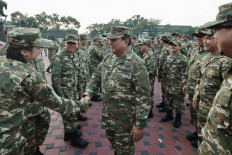
Sounding the alarm: Why the TNI is 'recruiting' senior officers for 200 civilian posts
A little over a quarter of a century ago, Indonesians were up in arms about the military's dominance in politics and government; today, the people are fed up with the civilian government and the police, and are looking at the military as if it was a panacea.
Academia 2 years ago
PREMIUM
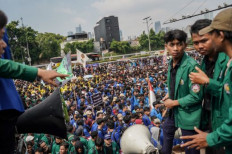
Idealism and the folly of youth in Indonesian politics and democracy
Once championing democracy, meritocracy and anticorruption, many young politicians have made a 180-degree turn and are now eating their words to justify the political practices they used to adamantly oppose.
Politics 2 years ago
PREMIUM
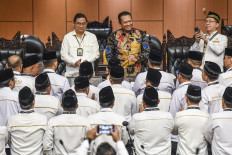
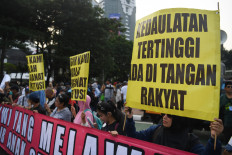
Reform undone: Activists lament shrinking civic space, unresolved rights abuse
Indonesia’s democracy has gone backward since Reform, pushing the democratic values students and the public fought for during the fall of the New Order in May 1998 increasingly out of reach, according to Amnesty International Indonesia executive director Usman Hamid.
Editor's Picks
Popular
- Much ado about asset forfeiture
- Mass poisonings cast doubt on free meals reforms
- The benefit of the doubt has expired
- New data rules could unlock cross-border data flows
- Prabowo sacks Purbaya, turns to familiar hand at Finance Ministry
- Children are no longer the priority, were they ever?
- Indonesia, China eye cooperation to boost 3 million homes program
- Prabowo replaces Finance Minister Purbaya with his deputy
- Six killed, 129 missing after ferry capsizes off Java
- SOE dividend grab tests Danantara’s mandate


