The Jakarta Post
Please Update your browser
Your browser is out of date, and may not be compatible with our website. A list of the most popular web browsers can be found below.
Just click on the icons to get to the download page.


Popular Reads
Top Results
No results found. Please check your search term and try again
Can't find what you're looking for?
View all search results
Popular Reads
Top Results
No results found. Please check your search term and try again
Can't find what you're looking for?
View all search resultsvulnerabilities
Opinion 1 month ago
PREMIUM
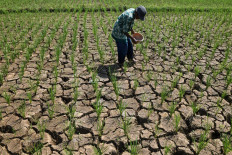
Analysis: Drought, rising prices expose vulnerabilities in rice supply
Rice prices have trended upward for the past seven months despite the Prabowo Subianto administration’s claim that Indonesia has achieved rice self-sufficiency. The price increase has occurred even as rice stocks held by the State Logistics Agency (Bulog) remain high. The trend could intensify as an El Niño-induced dry season brings worsening drought conditions, potentially disrupting harvests and putting further upward pressure on rice prices.
Opinion 1 month ago
PREMIUM
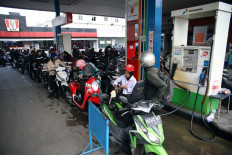
Analysis: Fraud exposes vulnerabilities in Sumatra's fuel distribution
The arrest of 142 suspects by South Sumatra Police has brought renewed attention to what authorities describe as one of the largest fuel embezzlement cases in the country’s recent history. Between January and July 2026, police uncovered 96 cases involving the diversion and illegal trade of subsidized fuel, with an estimated 1.4 million liters of fuel allegedly siphoned from the official distribution system.

Opinion 1 month ago
PREMIUM
Analysis: Investment inflows hide deeper vulnerabilities
Indonesia's investment figures are improving, with investment realization exceeding Rp 1,000 trillion (US$57 billion) and portfolio inflows rebounding strongly in the first half of 2026. But the recovery has yet to dispel investor concerns. Policy uncertainty, governance issues and continued pressure on the rupiah suggest that confidence in Indonesia's long-term investment climate remains fragile.

Academia 2 months ago
PREMIUM
Policy discipline needed to tackle economic pressure points
Global central banks are facing a high-stakes balancing act as surging public debt, supply shocks and AI-driven market speculation threaten long-term price stability. To prevent economic contagion, policymakers must take decisive action before these deep financial fault lines reach a critical tipping point.
Academia 3 months ago
PREMIUM
The 'missing middle': Jakarta’s challenge ahead of its quincentenary
As Jakarta approaches its 500th anniversary, glowing infrastructure and plummeting poverty rates mask a fragile socioeconomic reality. The city's future will not be defined by its skyscrapers but by whether it can rescue its massive yet vulnerable aspiring middle class from permanent economic insecurity.
Academia 3 months ago
Sustainability rhetoric vs. economic reality: Can we square the circle?
Global economic shocks and climate volatility are no longer temporary disruptions; they are structural crises deeply embedded in our strained natural systems. For resource-rich nations like Indonesia, surviving the next shock requires rewriting the global incentive structure to value nature on the national balance sheet and fairly compensate the smallholders on the front lines.

Academia 5 months ago
PREMIUM
When law meets creativity: The crisis of valuing creative work
When auditors valued creative concept development and editing at "zero rupiah," they didn't just miscalculate a budget—they criminalized the very nature of artistic work. Amsal Sitepu’s acquittal must now spark a systemic overhaul of how the state values the intangible assets of the creative economy.
Editor's Picks
Popular
- Batam residents protest data centers amid water crisis
- Recentralization concerns in fiscal, education heighten
- Popular discontent is justified. Authoritarianism is not the answer
- Safeguarding Indonesia's AI future
- Govt under pressure as 3 million home drive hits cracks
- Prabowo’s universal free education plan raises feasibility questions
- Free meals marketplace raises supply chain concerns
- The Jakarta Post: Indonesia & World Breaking News
- The Jakarta Post: Indonesia & World Breaking News
- Rocking the boat in a storm


