The Jakarta Post
Please Update your browser
Your browser is out of date, and may not be compatible with our website. A list of the most popular web browsers can be found below.
Just click on the icons to get to the download page.


Popular Reads
Top Results
No results found. Please check your search term and try again
Can't find what you're looking for?
View all search results
Popular Reads
Top Results
No results found. Please check your search term and try again
Can't find what you're looking for?
View all search resultsPresident Masoud Pezeshkian's apology to Gulf states strains Iran's leadership
Iran President Masoud Pezeshkian's apology to Gulf states for a week-long blitz of their territory - and his pledge to rein in such attacks - quickly prompted pushback from hardliners in the Revolutionary Guards and clerical elite, forcing him into a partial climbdown.
Change text size
Gift Premium Articles
to Anyone
Share the best of The Jakarta Post with friends, family, or colleagues. As a subscriber, you can gift 3 to 5 articles each month that anyone can read—no subscription needed!
 Set as preferred source
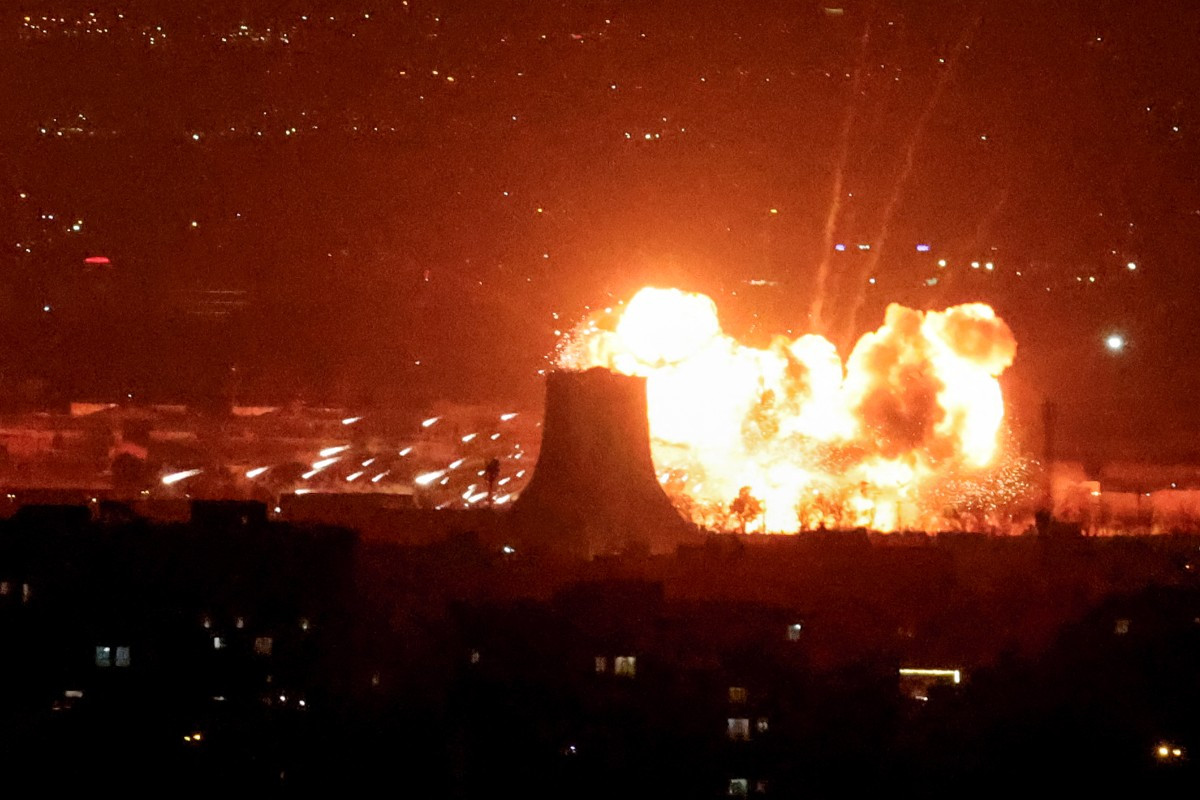 An explosion erupts following strikes near Azadi Tower close to Mehrabad International Airport in Tehran on March 7, 2026. (AFP/Atta Kenare)
I
ran's hierarchy is showing signs of fracturing over a war its leaders see as existential, with angry divisions between hardliners and more pragmatic factions laid bare by a row over President Masoud Pezeshkian's promise not to strike Gulf states.
Fissures within Iran's ruling elite were long suppressed under the iron rule of Supreme Leader Ayatollah Ali Khamenei, but his killing a week ago has allowed them to spill out into the open as US and Israeli strikes pile pressure on Tehran.
The unrelenting bombardment mortally imperils the Islamic Republic and has prompted its fiercest acolytes, the Revolutionary Guards, to seize a bigger role in strategy despite a decapitation campaign that has killed many top commanders.
Sources close to Iran's leadership, speaking from inside the country, told Reuters the strains were starting to show among leading figures still alive after a series of killings in the US-Israeli strikes. They spoke anonymously due to the sensitivity of the matter.
In a sign of the growing stresses to the system, clerics are accelerating the appointment of a new supreme leader with a decision possible on Sunday - though it is far from clear if Khamenei's successor will wield enough authority to stamp out factional disputes.
While his son, Mojtaba Khamenei, is seen as a frontrunner backed by the Guards and his father's powerful office, he is untested, junior to most of Iran's senior ayatollahs, and has alienated moderates within the system.
Other potential candidates could struggle to uphold the unquestioning obedience of the Guards required to maintain discipline within the system.
"Wartime tends to clarify power structures, and in this case the decisive voice is not that of the civilian leadership but of the IRGC," said Alex Vatanka, a senior fellow at the Middle East Institute, using an abbreviation of the Islamic Revolutionary Guard Corps.
Pezeshkian's apology to Gulf states for a week-long blitz of their territory - and his pledge to rein in such attacks - quickly prompted pushback from hardliners in the Revolutionary Guards and clerical elite, forcing him into a partial climbdown.
In one of the most open criticisms of Pezeshkian - and a sign of internal division, hardline cleric and lawmaker Hamid Rasai addressed the president on social media, saying: "your stance was unprofessional, weak and unacceptable."
When the president later repeated his earlier statement on social media, he left out the apology that had so angered the Guards and other hardliners - an embarrassing retreat.
To be sure, all senior figures within the hierarchy are steadfast in their commitment to defending the Islamic Republic and its revolutionary theocracy from U.S. and Israeli attacks, but there are clear splits over their strategic approach.
Iran's leadership has sometimes played up differences between hardliners and moderates as a tactic in negotiations with the West, but the dispute over Pezeshkian's statement on Saturday revealed genuine divisions, two senior sources said.
A hardliner close to Khamenei's office, which remains a central node in the hierarchy, told Reuters that Pezeshkian's comments had angered many senior commanders in the Guards.
Another senior Iranian source, a moderate former official, said nobody would be able to fill Khamenei's shoes, describing the late leader as a formidable strategist who had led Iran through many difficult periods.
With anxiety increasing in Iran's top ranks, senior ayatollahs began to publicly urge that the clerical body responsible for appointing a supreme leader accelerate its work.
"It should expedite the process so that it leads to the disappointment of the enemy and the preservation of the unity and solidarity of the nation," Ayatollah Nouri Hamedani said in a statement carried by the semi-official Fars News Agency.
STRAINS SHOWING EVEN IN TOP LEADERSHIP BODY
In Iran's unusual system, an elected president, government and parliament are subservient to a clerically appointed ayatollah who wields ultimate authority as supreme leader and personally oversees the Revolutionary Guards and other powerful bodies of state.
As leader for 36 years, Khamenei often played hardline and moderate factions within the ruling system against each other while retaining the ultimate say, allowing them to voice disagreements so long as they bowed to his writ.
When he died, leadership formally passed to a constitutionally mandated interim council that included Pezeshkian, the clerical head of the judiciary and another cleric from a hardline body called the Guardian Council.
In Khamenei's absence, strains are showing even inside that tight body, with the judiciary chief, noted hardliner Ayatollah Gholamhossein Mohseni-Ejei, saying some regional states had allowed their territory to be used for attacks.
"Heavy strikes on those targets will continue," he said, contradicting Pezeshkian's more conciliatory statement.
Still, even though Khamenei did sometimes allow moderate or reformist voices to carry the day in disputes with hardliners, they were usually overruled when the system seemed to come under threat.