The Jakarta Post
Please Update your browser
Your browser is out of date, and may not be compatible with our website. A list of the most popular web browsers can be found below.
Just click on the icons to get to the download page.


Popular Reads
Top Results
No results found. Please check your search term and try again
Can't find what you're looking for?
View all search results
Popular Reads
Top Results
No results found. Please check your search term and try again
Can't find what you're looking for?
View all search resultsVenezuela quake toll tops 900, search intensifies for hundreds trapped
Frustration mounted over the uneven pace of relief in some of the hardest-hit areas including La Guaira state, where residents and volunteers were still digging through rubble by hand amid shortages of heavy equipment and limited official presence.
Change text size
Gift Premium Articles
to Anyone
Share the best of The Jakarta Post with friends, family, or colleagues. As a subscriber, you can gift 3 to 5 articles each month that anyone can read—no subscription needed!
 Set as preferred source
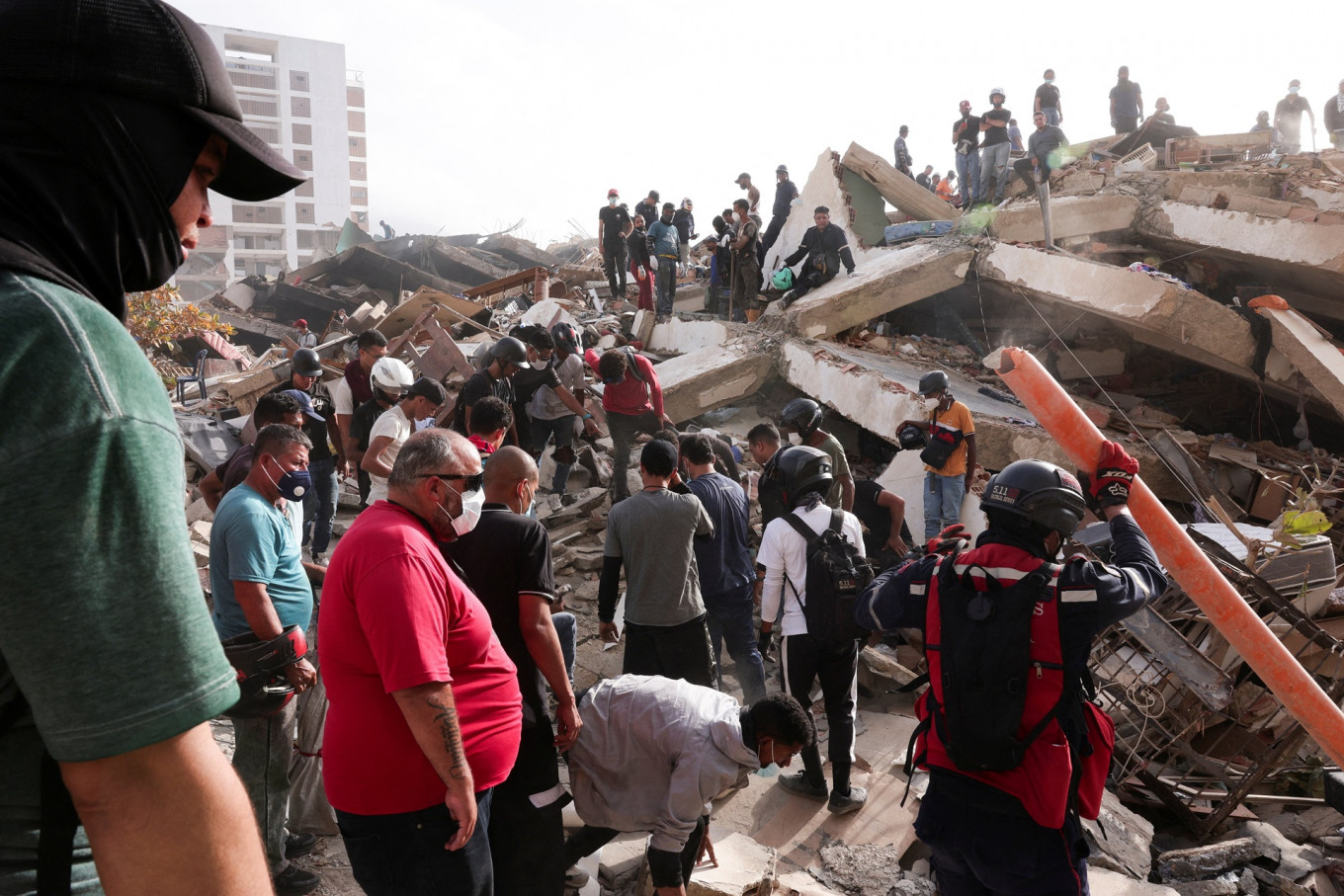 Firefighters and volunteers work amidst the rubble of a collapsed building in La Guaira, Venezuela on June 26, 2026 after earthquakes hit the country. (Reuters/Gaby Oraa)
D
esperate Venezuelans and rescue teams raced to find survivors on Friday as the death toll from twin earthquakes rose above 900 with foreign crews and aid only beginning to reach devastated areas nearly two days after the quakes.
The government said 172 people remained trapped, 920 were dead and 3,360 injured after the quakes devastated parts of Caracas and surrounding areas on Wednesday evening. More than 50,000 people were reported missing.
The ground shook once again Friday afternoon, a weaker 4.9 temblor that was felt in the capital Caracas and nearby Maracay.
Frustration mounted over the uneven pace of relief in some of the hardest-hit areas including La Guaira state, where residents and volunteers were still digging through rubble by hand amid shortages of heavy equipment and limited official presence.
Jennifer Palacios, 25, said her 6-year-old son and five other relatives remained buried in La Guaira city's eight-tower Hugo Chavez housing complex.
"It's the community that has managed to get people out alive," she said. "We need them to bring cranes to move the slabs. There are still people trapped."
The disaster could have political consequences for interim Venezuelan President Delcy Rodriguez, who has sought to portray herself as an agent of political change even though she served as vice president to the ousted Nicolas Maduro.
A United Nations report estimated direct damage from the two quakes, magnitude 7.2 and 7.5, at about $6.7 billion. The second quake was Venezuela's most powerful in more than a century.
Reuters witnesses traveled along highways cracked by the quakes and passed dozens of buildings reduced to broken concrete and twisted metal. Some ruins were spray-painted with building names to help rescuers identify locations.
Volunteers ferried supplies on motorcycles from Caracas and Valencia.
Despite initially thanking the volunteers, Rodriguez and other officials later told people to stay away from La Guaira city because clogged roads were making rescue operations more difficult. They announced roads would be closed starting at 8 p.m. local time except to official and registered response teams.
Lawyer Ricardo Trias, 73, was trying to obtain a death certificate for his godson Armando Lopez, 54, whose body was pulled from the rubble of his building in the coastal town of Caraballeda on Thursday night and remained at the site.
"We want them to give us the body [...] we can't take it and here it will rot," said Trias. "No forensic authority has come."
Interim government tested
Reuters witnesses saw people in Catia la Mar, a town in La Guaira, removing toilet paper, cooking oil, bread and other items from a damaged store.
Police, the national guard and other officials did not intervene in the looting, according to Reuters witnesses.
Rodriguez, who took power after the United States captured her predecessor in January, has pledged a major relief deployment.
Venezuela's oil production was not affected by the quakes, Oil Minister Paula Henao said in a radio interview on Friday, adding that fuel distribution would be guaranteed.
Oil executives and workers said the sector had avoided major infrastructure damage.
Foreign rescue teams, including some from countries long at odds with Venezuela, began arriving late on Thursday and into Friday.
Rodriguez spoke by phone with United States President Donald Trump and Secretary of State Marco Rubio on Friday. Earlier she and other officials met with the US military's Northern Command and disaster experts.
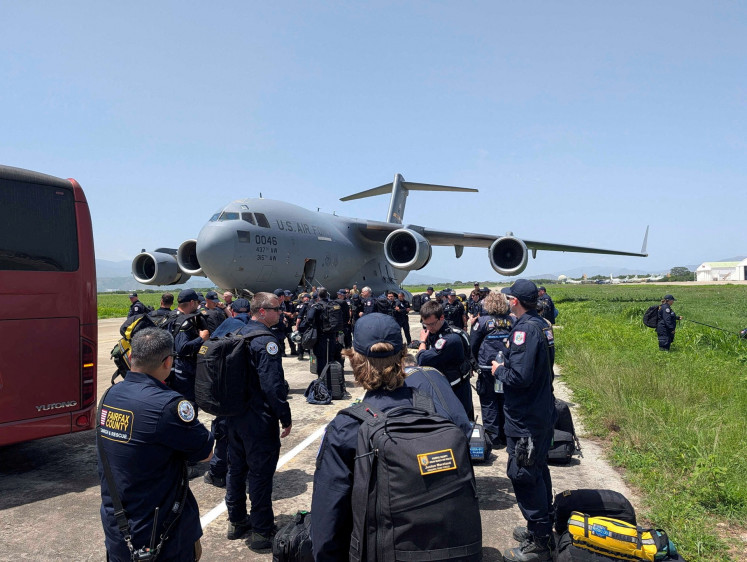
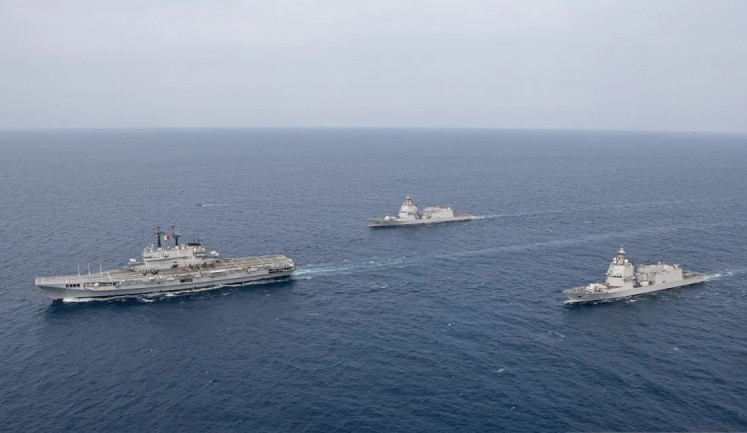
The US said it was mobilizing $150 million in aid and easing sanctions while the U.S. military dispatched two ships and said helicopters and aircraft would support rescue efforts.
In the beachside neighborhood of Los Corales, 50 members of El Salvador's rescue team were assessing the ruins of three 10-story buildings using drones, heat scanners and dogs to locate survivors.
"People have told us they can hear people. They call them on the phone and they answer, and they can hear people screaming and calling," said Roberto Gavidia, the head of the team.
Salvadoran President Nayib Bukele shared a video on X of the team preparing to enter one building, saying they had discovered a 15-year-old trapped with her pet on the ninth floor and were working to free them.
Nation under strain
The quakes struck a nation already weakened by decades of economic and political turmoil that has impoverished residents, driven millions abroad and weakened infrastructure.
"My building is uninhabitable and now I have nothing. It's just me and my son, and I have no family in the country," said Suhayl Sarquiz, 50, who lost her job a few months ago.
The US Geological Survey estimated more than 10,000 deaths were possible, which would make the disaster one of Latin America's deadliest earthquakes of the last century.
Nearly 7 million people could be affected, the UN's migration agency said, as it supplied emergency shelter and other relief items.