The Jakarta Post
Please Update your browser
Your browser is out of date, and may not be compatible with our website. A list of the most popular web browsers can be found below.
Just click on the icons to get to the download page.


Popular Reads
Top Results
No results found. Please check your search term and try again
Can't find what you're looking for?
View all search results
Popular Reads
Top Results
No results found. Please check your search term and try again
Can't find what you're looking for?
View all search resultsIndonesian officials cancel participation at SCS tribunal commemorative conference
The Permanent Court of Arbitration (PCA) ruled in favor of the Philippines on July 12, 2016, clarifying that China’s claim over maritime areas within the so-called “nine-dash line” have no lawful effect, unless stipulated by the United Nations Convention on the Law of the Sea (UNCLOS). China, as well as Taiwan, rejected the ruling.
Change text size
Gift Premium Articles
to Anyone
Share the best of The Jakarta Post with friends, family, or colleagues. As a subscriber, you can gift 3 to 5 articles each month that anyone can read—no subscription needed!
 Set as preferred source
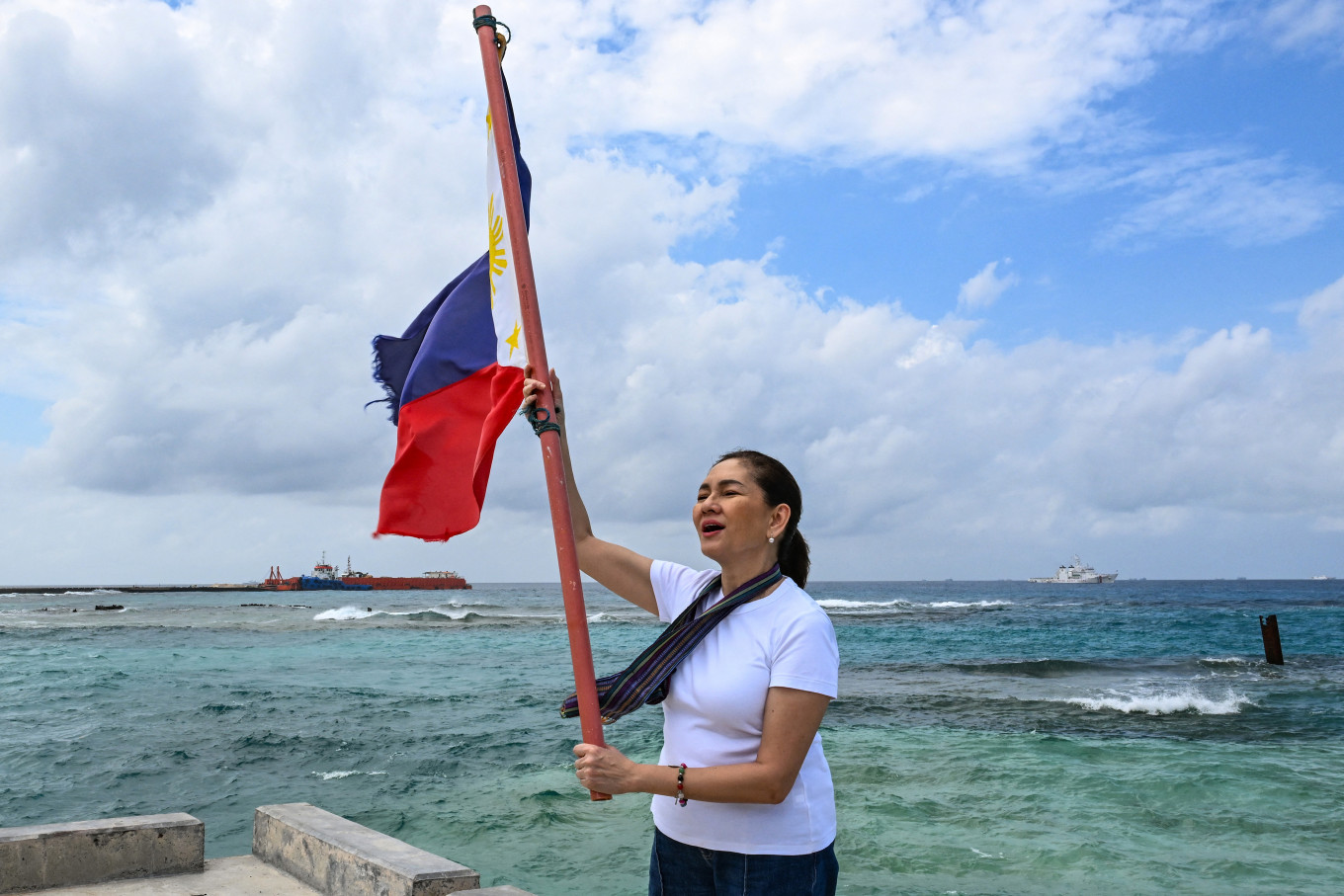 Philippine Senator Risa Hontiveros raises a Philippine flag on Feb. 21, 2026, on Thitu Island in the South China Sea. (AFP/Jam Sta Rosa)
I
ndonesian government officials pulled out of a conference marking the 10th anniversary of an international tribunal ruling on the South China Sea just two days before the event started on Monday in Jakarta.
The Permanent Court of Arbitration (PCA) ruled in favor of the Philippines on July 12, 2016, clarifying that China’s claim over maritime areas within the so-called “nine-dash line” have no lawful effect, unless stipulated by the United Nations Convention on the Law of the Sea (UNCLOS). China, as well as Taiwan, rejected the ruling.
“From the early stages of preparing this conference we received full and constructive support from the Indonesian Foreign Ministry and from a number of relevant ministries and government institutions,” Indonesian co-organizer Arie Afriansyah from the University of Indonesia’s (UI) School of Law told conference participants in his welcoming remarks.
“Several Indonesian government representatives had been scheduled to deliver keynote remarks and participate as speakers on the panel. Unfortunately, however, two days before the conference, we were informed that the support had been withdrawn.”
Speaking at the opening of the Commemorative Conference of the 10th Anniversary of the South China Sea Arbitral Award held in Jakarta on Monday and Tuesday, he said that the government institutions had their own procedures, responsibilities and considerations.
“This situation is concerning, not only because the program required adjustments at very short notice, but also because such developments may inadvertently discourage open academic discussion,” he said.
“This may be perceived as placing undue pressure on scholarly engagement and could affect the freedoms of opinion, expression and academic exchange that should be currently safeguarded in a democratic society, governed by the rule of law.