The Jakarta Post
Please Update your browser
Your browser is out of date, and may not be compatible with our website. A list of the most popular web browsers can be found below.
Just click on the icons to get to the download page.


Popular Reads
Top Results
No results found. Please check your search term and try again
Can't find what you're looking for?
View all search results
Popular Reads
Top Results
No results found. Please check your search term and try again
Can't find what you're looking for?
View all search resultsTrial of potential Ebola antiviral under way, says WHO
Change text size
Gift Premium Articles
to Anyone
Share the best of The Jakarta Post with friends, family, or colleagues. As a subscriber, you can gift 3 to 5 articles each month that anyone can read—no subscription needed!
 Set as preferred source
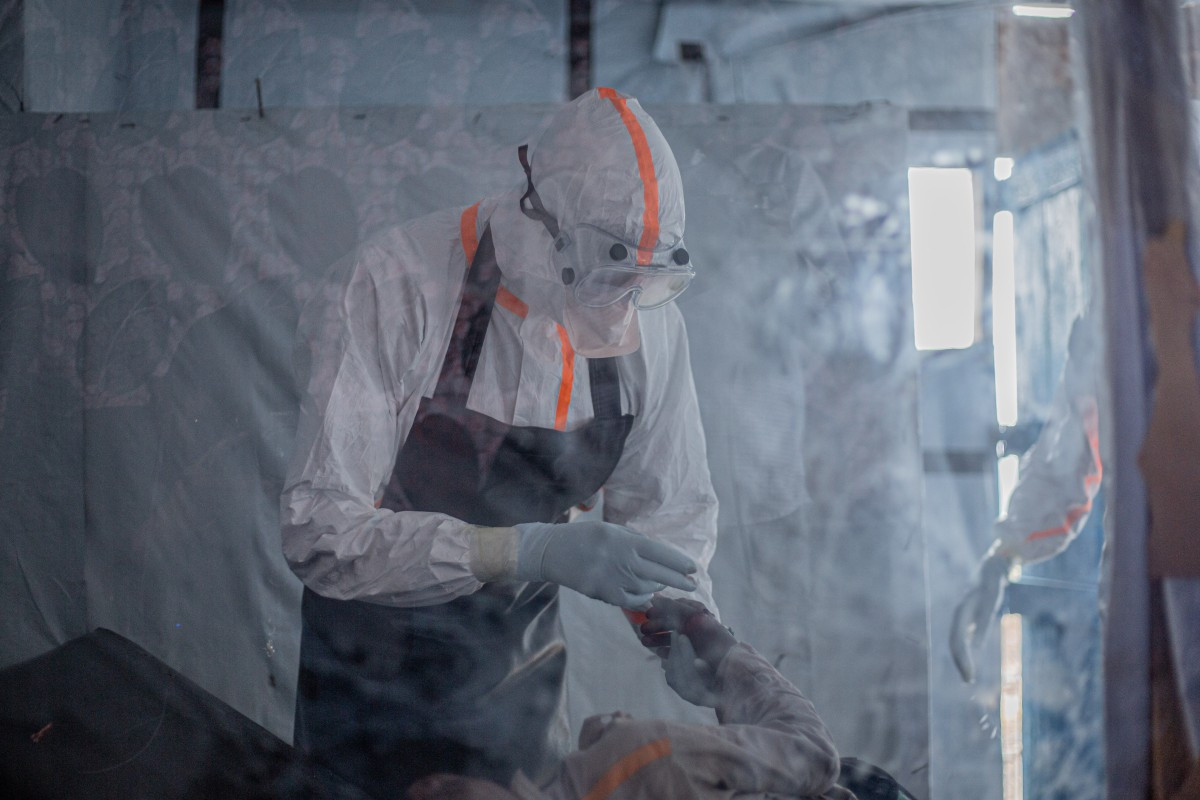 A doctor provides care to a patient with Ebola virus disease at the Rwampara Ebola Treatment Center in Bunia, Ituri, in the east of the Democratic Republic of Congo on July 13, 2026. (AFP/Benediction Murhabazi)
T
he first clinical trial is under way of an antiviral drug's effectiveness in people exposed to the deadly Ebola strain spreading in the Democratic Republic of Congo, the WHO said Tuesday.
The trial, called EBO-PEP, aims to assess the effectiveness of the antiviral obeldesivir in post-exposure prophylaxis, for people who have been in contact with confirmed Bundibugyo cases.
The experimental drug, which is administered orally and was developed by the US pharma firm Gilead Sciences, has shown efficacy in pre-clinical models against viruses in the wider family of filoviruses that cause hemorrhagic fevers.
Clinical trials mark the stage where a promising drug is tested on humans.
World Health Organization director-general Tedros Adhanom Ghebreyesus confirmed the launch of the trial in a post on X.
"Every breakthrough begins with hope," he wrote.
"If effective among high-risk contacts after exposure, this could mark a major step forward" in preventing contacts from developing disease, he added.
Daily monitoring
There are no approved vaccines or treatments for Bundibugyo.
According to the DR Congo's latest official figures, the rare Ebola species has infected more than 1,960 people and killed over 700.
The outbreak was declared on May 15 after several deaths in Ituri, a mineral-rich northeastern province plagued by armed groups.
Cases of Ebola, which spreads through close contact and infected bodily fluids, have been found in five DRC provinces, and in neighboring Uganda.
But more than 90 percent of cases are still being detected in Ituri.
The first patients for the obeldesivir trial are being recruited at PEP centers set up adjacent to the Ebola treatment centres operated by The Alliance for International Medical Action (ALIMA) NGO in Bunia and Rwampara, in Ituri.
It aims to recruit nearly 1,000 participants aged 12 and over who have been in direct contact with a confirmed case within the preceding five days but who are not showing symptoms.
Each participant will be monitored daily for 21 days, with a final visit at 42 days.
Fears of wider spread
Earlier Tuesday, the WHO said the Bundibugyo outbreak in the DRC could be at least two to four times bigger than official figures suggest.
Returning from Bunia, WHO emergencies chief Chikwe Ihekweazu told reporters in Geneva that the outbreak "continues to outpace the response efforts".
He said 80 percent of new cases were outside the lists of known contacts of cases, and were "from unknown chains of transmission" – and voiced alarm that many newly reported cases are people who died without ever reaching a health facility.
The trial of two potential treatments for patients struck with Bundibugyo began in Ituri on July 2.
It is evaluating the monoclonal antibody MBP134 and the antiviral drug remdesivir, alone and in combination.
The trial will take months and could even run into next year, and might require more than 1,000 patients to produce definitive answers.