The Jakarta Post
Please Update your browser
Your browser is out of date, and may not be compatible with our website. A list of the most popular web browsers can be found below.
Just click on the icons to get to the download page.


Popular Reads
Top Results
No results found. Please check your search term and try again
Can't find what you're looking for?
View all search results
Popular Reads
Top Results
No results found. Please check your search term and try again
Can't find what you're looking for?
View all search resultsUK forecasts 'biggest' El Nino will smash records, spark hottest year
If the forecast is accurate, then 2026 "will far exceed our recent experience of El Niño and its worldwide climate influences", according to the physicist with the Britain's weather agency.
Change text size
Gift Premium Articles
to Anyone
Share the best of The Jakarta Post with friends, family, or colleagues. As a subscriber, you can gift 3 to 5 articles each month that anyone can read—no subscription needed!
 Set as preferred source
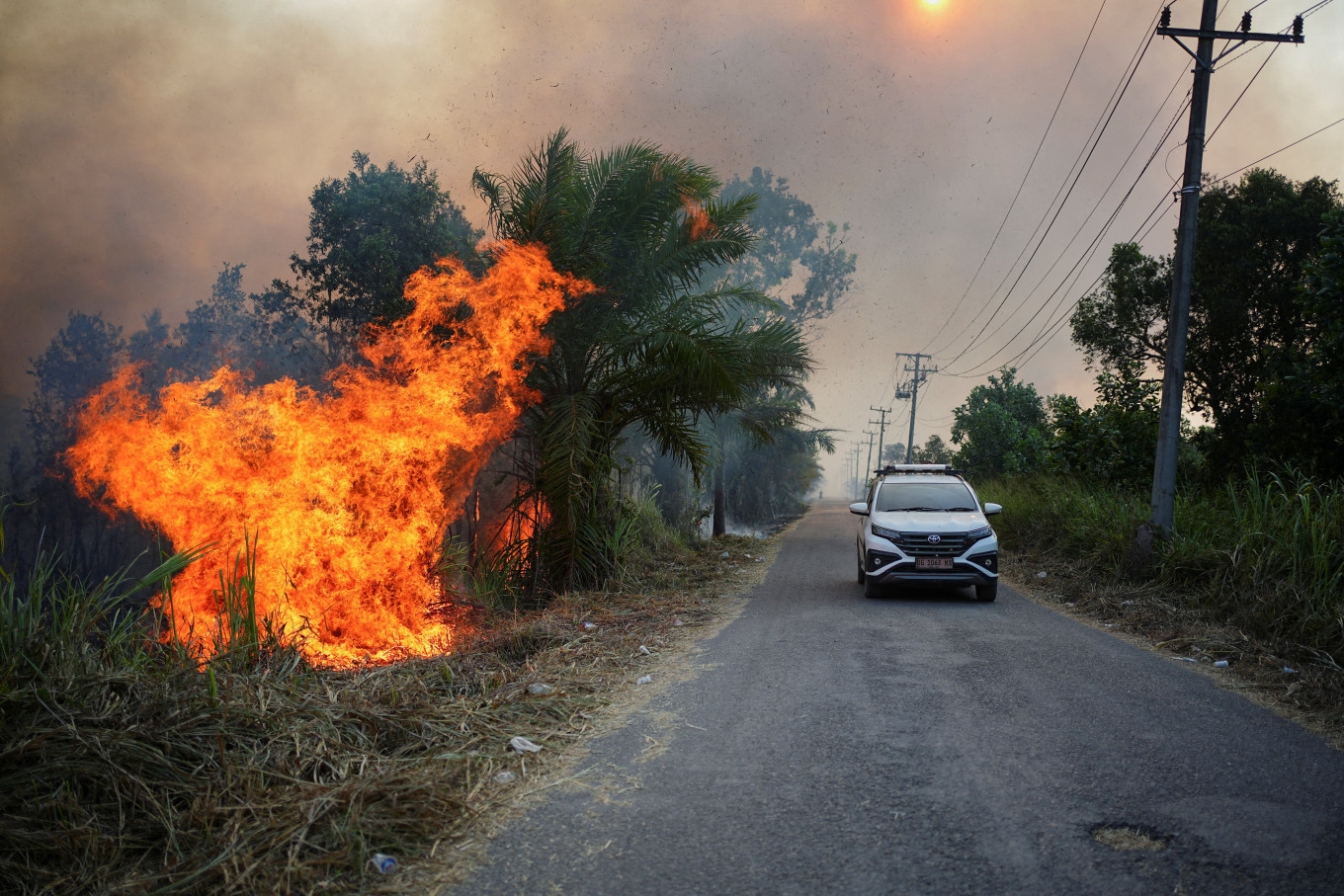 A car passes by next to flames as a wildfire burns in Rambutan village, Ogan Ilir regency, South Sumatra, on Aug.15, 2026. (REUTERS/Abriansyah Liberto)
T
his year's El Niño weather pattern will be the biggest in over a century and could make 2027 the hottest year globally, Britain's national weather agency predicted Friday.
An El Niño weather event happens when warming sea surface temperatures in the tropical eastern Pacific trigger worldwide changes in winds, atmospheric pressure and rainfall, as well as higher global temperatures overall.
Adam Scaife, head of long-range forecasting at the weather agency, told the BBC: "We are expecting the biggest El Niño for over a century, peaking at something over three degrees; that is unheard of in modern climate records."
This means Pacific water would heat up more than 3 degrees Celsius above the norm in the coming months.
El Niño occurs when water temperatures rise at least 0.5 degrees above the baseline. While it is part of a natural cycle, scientists agree climate change increases its impacts.
A record El Niño would be "adding to the stresses of climate change" following a summer of heatwaves across Europe, the Met Office said in a blog.
Temperatures in the Pacific region are currently running about 2.6 degrees above a rolling 30-year average, according to the Climate Brink dashboard based on data from the United States National Oceanic and Atmospheric Administration.
The dashboard also aggregates forecasts that put El Niño on course to peak at a 3.9 degrees anomaly this November, well above a 3 degrees anomaly detected in 2015.
"We should be clear that this is an unprecedented event," British scientist Scaife said in a Met Office blog.
If the forecast is accurate, then 2026 "will far exceed our recent experience of El Niño and its worldwide climate influences", said the physicist who specialises in climate modelling.
"I have never seen an El Niño signal this intense in our forecasts," he added, with even a 2C rise considered a "really big event".
El Niño typically results in drier conditions across southeast Asia, Australia, southern Africa, and northern Brazil, and wetter conditions in the Horn of Africa, the southern United States, Peru and Ecuador.
This year's anomalous warmth will have particularly strong effects throughout the Tropics, Scaife said.
Forecasters "expect really severe droughts in places like South America and the West Pacific", he added.
El Niño is already causing well below normal rainfall in India, the Met Office said.
The weather event is also expected to prompt "increased rainfall and storminess in the autumn here in the UK around November time", Scaife said. "These are not short-term weather forecasts. We're talking about really long-term, persistent conditions here."
2027 likely 'hottest ever'
Since El Niño events drive up the global average temperature, 2027 is now "very likely to replace 2024 as the warmest year on record", said Nick Dunstone, another Met Office scientist.
In 2024, global temperatures exceeded 1.5 degrees above the preindustrial period, the limit set by international commitments to curb global warming. Last year was the third hottest on record.
The British forecast for a very strong El Niño was in line with other forecasts: Carlo Buontempo, director of the European Union's Copernicus Climate Change Service, told AFP in January that 2026 could be "another record-breaking year".
Peruvian and Ecuadoran fishermen coined the term El Niño ("the boy" or "the Christ Child") in the 19th century for the arrival of an unusually warm ocean current off the coast that reduced their catch just before Christmas.
This phase of natural climate oscillation between high and low temperatures occurs every two to seven years, according to meteorologists.
There is an opposite cooling pattern called La Nina, and these have alternated in an irregular cycle that has lasted for thousands of years.