The Jakarta Post
Please Update your browser
Your browser is out of date, and may not be compatible with our website. A list of the most popular web browsers can be found below.
Just click on the icons to get to the download page.


Popular Reads
Top Results
No results found. Please check your search term and try again
Can't find what you're looking for?
View all search results
Popular Reads
Top Results
No results found. Please check your search term and try again
Can't find what you're looking for?
View all search resultsHottest June to August period on record for 1.3 billion people: Copernicus data
Fifty-two countries across all continents broke their seasonal temperature records for that period, AFP's analysis found.
Change text size
Gift Premium Articles
to Anyone
Share the best of The Jakarta Post with friends, family, or colleagues. As a subscriber, you can gift 3 to 5 articles each month that anyone can read—no subscription needed!
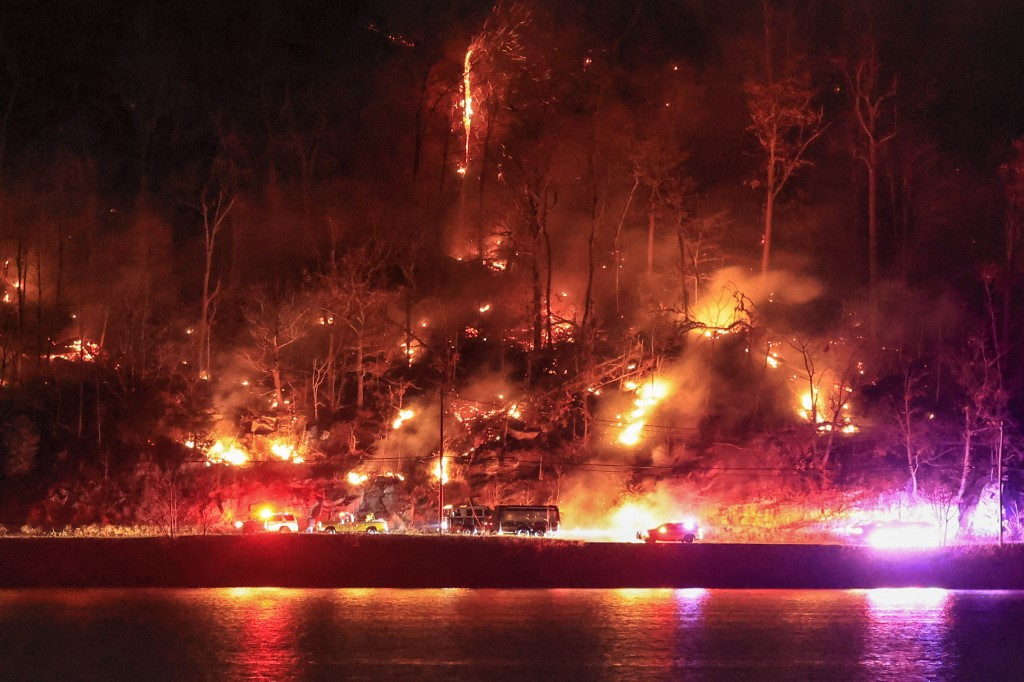 First responders arrive at an area burning by the Jennings Creek Wildfire on Nov. 13, 2024 in Greenwood Lake, New York. An extended drought has helped fuel the Jennings Creek Wildfire on the New York-New Jersey border, which has grown to 5,000 acres across both states. (AFP/Getty Images/Kena Bentacur)
S
ome 1.3 billion people worldwide this year experienced the hottest June to August period on record, according to an AFP analysis of meteorological data from the European Copernicus programme.
Fifty-two countries across all continents broke their seasonal temperature records for that period, AFP's analysis found.
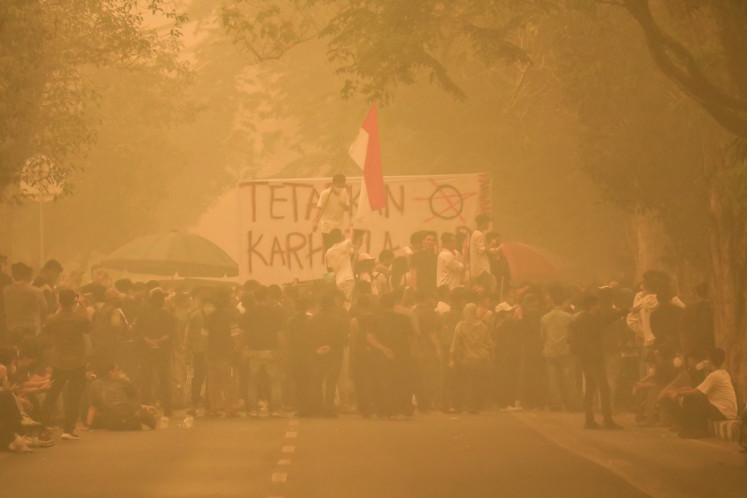
The extreme heat has taken many forms, from unprecedented heatwaves in Europe to devastating drought in Sudan and toxic smoke in Indonesia.
In some countries, such as France and Britain, record temperatures were announced by meteorological agencies, but many less well-equipped nations do not publish detailed climate data.
AFP's analysis provides a global overview of temperature records.
The Copernicus dataset incorporates measurements taken by satellites, ground stations, as well as modelling. It covers the entire world, with hourly data going back to 1970.
Early El Nino
The climate phenomenon El Nino, expected to peak later this year, has already contributed to extreme heat in Central America and northern parts of South America, where nine countries experienced their hottest June-August period on record this year.
The natural weather pattern that brings worldwide changes in winds, air pressure and rainfall patterns is expected be the strongest in four decades.
The Central American country of El Salvador was 2.5 degrees Celsius hotter than the 1991-2020 average, successively breaking monthly records from May to August.
In Panama, drought has led authorities to reduce ship transits through the vital Panama canal linking the Atlantic and Pacific oceans, through which five percent of global maritime trade passes.
El Nino is also contributing to an exceptional dry spell in Indonesia, where nearly 100 million people were hit with the hottest June-August spell on record.
The drought fuelled fires in tropical jungles on the islands of Borneo and Sumatra in August.
Thick plumes of smoke causing respiratory problems spread to neighbouring Singapore, the Philippines and Malaysia, where schools were forced to close.
More than 35,000 deaths in Europe
Western and southern Europe broke numerous heat records throughout the summer.
Eleven countries broke their average summer temperature records.
At least 35,000 excess deaths or deaths directly linked to the heat have been recorded, according to an AFP estimate.
The tally is based on health reports from mid-June to the end of August in eight countries: Germany, England, Austria, Belgium, Spain, France, the Netherlands and Portugal.
Nile runs low -
Over a third of people experiencing the hottest northern summer months on record were in Africa, particularly in the Sahel and areas south of it.
Eighteen African countries broke their seasonal records for the June-August period, from Mauritania and Sierra Leone in the west to Eritrea and Ethiopia in the east.
Several countries hit by the record heat, such as Burkina Faso and Mali, are particularly vulnerable to rising temperatures as they are already grappling with armed conflicts and severe poverty.
In Uganda and Sudan, temperatures exceeded the 1991-2020 averages by more than 2 degrees Celcius, which is rare at these latitudes.
The Nile river is at an abnormally low level in war-torn Sudan, which is already facing the world's worst food crisis.
El Nino has delayed the arrival of essential rains for agriculture, leaving the country's farmland uncultivated.
Other parts of the world that also experienced record temperatures between June and August included Uzbekistan, India's west coast, the Melbourne and Canberra regions of Australia, and the US states of Utah and Colorado.