The Jakarta Post
Please Update your browser
Your browser is out of date, and may not be compatible with our website. A list of the most popular web browsers can be found below.
Just click on the icons to get to the download page.


Popular Reads
Top Results
No results found. Please check your search term and try again
Can't find what you're looking for?
View all search results
Popular Reads
Top Results
No results found. Please check your search term and try again
Can't find what you're looking for?
View all search resultsChina, Russia, India seek economic cooperation at BRICS
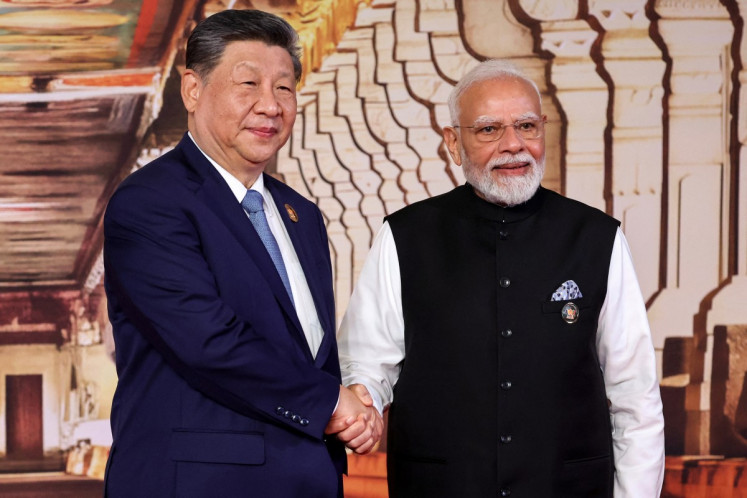
Indian Prime Minister Narendra Modi called for "cooperation" within the bloc, which he has said represents "50 percent of the world's population, 40 percent of global GDP and more than 25 percent of global trade".
Change text size
Gift Premium Articles
to Anyone
Share the best of The Jakarta Post with friends, family, or colleagues. As a subscriber, you can gift 3 to 5 articles each month that anyone can read—no subscription needed!
 Set as preferred source
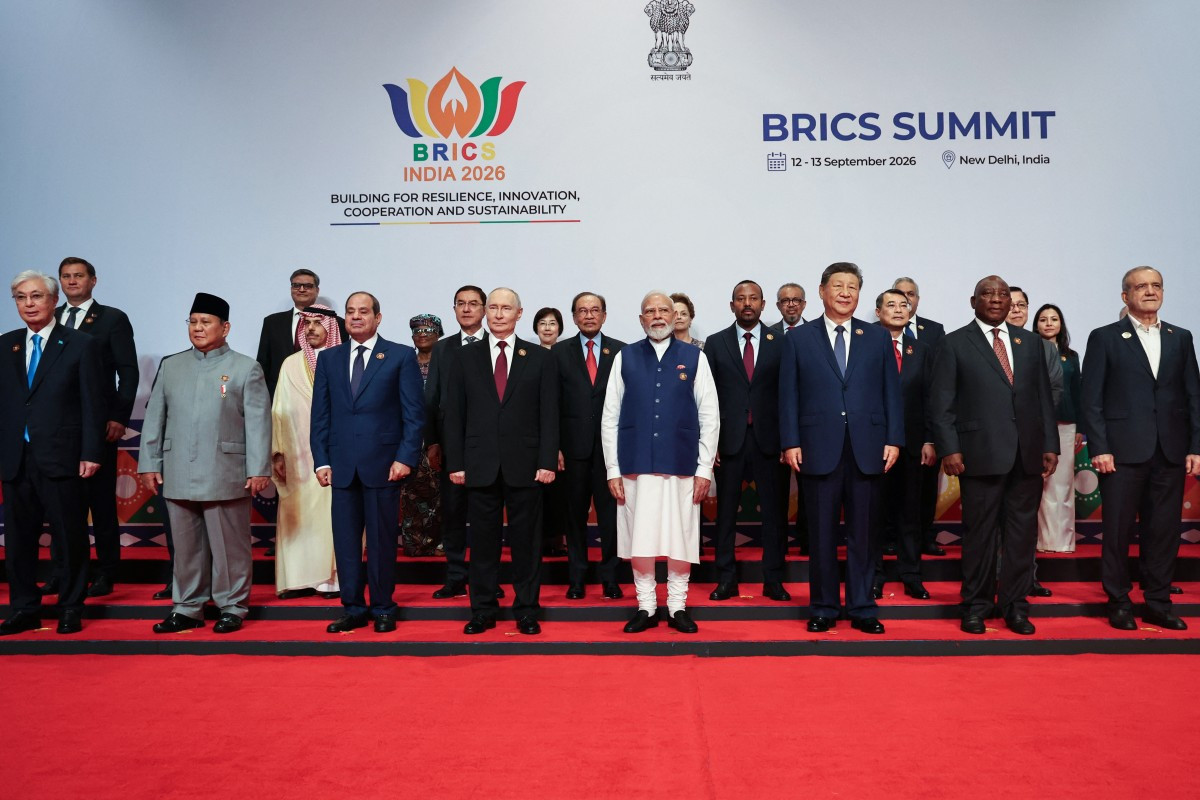 In this pool photograph distributed by the Russian state agency Sputnik, leaders of participating countries gather for a family photograph during the 18th BRICS Summit in New Delhi on September 13, 2026. (AFP/Sputnik)
B
RICS leaders including China, Russia and India entered a second day of talks in New Delhi on Sunday, discussing "inclusive global growth", after reaching rare agreement calling for calm in the Middle East.
Indian Prime Minister Narendra Modi called for "cooperation" within the bloc, which he has said represents "50 percent of the world's population, 40 percent of global GDP and more than 25 percent of global trade".
"The power of BRICS lies in our diversity and cooperation," Modi told leaders, including Chinese President Xi Jinping and Russian President Vladimir Putin, on the final day of talks.
BRICS was created in 2009 as a forum for major emerging economies seeking greater influence in institutions dominated by Western powers. The group is seeking to bolster its global influence and address conflict, trade turbulence and energy security.
"We have tried to push inclusive global growth," Modi said.
"We may be rooted in different realities, but together we rise through cooperation and blossom for humanity," he said.
On Saturday, Iran and the United Arab Emirates signed up to a joint statement from the BRICS group of nations that called for restraint in the Middle East war on Saturday, in what was seen as a sign of diplomatic progress between the countries divided by the war.
Iranian President Masoud Pezeshkian also met the Crown Prince of Abu Dhabi on the sidelines of the first day of the New Delhi summit, in the countries' highest-level meeting since the start of the conflict.
The two leaders discussed regional and international issues, de-escalation, stability, and efforts to advance regional peace and development, the Abu Dhabi media office said on X, without referring to any resolution to the discussions.
The BRICS summit is a test of the diplomatic clout of a bloc set up in 2009 to challenge a world order dominated by the United States and its Western allies. It originally comprised Brazil, Russia, India, China and South Africa and expanded to includeEgypt, Ethiopia and Indonesia as well as Iran and the UAE.
Summit organisers and diplomats have been focused on bridging the Iran-UAE divide, even as the United States and Iran resume tit-for-tat strikes in the six-month-old war.
Iran has launched repeated attacks on the UAE during the conflict, most recently in late August when it targeted the Al Minhad Air Base that housed US forces and helicopters.
"We express deep concern over the continued escalation of tensions in Middle East/West Asia ... call for exercising maximum restraint, as well as avoiding actions that could further aggravate the situation," the joint BRICS declaration read.
It called for the protection of civilians, urged respect for the sovereignty and territorial integrity of states, and stressed the need to protect global trade, supply chains, energy flows and maritime security.
Foreign policy experts had said the key test for the bloc would be finding language on the Middle East crisis that both Abu Dhabi and Tehran could accept, clearing the way for the joint declaration.
Such a joint statement was unlikely to influence the current geopolitical landscape, but would demonstrate unity by a grouping of emerging nations, they said.
The Iranian embassy in India posted a photo of the meeting between its president and Abu Dhabi Crown Prince Sheikh Khaled bin Mohamed bin Zayed Al Nahyan, the eldest son of the president of the country and the next in line to succeed him.
But it did not say anything about what they discussed.
"The key to ending the war lies with the US and Israel," Sunjay Sudhir, a former Indian ambassador to the UAE, told Reuters.
"What India has done is keep the difficult conversations going, by showing that countries of the region can sit at the same table, engage diplomatically, and build on where their interests converge."