The Jakarta Post
Please Update your browser
Your browser is out of date, and may not be compatible with our website. A list of the most popular web browsers can be found below.
Just click on the icons to get to the download page.


Popular Reads
Top Results
No results found. Please check your search term and try again
Can't find what you're looking for?
View all search results
Popular Reads
Top Results
No results found. Please check your search term and try again
Can't find what you're looking for?
View all search resultsYemen's Houthis take over strait vital to global shipping
The developments are likely to deepen the Middle East war's impact on international commerce as Saudi Arabia shut down an oil pipeline following attacks, and after months of Iran's blockade of the Strait of Hormuz.
Change text size
Gift Premium Articles
to Anyone
Share the best of The Jakarta Post with friends, family, or colleagues. As a subscriber, you can gift 3 to 5 articles each month that anyone can read—no subscription needed!
 Set as preferred source
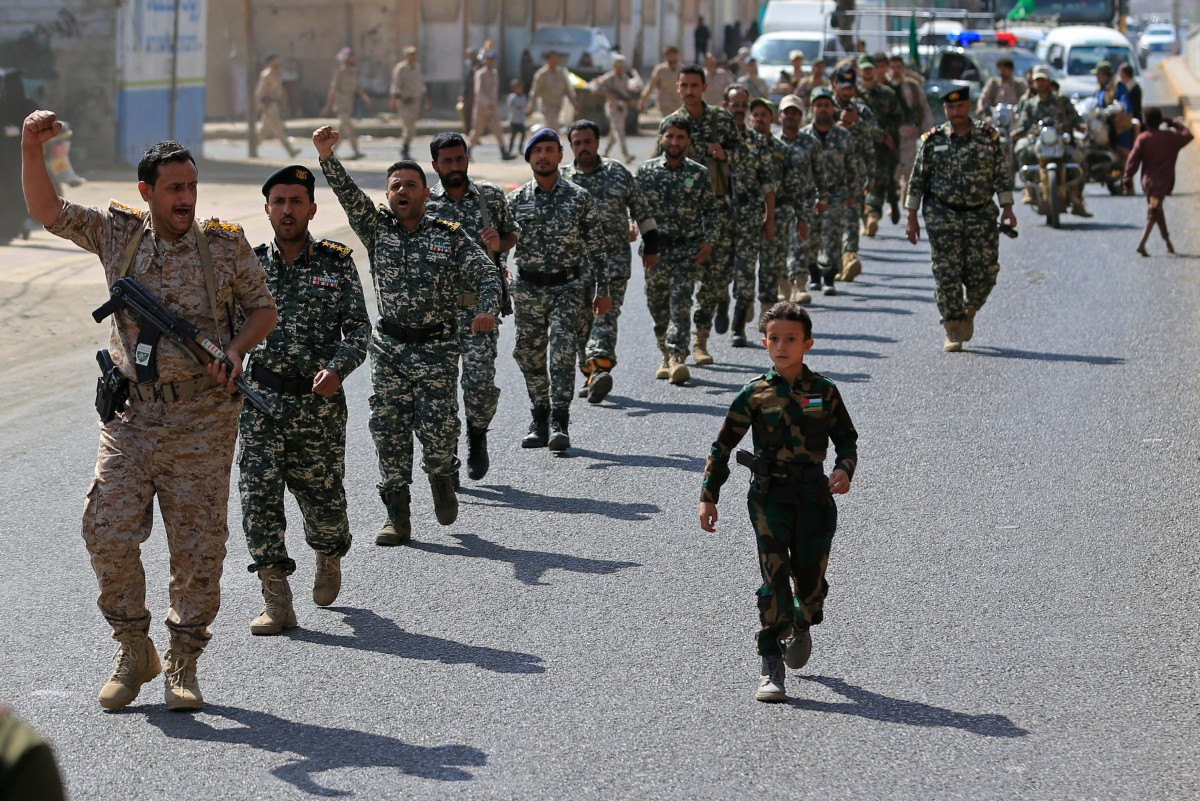 Fighters loyal to the Houthi authorities, march during a rally to recruit more fighters, in Sanaa on September 10, 2026. (AFP/Muhammad Huwais)
T
he Iran-backed Houthis controlled Yemen's entire Red Sea coast on Saturday after capturing three strategic islands in a lightning offensive the previous day, cementing their hold on a vital shipping corridor linking Europe and Asia.
The developments are likely to deepen the Middle East war's impact on international commerce as Saudi Arabia shut down an oil pipeline following attacks, and after months of Iran's blockade of the Strait of Hormuz.
Following a week-long offensive that has killed hundreds, government officials said the Houthis seized the Yemeni side of the Bab al-Mandab Strait, the southern gateway to the Red Sea and the Suez Canal.
A local official with Yemen's Saudi-backed government said on Friday that the Houthis had "completed their takeover of the Bab al-Mandab area and Mayyun Island".
A government military official later reported the group had also seized Greater and Lesser Hanish, the last two islands in the narrow waterway not under their control, as well as all of the neighbouring Red Sea coastline.
"Everything that was under our control on the western coast has fallen," the military official added.
A witness told AFP that gunmen were "deploying along the Bab al-Mandab shore and are driving around in military vehicles".
The capture of the islands, particularly Mayyun in the middle of the strait, heightens the Houthis' ability to attack Saudi tankers, which they have been targeting since July.
Saudi Arabia, the world's biggest oil exporter, has relied on the Red Sea ever since Iran's Hormuz blockade choked off its shipments via the Gulf.
Mohammad Mokhber, an adviser to Iranian supreme leader Mojtaba Khamenei, congratulated the Houthis on their "resounding victory" on Friday.
Oil prices have soared past $100 a barrel this week, while average US diesel prices topped $6 for the first time on Friday -- a potential headache for President Donald Trump ahead of midterm elections.
The Houthis' military spokesman, Yahya Saree, said navigation through the Bab al-Mandab Strait was "safe" for all but Saudi Arabia following the latest advances.
The Houthi offensive has killed more than 500 people, according to sources on both sides.
It has also displaced about 46,000 people, the UN migration agency said on Friday.
It is part of renewed hostilities in Yemen's civil war that began with the group's takeover of the capital Sanaa in 2014.
Houthi supporter Abdulhamid Dhaifallah lauded the group's "great victories" in and along the strait.
Meanwhile, Saudi Arabia has shut down its East-West pipeline, after the vital oil conduit came under aerial attack in the widening Middle East war, threatening to send energy prices even higher.
The world’s largest crude oil exporter said it temporarily closed the pipeline as a precaution after a drone attack that both Baghdad and Riyadh said had originated in Iraq, where Iranian-backed militias operate. Iraq dismissed a military commander on Saturday in response to the attack.
The 1,200-km (745-mile) pipeline running across the Arabian Peninsula has served as the main route out for global supplies of Middle East oil for the past six months while the Strait of Hormuz has been largely shut by war. It has been moving 4 million to 5 million barrels per day, amounting to 4 percent to 5 percent of global supply, sparing Saudi Arabia the brunt of the disruption that has crippled other Gulf oil and gas exporters.
There was no immediate claim of responsibility for the strikes. Satellite images showed black smoke rising from an area of the pipeline south of Medina. The attack resulted in some injuries and damage that was being assessed, the Saudi Foreign Ministry said without detailing the impact on exports.