The Jakarta Post
Please Update your browser
Your browser is out of date, and may not be compatible with our website. A list of the most popular web browsers can be found below.
Just click on the icons to get to the download page.


Popular Reads
Top Results
No results found. Please check your search term and try again
Can't find what you're looking for?
View all search results
Popular Reads
Top Results
No results found. Please check your search term and try again
Can't find what you're looking for?
View all search resultsTokyo suffers longest streak of rainy days on record
Climate change fuelled by fossil fuel emissions increases moisture in the atmosphere, making heavy rain more likely.
Change text size
Gift Premium Articles
to Anyone
Share the best of The Jakarta Post with friends, family, or colleagues. As a subscriber, you can gift 3 to 5 articles each month that anyone can read—no subscription needed!
 Set as preferred source
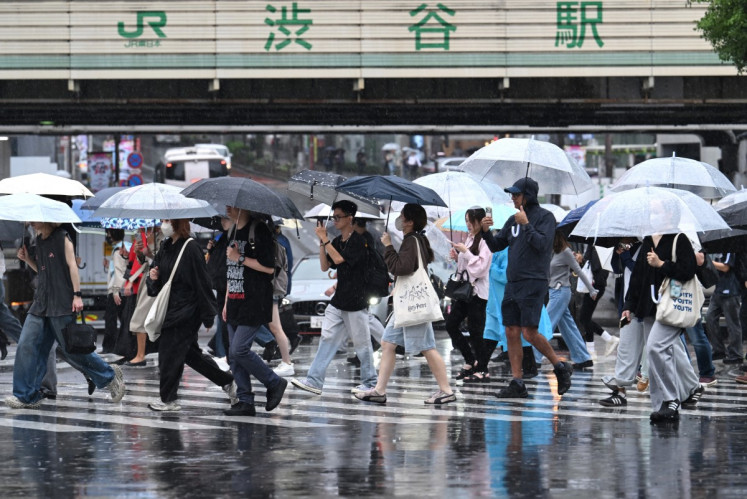
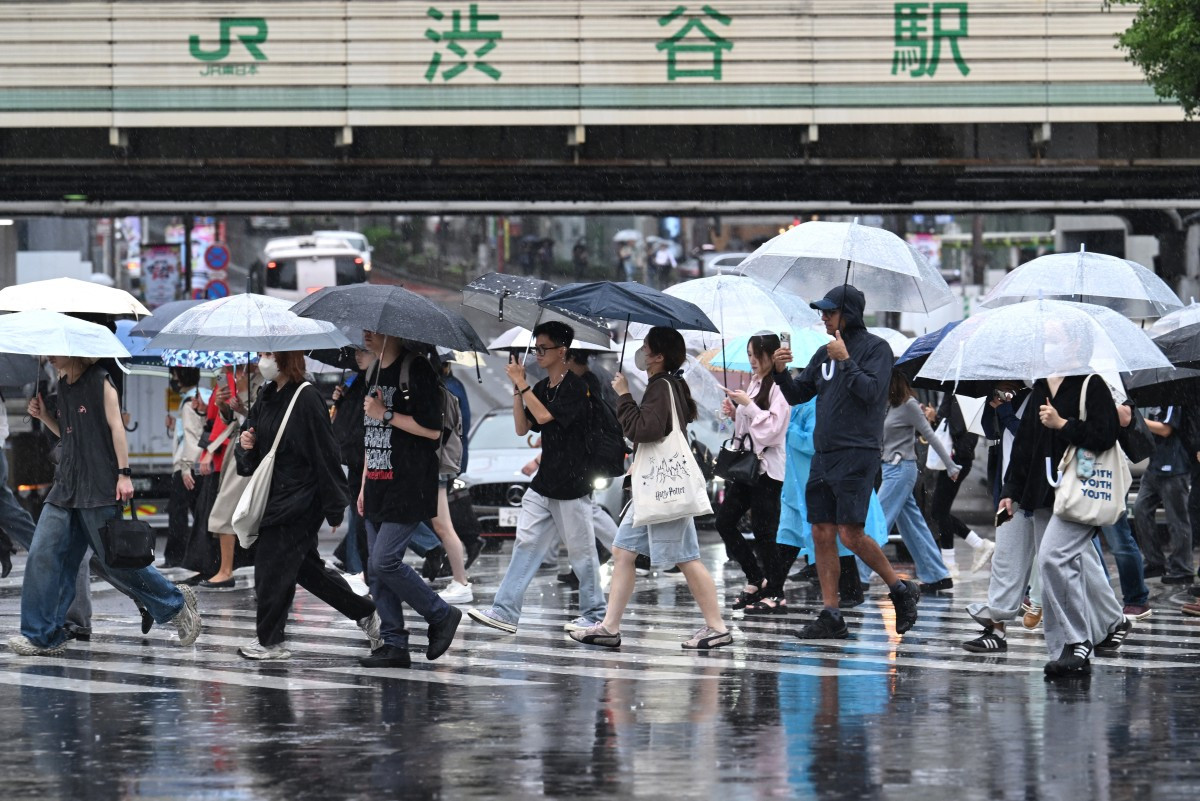 Pedestrians with umbrellas walk on a crossing as rain falls in Tokyo's Shibuya district on September 20, 2026. (AFP/Rie Kikuchi)
Tokyo has logged 34 straight days of rain, marking the longest streak on record, Japan's weather agency said on Tuesday.
Climate change fuelled by fossil fuel emissions increases moisture in the atmosphere, making heavy rain more likely.
The weather globally is also being shaped this year by the El Nino phenomenon, which shifts winds, air pressure and cloud patterns and can bring heavy rain to some areas and droughts elsewhere.
The Japanese capital's rainy season is normally in June, but it has suffered regular heavy downpours throughout the summer months, as well as heavy flooding in the wider Tokyo region.
The stretch of rainy days was the longest since records began in 1886.
Masayuki Kyoda, an official at the Japan Meteorological Agency (JMA), told AFP that "the distinctive weather map during this month is in part because of El Nino", bringing higher temperatures in the Pacific Ocean.
"Autumn rain fronts are staying longer than usual," Kyoda said, referring to Tokyo's rainy season, because a high pressure system in the Pacific is also remaining longer than normal.
He said that although it was not possible to directly link the streak to climate change, a JMA report last year concluded that "global warming was impacting Japan's weather long-term, including through more precipitation".
The previous record of the longest streak of rainy days in Tokyo was 33 between June 27 and July 29, 2019, said Kazuhiro Hirono, another JMA official.
The Mainichi Shimbun daily reported that central Tokyo had been soaked by 629 millimetres (24.8 inches) of rain in September through to Monday, nearly three times the normal level.
That was approaching the September record of 670.9 millimetres set in 1958.
Tokyo's wet weather comes as 1.7 million people were affected by recent flooding in Thailand after an intense weather system hit the region, with 23 people killed since mid-September.
Last week, torrential rains brought by a powerful typhoon lashing Japan's Pacific coast caused landslides that killed four people with six missing, while snapping electricity supply to about 45,000 homes.
Typhoon Dujuan is the latest extreme weather event in a year of unusually intense rain, floods and tropical cyclones that have hit regions across the globe, from East Asia to North America and Europe.
Mud flowing into a home killed a woman in her 60s in the city of Yokosuka in the Kanto region, after landslides in the areas of Kanagawa and Chiba, the broadcaster said, adding that three other dead ranged in age from the 50s to the 80s.