The Jakarta Post
Please Update your browser
Your browser is out of date, and may not be compatible with our website. A list of the most popular web browsers can be found below.
Just click on the icons to get to the download page.


Popular Reads
Top Results
No results found. Please check your search term and try again
Can't find what you're looking for?
View all search results
Popular Reads
Top Results
No results found. Please check your search term and try again
Can't find what you're looking for?
View all search resultsNetanyahu bloc leads as Israeli votes counted
Voters turned out in the highest numbers in decades to give their verdict on Netanyahu, Israel's longest-serving prime minister, who has pushed the country sharply to the right and unleashed a wave of wars in response to Hamas's October 7, 2023 attack.
Change text size
Gift Premium Articles
to Anyone
Share the best of The Jakarta Post with friends, family, or colleagues. As a subscriber, you can gift 3 to 5 articles each month that anyone can read—no subscription needed!
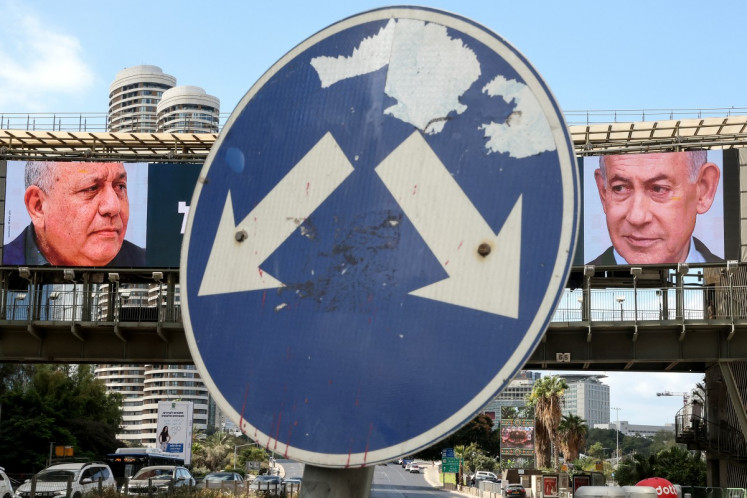
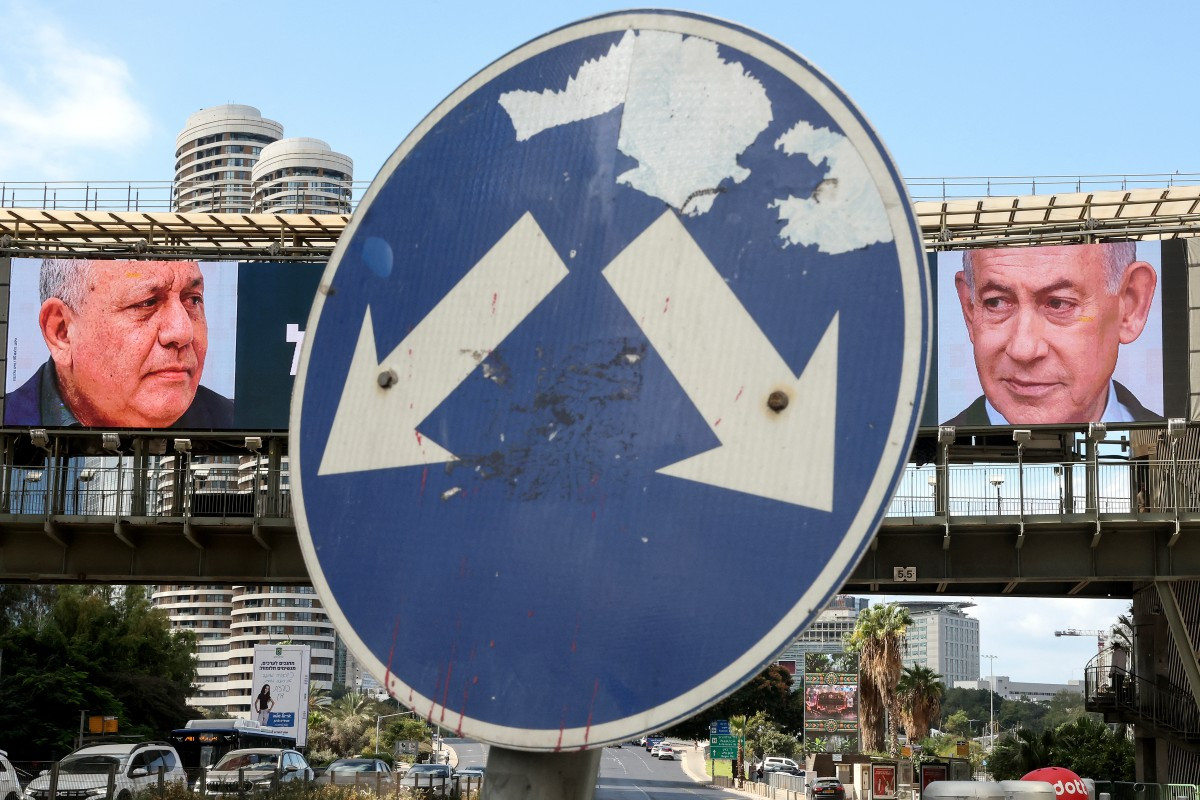 A road sign stands in front of a large billboard featuring Israel's Prime Minister Benjamin Netanyahu (right) of the Likud party and former military chief and leader of the centrist Yashar party, Gadi Eisenkot, in Ramat Gan on October 20, 2026. (AFP/Jack Guez)
T
he camp of Prime Minister Benjamin Netanyahu was ahead of his rival's opposition bloc but still short of a majority on Wednesday after two-thirds of the votes were counted in Israel's pivotal general election.
Voters turned out in the highest numbers in decades to give their verdict on Netanyahu, Israel's longest-serving prime minister, who has pushed the country sharply to the right and unleashed a wave of wars in response to Hamas's October 7, 2023 attack.
Following the vote, both Netanyahu and his main rival Gadi Eisenkot vowed to form a government despite neither being projected to win a majority.
With 66 percent of ballots counted, Netanyahu's bloc was shown to have 54 of the 120 seats in the parliament.
Eisenkot's opposition bloc had 48 seats and the country's non-aligned Arab parties 18. The partial results are likely to change as more votes are counted.
Exit polls had shown that Eisenkot, a former military chief and political novice, and his opposition bloc were neck-and-neck with Netanyahu's hard-right camp, with both winning about 51 seats, well away from the threshold for a majority.
The strongest gains went to Arab Israeli parties whose voters turned out in soaring numbers against Netanyahu, who has relentlessly warned that the minority would dilute the Jewish nationalist direction in which he has taken Israel.
The partial results suggest that Eisenkot's bloc would have enough seats for a majority if it entered into a coalition agreement with the Arab parties, something most of its members expressed reluctance to do on the campaign trail.
But Yair Golan, the head of Israel's main left-wing party, which is part of Eisenkot's camp, called for precisely that on Wednesday.
"We must no longer accept Netanyahu's racist division between Jewish votes and Arab votes," he said on X. "We have a responsibility. And we have an opportunity to form a government of change in partnership with Israel's Arab citizens."
Eisenkot had said during the campaign he would not govern with Israeli Arab lawmakers, echoing the position of Netanyahu, who has suggested a government relying on Arab votes would lack legitimacy.
Arab lawmakers could also give Eisenkot support in parliamentary votes on an ad hoc basis, enabling him to maintain a minority government without joining a coalition.
A lack of clear majority for either camp could mean weeks spent trying to cobble together coalitions, with possible new elections on the horizon if negotiations fail.
A stalemate could in the immediate term benefit Netanyahu, who would remain caretaker prime minister until a new government is formed.
Full results are expected by Thursday evening or Friday morning.