The Jakarta Post
Please Update your browser
Your browser is out of date, and may not be compatible with our website. A list of the most popular web browsers can be found below.
Just click on the icons to get to the download page.


Popular Reads
Top Results
No results found. Please check your search term and try again
Can't find what you're looking for?
View all search results
Popular Reads
Top Results
No results found. Please check your search term and try again
Can't find what you're looking for?
View all search resultsAustralia aims to tax tech giants unless they pay news outlets
Prime Minister Anthony Albanese said tech giants Meta, Google and TikTok would be given a chance to strike content deals with local news publishers.
Change text size
Gift Premium Articles
to Anyone
Share the best of The Jakarta Post with friends, family, or colleagues. As a subscriber, you can gift 3 to 5 articles each month that anyone can read—no subscription needed!
 Set as preferred source
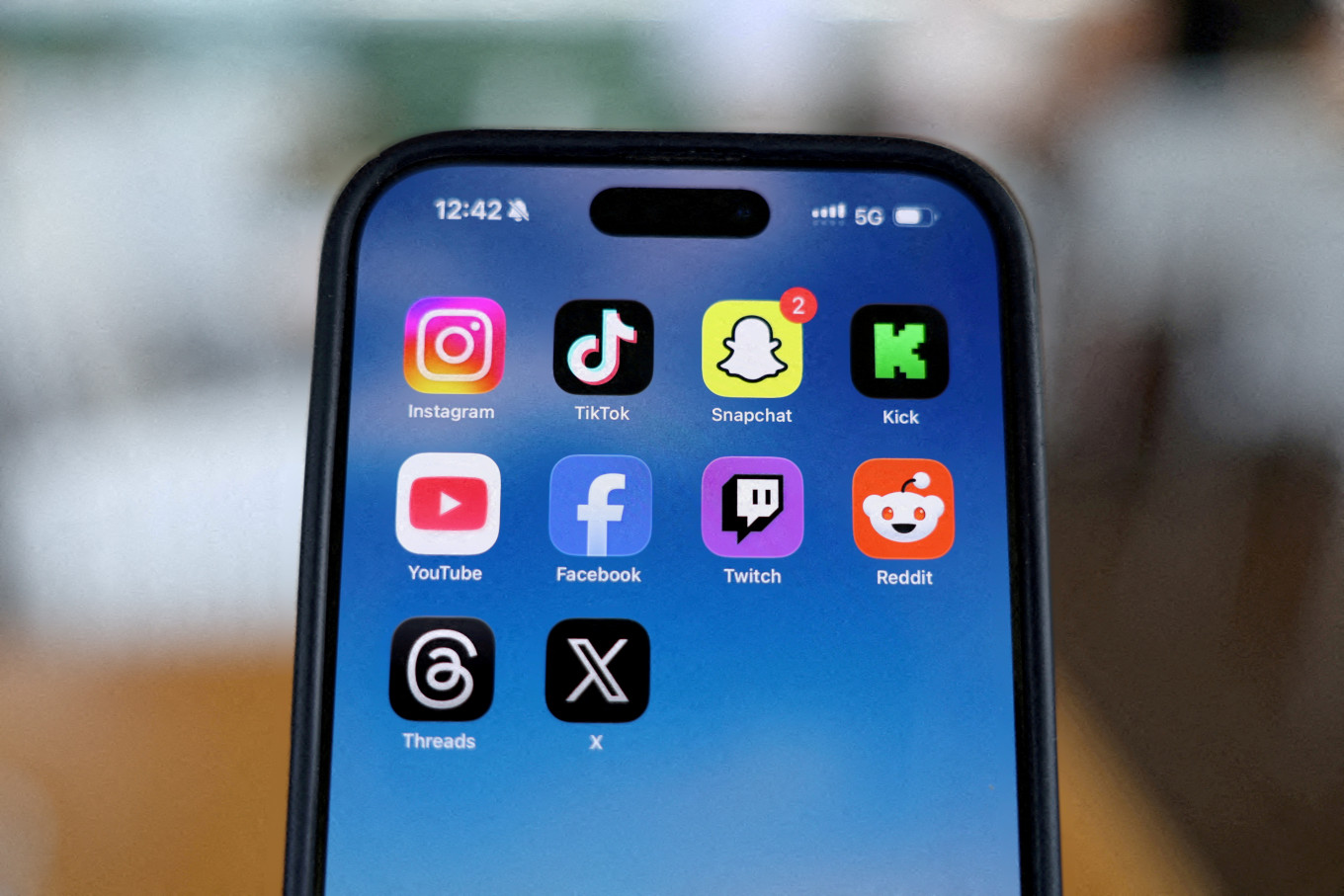 Instagram, TikTok, Snapchat, Kick, YouTube, Facebook, Twitch, Reddit, Threads and X applications are displayed on a mobile phone ahead of new law banning social media for users under 16 in Australia, in this picture illustration taken on December 9, 2025. (Reuters/Hollie Adams)
A
ustralia unveiled draft laws on Tuesday that would tax tech giants Meta, Google and TikTok unless they voluntarily strike deals to pay local outlets for news.
Traditional media companies around the world are in a battle for survival as readers increasingly consume their news on social media.
Australia wants big tech companies to compensate local publishers for sharing articles that drive traffic on their platforms.
Prime Minister Anthony Albanese said tech giants Meta, Google and TikTok would be given a chance to strike content deals with local news publishers.
If they refused, they faced a compulsory levy that amounted to 2.25 percent of their Australian revenue, he said.
"Large digital platforms cannot avoid their obligations under the news media bargaining code," Albanese told reporters.

"At this point the three organisations are Meta, Google and TikTok."
The changes aim to close a loophole under a previous media law which allowed organisations to avoid a levy if they removed news from their platforms.
The three firms were singled out based on a combination of their Australian revenues and large numbers of domestic users.
"What we are encouraging is for them to sit down with news organisations and get these deals done," Albanese said.
Journalism needed to have a "monetary value attached to it", Albanese said.
"It shouldn't be able to be taken by a large multinational corporation and used to generate profits with no compensation."
The draft laws have been designed to stop the tech giants from simply stripping news from their platforms.
When Canberra mooted similar laws in 2024, Facebook parent Meta announced that Australian users would no longer be able to access the "news" tab.
Meta had previously announced it would not renew content deals with news publishers in the United States, Britain, France and Germany.
Meta said the proposed laws were "nothing more than a digital services tax".
"News organisations voluntarily post content on our platforms because they receive value from doing so," a spokeswoman said in a statement to AFP.
"The idea that we take their news content is simply wrong."
Google said it already had commercial arrangements in place with more than 90 local news businesses, and was the only technology company in Australia to do so.
"While we are currently reviewing the draft legislation, we have been clear: we reject the need for this tax," a Google spokesman said in a statement to AFP.
The firm said other major platforms such as Microsoft, Snapchat and OpenAI had been arbitrarily excluded.
Supporters of such laws argue that social media companies attract users with news stories and hoover up online advertising revenue that would otherwise go to struggling newsrooms.
Australia's University of Canberra has found that more than half the country uses social media as a source of news.
"People are increasingly getting their news directly from Facebook, from TikTok and Google," Communications Minister Anika Wells said.
"We believe it's only fair that large digital platforms contribute to the hard work that enriches their feeds and that drives their revenue."
The draft laws were presented on Tuesday for public consultation, which will close in May.
They would then be introduced into parliament later this year.