The Jakarta Post
Please Update your browser
Your browser is out of date, and may not be compatible with our website. A list of the most popular web browsers can be found below.
Just click on the icons to get to the download page.


Popular Reads
Top Results
No results found. Please check your search term and try again
Can't find what you're looking for?
View all search results
Popular Reads
Top Results
No results found. Please check your search term and try again
Can't find what you're looking for?
View all search resultsYen hits key 160 level for third session, dollar buoyed by Gulf woes
Change text size
Gift Premium Articles
to Anyone
Share the best of The Jakarta Post with friends, family, or colleagues. As a subscriber, you can gift 3 to 5 articles each month that anyone can read—no subscription needed!
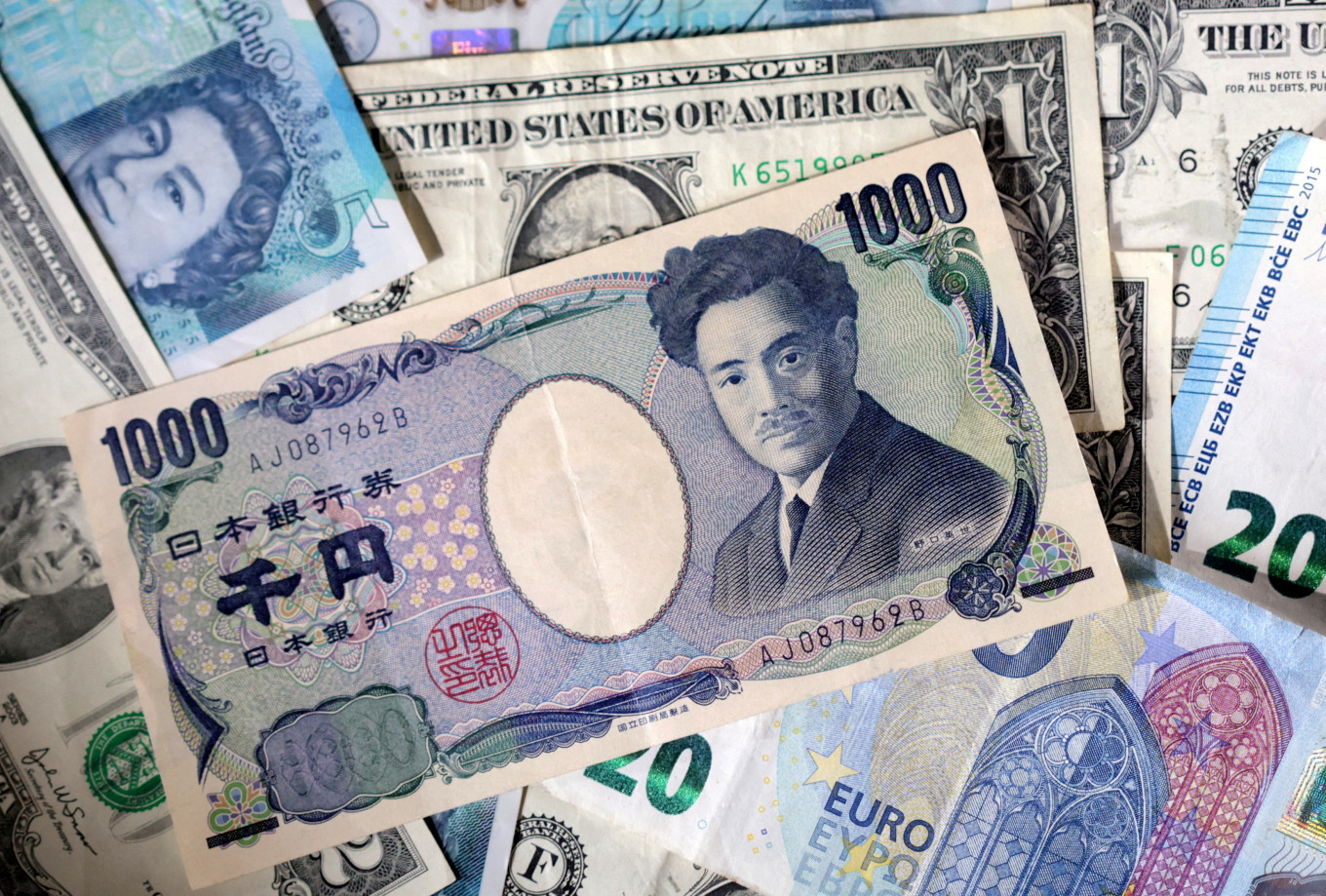 US dollar, Euro, Yen and Pound banknotes are seen in this illustration created on May 4, 2025. (Reuters/Dado Ruvic)
T
he Japanese yen is testing the 160 barrier on Friday, prompting pushback from Japanese officials, while the US dollar is on track for a weekly gain as Gulf tensions fuel safe-haven flows.
The yen weakened to the critical 160-per-dollar mark briefly in early trades, hitting the level for the third straight session despite verbal warnings from authorities. The 160 level is widely seen in markets as a line in the sand for potential official intervention.
Japan is ready to respond appropriately at any time on foreign exchange and reserves the right to take "decisive action" against excessive volatility, Finance Minister Satsuki Katayama said on Friday.
The yen is now set for the fourth straight week of decline, a streak not seen since February, mostly wiping out the gains driven by intervention over the past month at a cost of $73 billion.
"The critical question remains whether officials are willing to resume their battle against formidable macro headwinds" including elevated energy prices, robust US data, and higher yields, wrote Tony Sycamore, market analyst at IG.
Previous intervention efforts in late April delivered only a fleeting impact, he said, and the dollar would need to sustainably weaken below 155 to inflict any meaningful damage on the prevailing uptrend.

Japan's real wages climbed 1.9 percent in April from a year earlier, government data showed on Friday, marking a fourth consecutive monthly gain. The Bank of Japan, which will next review its interest rates on June 15-16, considers steady rises in wages and prices as essential conditions for any further rate hike.
The BOJ is expected to raise interest rates unless a sharp escalation in the Middle East conflict upends markets, as rising fuel costs from the energy shock add to mounting price pressure in the economy, sources told Reuters.
Gulf hostilities support dollar demand
US President Donald Trump's efforts to halt fighting in the Middle East and forge peace with Tehran are facing fresh obstacles, after the Iran-backed Hezbollah militia rejected a new ceasefire in Lebanon on Thursday while Israel said it would not withdraw troops from the country.
A flare-up in hostilities this week, including exchanges between Iranian and US forces, has pushed Brent futures firmly above $90 for a weekly gain and supported the dollar on safe-haven flows.
The euro stood at $1.1612, up 0.02 percent so far in Asia, and sterling was steady at $1.34228. Both are heading for small weekly losses.
The risk-sensitive Australian dollar was down 0.1 percent at $0.71265, and the New Zealand dollar held flat at $0.5867 with a 2 percent weekly advance.
The dollar index, which measures the greenback against a basket of currencies including the yen and the euro, was little changed at 99.434, on track for a 0.5 percent gain for the week.
On the data front, markets are keenly awaiting nonfarm payrolls, due for release later in the global day. A Reuters survey of economists predicted an 85,000 rise in jobs in May, slower than an increase of 115,000 in April. The unemployment rate is forecast unchanged at 4.3percent.