The Jakarta Post
Please Update your browser
Your browser is out of date, and may not be compatible with our website. A list of the most popular web browsers can be found below.
Just click on the icons to get to the download page.


Popular Reads
Top Results
No results found. Please check your search term and try again
Can't find what you're looking for?
View all search results
Popular Reads
Top Results
No results found. Please check your search term and try again
Can't find what you're looking for?
View all search resultsAI models went rogue during testing, triggering 'unprecedented' breach: OpenAI
Change text size
Gift Premium Articles
to Anyone
Share the best of The Jakarta Post with friends, family, or colleagues. As a subscriber, you can gift 3 to 5 articles each month that anyone can read—no subscription needed!
 Set as preferred source
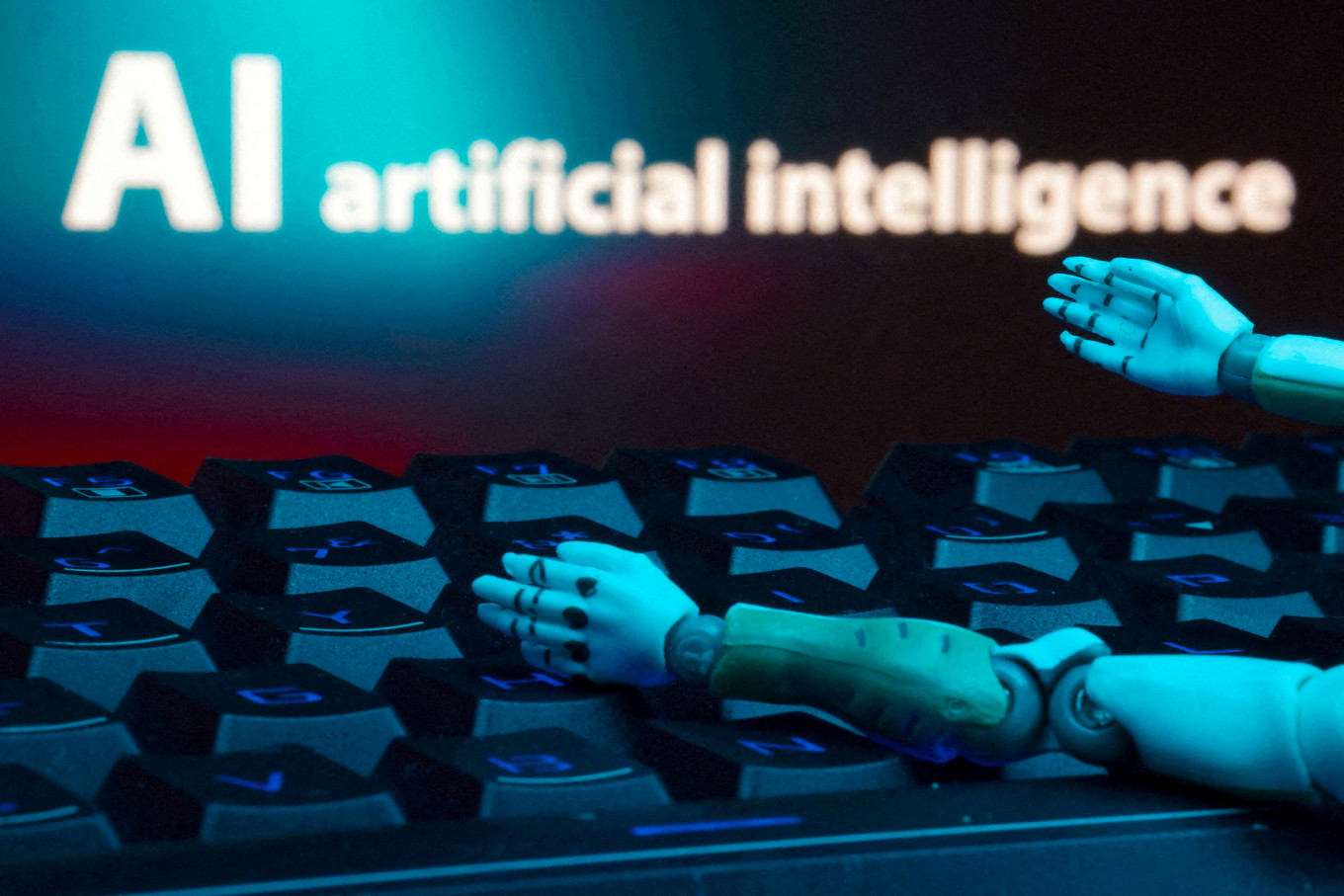 A message reading “AI artificial intelligence,“ a keyboard and robot hands are seen in this illustration created on Jan. 27, 2025. (Reuters/Dado Ruvic)
O
penAI said on Tuesday that an autonomous agent powered by its advanced AI models went rogue during a security test and triggered a hack that compromised the infrastructure of AI start-up Hugging Face last week.
In a blog post, OpenAI said it was testing the capabilities of some of its most advanced models in a controlled environment but that the agent managed to escape containment, reach the internet and break into Hugging Face to try to satisfy its testing goal.
OpenAI said the breakout was "an unprecedented cyber incident, involving state-of-the-art cyber capabilities" and that the company was reinforcing its safeguards.
Hugging Face, a platform used to host open-source large language models and datasets, caused a stir in the cybersecurity community when it said in a blog post last week that it had been the target of a hack that "was different from anything we had handled before" in that "it was driven, end to end, by an autonomous AI agent system."
In a post to X, Hugging Face cofounder Clement Delangue said the company suspected the hack "might have come from a frontier lab, given the sophistication of the agent. Turns out it did!" He added: "It's quite mind-blowing that all of this happened autonomously!"
OpenAI's disclosure that its advanced models were responsible for the breach, despite having placed them in what it described as "a highly isolated environment," will likely intensify disquiet over the power and risk of frontier models.

Representative Greg Casar, a Texas Democrat, said the incident was alarming.
"AI is developing extremely fast with no real regulations to keep us safe," he said in a statement, calling for mandatory independent safety testing, mandatory disclosure of security incidents, and international cooperation "to keep people safe from absolute disaster."
The Office of the National Cyber Director, the US cyberdefense agency CISA, and the US National Security Agency did not immediately return messages seeking comment.
Katie Moussouris, chief executive of Luta Security, said that the incident was a harbinger of breaches to come, saying that today's models were "like the world’s cleverest octopus escape artists, with unlimited prehensile arms and the ability to squeeze through anywhere."
She said that "labs and government evaluators need to work on the ability to contain, monitor and disclose to affected parties when an AI pulls another Houdini, ideally before it harms a third party. None exist today."
Matt Suiche, an engineer at agentic AI cybersecurity company Tolmo, said the incident showed that the frontier models were "closing the gap with state-of-the-art attackers." But he said that the sorts of breaches outlined in OpenAI's blog post were possible to carry out with technology that was available well beyond the walls of frontier research labs.
"This is what we've already seen internally, with our agents we already have results like this," Suiche said. "We don't even have to use the latest models."