The Jakarta Post
Please Update your browser
Your browser is out of date, and may not be compatible with our website. A list of the most popular web browsers can be found below.
Just click on the icons to get to the download page.


Popular Reads
Top Results
No results found. Please check your search term and try again
Can't find what you're looking for?
View all search results
Popular Reads
Top Results
No results found. Please check your search term and try again
Can't find what you're looking for?
View all search resultsSustainable water conservation underpins AQUA's business
The journey of an AQUA bottle begins long before it reaches consumers, with protected mountain ecosystems, advanced science, and a nationwide distribution network working together behind the scenes.
Change text size
Gift Premium Articles
to Anyone
Share the best of The Jakarta Post with friends, family, or colleagues. As a subscriber, you can gift 3 to 5 articles each month that anyone can read—no subscription needed!
 (Courtesy of Danone Indonesia)
F
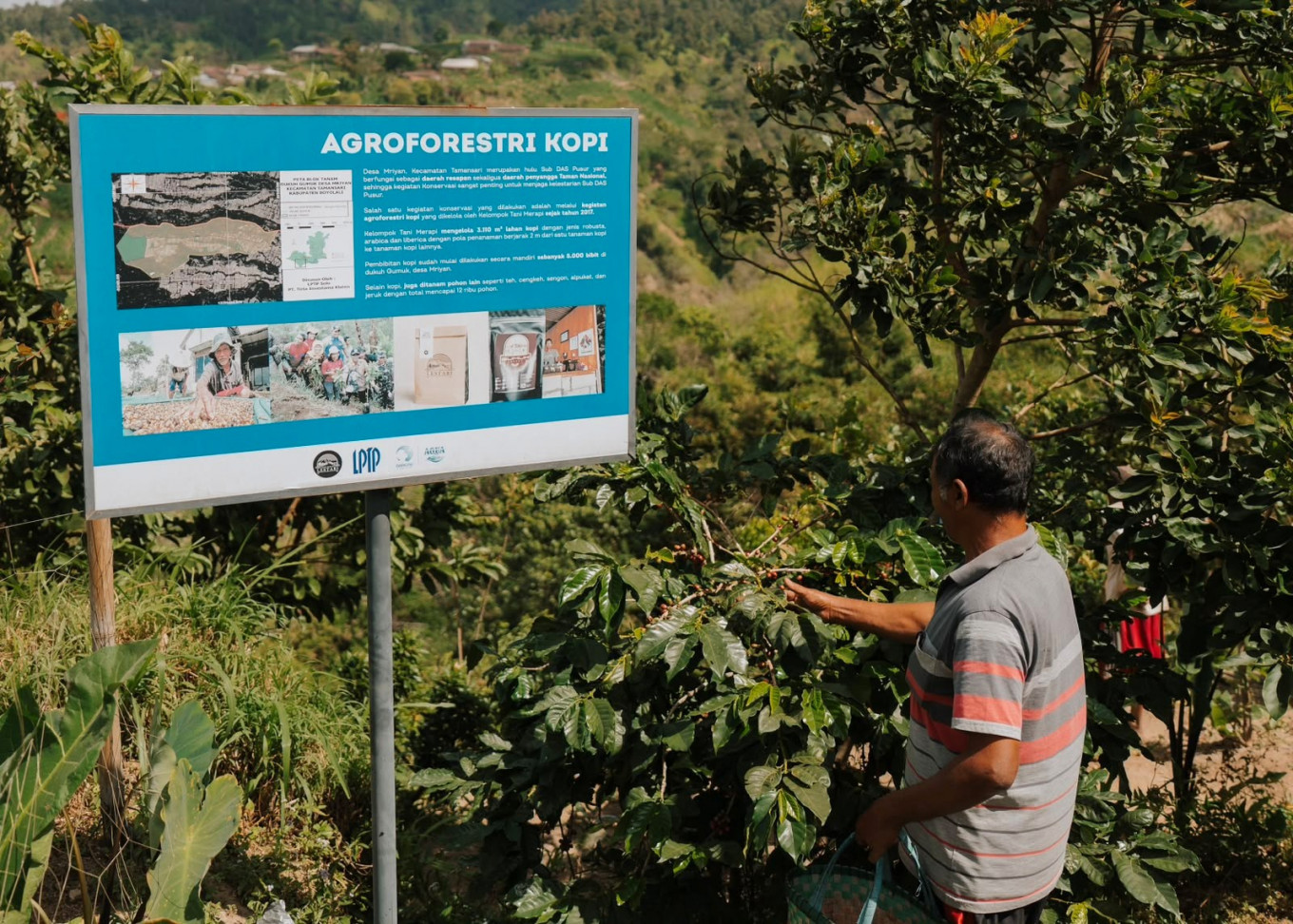
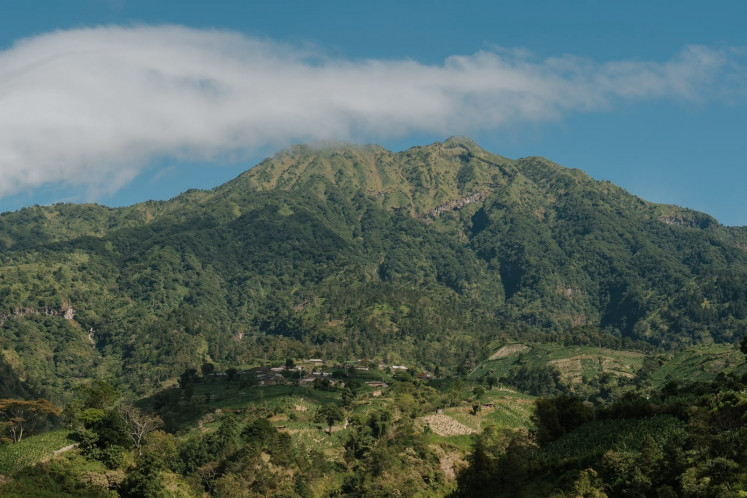
resh mountain air, clear skies and the tranquil atmosphere of Gumuk village on the slopes of Mount Merapi hide one of Indonesia's most valuable natural assets: an underground aquifer system that provides naturally filtered drinking water for millions of people.
Rainwater that falls on Mount Merapi gradually infiltrates layers of mineral-rich volcanic rock before flowing into deep underground aquifers. Around 25 kilometers away, the water emerges at the protected source used by AQUA to produce its bottled drinking water.
Conservation as a business necessity
For AQUA, protecting this natural ecosystem is more than an environmental commitment; it is fundamental to the sustainability of its business.
"As we all know, AQUA uses mountain spring water as its raw material, making volcanic mountains extremely important to our business," said Karyanto Wibowo, public affairs and sustainability director at Danone Indonesia, during a media visit to the upper Pusur River watershed in Klaten on July 7.
"That is why conserving natural ecosystems and working closely with local communities are essential to ensuring the long-term sustainability of our bottled water business."

The Pusur River watershed, located about 700 meters above sea level, is one of 17 watersheds managed by AQUA around its production facilities across Indonesia.
Scientific research has played a central role in selecting both the company's water sources and its conservation strategy. Prof. Heru Hendrayana, a hydrogeological expert from Gadjah Mada University (UGM), said studies conducted by UGM together with Sorbonne University and the University of Montpellier show that Mt. Merapi's volcanic formations possess exceptional groundwater storage capacity.
The porous volcanic rocks efficiently store and transmit water, while annual rainfall of around 2,500-3,000 millimeters continuously replenishes the aquifer. Formed between 2,000 and 10,000 years ago, these volcanic layers are naturally rich in minerals, making the area an ideal source of drinking water.
Based on these scientific findings, AQUA established its Klaten production facility near the protected recharge area while preserving the spring itself.
However, the company's conservation efforts extend well beyond protecting the water source. AQUA applies an integrated watershed management approach covering upstream, midstream and downstream areas while working with local communities, researchers, government agencies and other stakeholders.
According to Karyanto, the company combines hydrogeological studies with socioeconomic research to better understand local conditions before designing conservation programs.
One of the biggest challenges is land-use change. Forests have gradually been converted into agricultural land and settlements, reducing the soil's ability to absorb rainwater.
"Our intervention is aimed at maximizing water infiltration instead of surface runoff," he said.
To address this challenge, AQUA encourages farmers to adopt more sustainable agricultural practices by combining vegetables and tobacco with coffee and fruit trees. Farmers have also shifted from conventional vertical farming to terraced cultivation, helping reduce soil erosion while improving water retention.
The conservation effort also includes collaboration with Mt. Merapi National Park, a 6,410-hectare protected area that functions as a vital groundwater recharge zone and biodiversity conservation area.
Park head Muhamad Rekmana said the park works together with AQUA and local communities on tree-planting, forest patrols and fire prevention programs.
Scientific isotope analysis has confirmed that groundwater beneath the national park shares the same water fingerprint as the water eventually used by AQUA, highlighting the importance of protecting the upper watershed.
Conservation continues downstream as rivers pass through farming communities before reaching the factory. AQUA works with farmers and dairy producers to reduce pollution through improved waste management, environmentally friendly farming practices and biogas production from livestock manure.
The company also supports irrigation improvements that help distribute water more efficiently to rice farmers while reducing water shortages during the dry season.
To strengthen cooperation among all stakeholders, AQUA helped establish the Watershed Forum, bringing together the regional water utility (PDAM), tourism operators, farmers and bottled water producers to jointly protect the watershed.
Ensuring water quality
Conservation is only the first step in producing safe drinking water. AQUA also applies strict quality control throughout the production process.
According to a staff at the AQUA factory in Klaten, the company ensures water quality through carefully selected deep aquifer sources, laboratory testing against more than 400 quality parameters, and hygienic packaging processes that comply with Indonesian National Standards (SNI) and regulations issued by the Food and Drug Monitoring Agency (BPOM).
"Our water sources come from deep aquifers located more than 60 meters below the surface and are naturally protected by impermeable geological layers," a staff member explained.
Because the water originates from deep underground, it is naturally shielded from surface contamination and human activities.
The factory routinely tests the water against more than 400 physical, chemical and microbiological parameters, including odor, color, taste and pH.
Staff emphasize that the water source is not an ordinary drilled well but part of a natural groundwater system formed through mountain hydrogeological processes.
"These water sources undergo rigorous scientific assessment by experts from UGM and Padjadjaran University before they are used. Some sources are even self-flowing, meaning the water emerges naturally without pumping," the staff member said.
He added that maintaining water quality requires long-term investment.
"Quality water is not an easy business. You have to invest in water sources and protect them over many years to ensure the reservoir remains clean and free from contaminants."
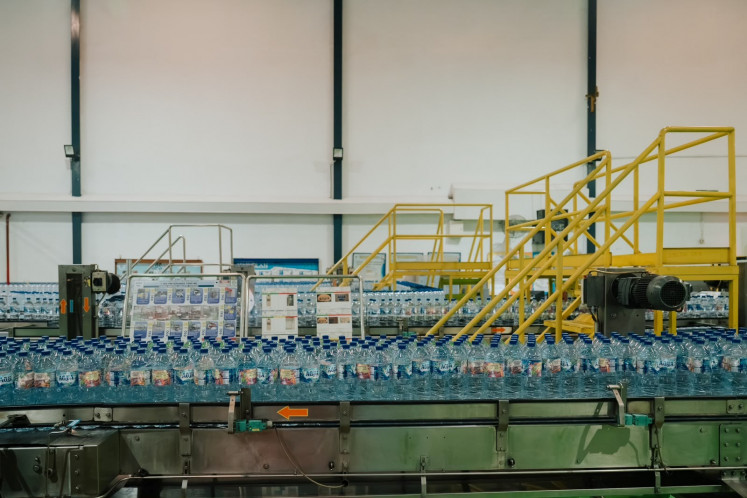
The production process is designed to minimize contamination. Water flows through a closed piping system before entering fully integrated filling and packaging lines without any human hand contact.
Bottle production also takes place inside enclosed sterile machines. Plastic preforms are heated and blown into bottles before being immediately filled and sealed, helping preserve the water's natural mineral composition.
Each bottle is equipped with a tamper-evident cap and production code that allows consumers to verify product authenticity.
The Klaten factory also uses advanced technologies, including machine learning, to monitor production quality, automate packaging and predict maintenance requirements.
Beyond water quality, AQUA continues to improve packaging sustainability. All 19-liter bottles are reusable, while other products contain up to 25 percent recycled material. AQUA LIFE is produced entirely from recycled plastic processed into food-grade packaging using advanced recycling technology.
Efficient distribution across Indonesia
AQUA distributes its bottled drinking water through dozens of production facilities strategically located across Indonesia's major islands, enabling products to reach consumers efficiently while minimizing transportation distances.
According to company staff, factories are intentionally built close to protected water sources to improve operational efficiency and maintain product quality.
From each factory, products are transported by trucks and logistics trains to regional distribution centers before reaching authorized distributors, depots, wholesalers, supermarkets, minimarkets, neighborhood stores and direct home-delivery services.
The company also operates AQUA Home Service (AHS), a home-based distribution program that delivers 19-liter bottles directly to households while expanding business opportunities for local entrepreneurs.
The AHS network now involves around 15,000 micro-entrepreneurs nationwide.
Lilies Anggraeni from Klaten joined the program in 2020 after the COVID-19 pandemic affected her family's contracting business. "Initially, we sold only around 40 19-liter bottles," she said. "Today we sell more than 800 bottles."
For reusable 19-liter bottles, the distribution system includes the collection of empty containers from customers. The bottles are returned to factories, where they undergo thorough cleaning and sanitization before being refilled, supporting both product safety and circular packaging practices.
By integrating scientific research, long-term conservation, rigorous quality control and an extensive nationwide distribution network, AQUA aims to ensure that consumers receive safe drinking water while helping preserve the natural ecosystems that make its business possible.