The Jakarta Post
Please Update your browser
Your browser is out of date, and may not be compatible with our website. A list of the most popular web browsers can be found below.
Just click on the icons to get to the download page.


Popular Reads
Top Results
No results found. Please check your search term and try again
Can't find what you're looking for?
View all search results
Popular Reads
Top Results
No results found. Please check your search term and try again
Can't find what you're looking for?
View all search resultsIndonesia's second digital leap must be about capability
Indonesia's next digital leap, rather than helping democratize access, must lead toward democratizing capability: using AI to generate value.
Change text size
Gift Premium Articles
to Anyone
Share the best of The Jakarta Post with friends, family, or colleagues. As a subscriber, you can gift 3 to 5 articles each month that anyone can read—no subscription needed!
 Set as preferred source
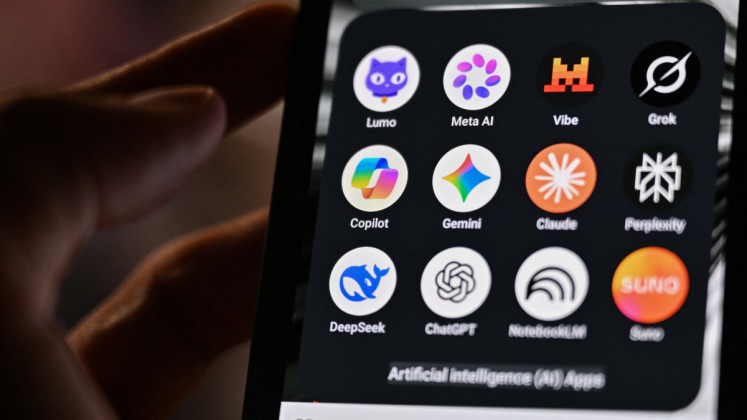
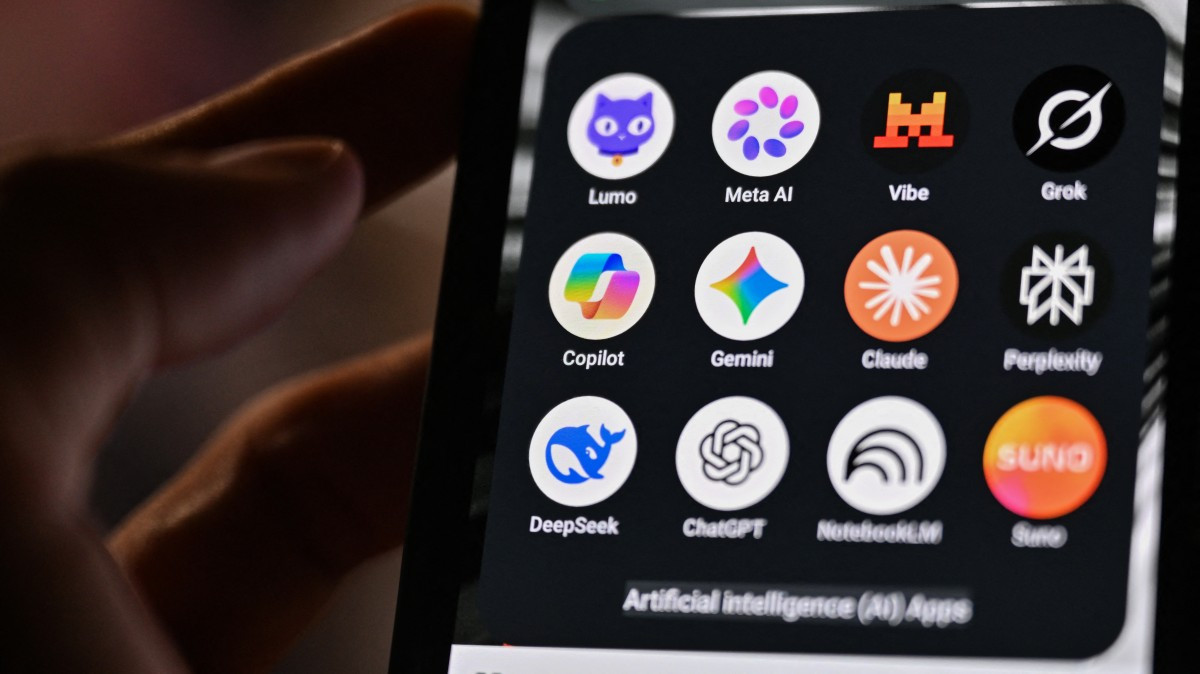 A smartphone menu displays the search results for artificial intelligence apps on July 15, 2026, in this illustration created in Saint-Mande, east of Paris, France. (AFP/Martin Lelievre)
I
ndonesia has demonstrated before how quickly it can embrace a technological shift. Mobile connectivity, digital payments and platforms brought millions of consumers and small businesses into the digital economy, while a generation of homegrown technology companies emerged to serve them.
Artificial intelligence creates the possibility of another leap. But if we learn one lesson from Indonesia’s first great digital leap, it’s that technology creates an opportunity to leapfrog only when the capabilities around it develop, too. That distinction matters, because AI is becoming remarkably easy to access.
The harder question is whether Indonesia can turn that access into higher productivity and spread that capability across an economy in which most businesses will never have their own AI teams.
From access to capability
AI potentially democratizes something even more powerful than access to information: access to expertise.
A small manufacturer can ask an AI system to help improve production planning. A retailer can use it to analyze sales or develop a marketing campaign.

Increasingly, smaller businesses can access analytical and creative capabilities that until recently were available mainly to much larger organizations. But having an answer is not the same as knowing what to do with it.
Productive use of AI requires people who can frame the right problem, provide relevant context, challenge an output that looks convincing but may be wrong and translate the result into a better business decision. It also requires usable data, reliable infrastructure and often, changes to the way work gets done.
This distinction between adoption and capability is increasingly recognized in Indonesia. In July, the Communications and Digital Ministry described the country's challenge explicitly as an AI capability gap: AI adoption is already high, but the depth of its use by individuals and businesses remains uneven.
The main issue, therefore, is enabling Indonesians to use AI well.
Adoption can outrun value
This is not a challenge limited to Indonesia.
BCG's 2026 global AI at Work research found that among frontline employees who regularly use artificial intelligence, 42 percent reported saving at least eight hours a week. Yet 66 percent received limited or no guidance on how to use the time saved, and more than half did not redirect it toward more strategic work.
Technology may generate capacity, but organizations aren’t necessarily converting that capacity into value.
The same research found that organizations redesigning workflows and business models around AI generated greater value than those concentrating principally on deploying tools.
This is an important distinction. Indonesia’s AI opportunity cannot be measured by the number of people using AI applications, pilots launched or trainees completing an AI course. Rather, it needs to be measured by whether organizations become more productive as a result.
Harder challenge for small businesses
Large corporations will undoubtedly face shortages of AI talent. But they can recruit specialists, partner with technology providers, invest in infrastructure and reskill their workforces.
The more difficult question is how sophisticated AI capability reaches the much broader economy.
It is unrealistic to expect millions of micro, small and medium enterprises (MSMEs) to employ AI engineers, data scientists or digital transformation teams. This is why the goal should not be to turn every local MSME into an AI expert; it should be to make AI expertise accessible to every MSME.
This changes the way we think about capability building.
Turn large firms into capability multipliers
Indonesia already has institutions with extraordinary economic reach. Banks interact with millions of businesses. Digital marketplaces connect vast merchant networks. Manufacturers sit at the center of extensive supplier and distributor ecosystems. State-owned enterprises (SOEs) influence entire sectors. These institutions can become channels through which AI capability spreads.
A bank, for example, could increasingly embed AI-enabled financial management, forecasting or business insights into the services it provides MSME customers. A manufacturer can help suppliers apply AI to quality, maintenance, inventory or planning.
The principle is familiar from Indonesia's previous digital transformation: Small businesses were able to participate in e-commerce without each building their own payments, logistics and technology infrastructure.
The AI era requires a similar ambition: to package sophisticated capability so businesses can benefit without having to build it themselves.
From training people to connecting capability
Government has an equally important role beyond just funding more courses.
Indonesia has already begun moving beyond that model. The communications ministry’s AI Talent Factory is designed around advanced AI skills and use cases rather than classroom training alone.
In July, the ministry and the SOEs Regulatory Agency (BP BUMN) moved to connect the program with the BUMN AI Talent Pool, creating pathways for participants to work on actual AI solutions at SOEs.
That evolution from training to application is important. The next step should be from application to diffusion.
Universities and polytechnics could connect young technical talent with the industries around them. Large companies could open suitable real-world problems and provide mentors. Technology companies could contribute tools and expertise. Government could help establish standards, incentives and infrastructure that make these partnerships scalable and accessible.
Business chambers could also play a role, an example being the upcoming initiative by the Singapore Business Federation (SBF) and the Indonesian Chamber of Commerce and Industry (KADIN) to launch an AI-powered trade advisory platform that would help local MSMEs identify potential destination markets for exports.
Rather than expecting every firm to create its own AI capability, Indonesia can increasingly organize capability around economic ecosystems and value chains.
There is a useful human dimension to this model as well. Younger workers may bring greater familiarity and experimentation with AI. Experienced practitioners meanwhile bring accumulated domain knowledge and judgment about how an industry works. Together, this creates a collaborative learning experience that enriches all.
Skills matter, but they are not enough
The World Bank's latest work on AI readiness identifies four mutually reinforcing foundations: connectivity, compute, context and competency. In other words, countries need digital and energy infrastructure, access to computing capacity, relevant data and content and people with the skills to use AI.
We know from earlier digital transformations that rapid technology adoption creates opportunity. However, productivity gains depend on the wider system developing with it, emphasizing that Indonesia needs the right ingredients to come together where value is actually created: in factories, shops, offices and public services across the country.
A different kind of digital leap
Indonesia enters this next era with considerable advantages: a digitally engaged population, a large technology ecosystem, millions of entrepreneurs and institutions with the reach to spread new capabilities at enormous scale.
But the next leap will be different from the last. Indonesia's first digital transformation helped democratize access to information, transactions and markets. Its next must democratize the capability to turn AI into value.
The next digital divide, therefore, may not simply be between those who have access to AI and those who do not. It may be between those who can put it to productive use and those who cannot.
*****
The writer is Managing Director and Partner at Boston Consulting Group (BCG).