The Jakarta Post
Please Update your browser
Your browser is out of date, and may not be compatible with our website. A list of the most popular web browsers can be found below.
Just click on the icons to get to the download page.


Popular Reads
Top Results
No results found. Please check your search term and try again
Can't find what you're looking for?
View all search results
Popular Reads
Top Results
No results found. Please check your search term and try again
Can't find what you're looking for?
View all search resultsHigher for longer, tighter for banks
Global interest rates are also likely to remain relatively high, as the Federal Reserve raised the Fed Funds Rate (FFR) by 25 basis points to 3.75 percent-4 percent at its September 2026 meeting.
Change text size
Gift Premium Articles
to Anyone
Share the best of The Jakarta Post with friends, family, or colleagues. As a subscriber, you can gift 3 to 5 articles each month that anyone can read—no subscription needed!
 Set as preferred source
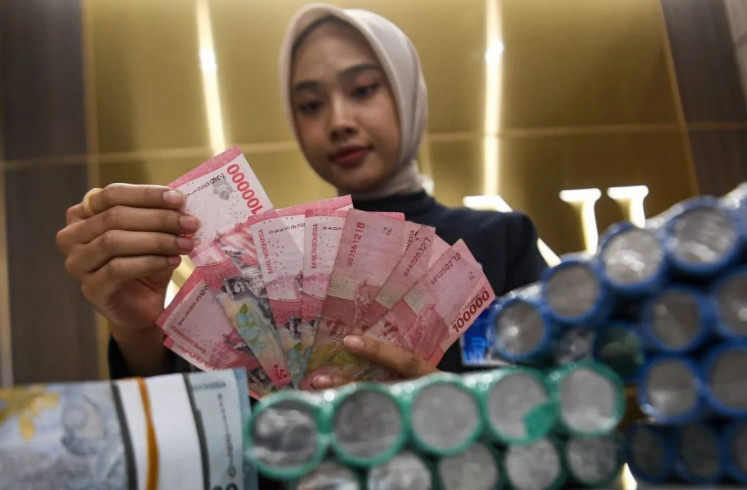
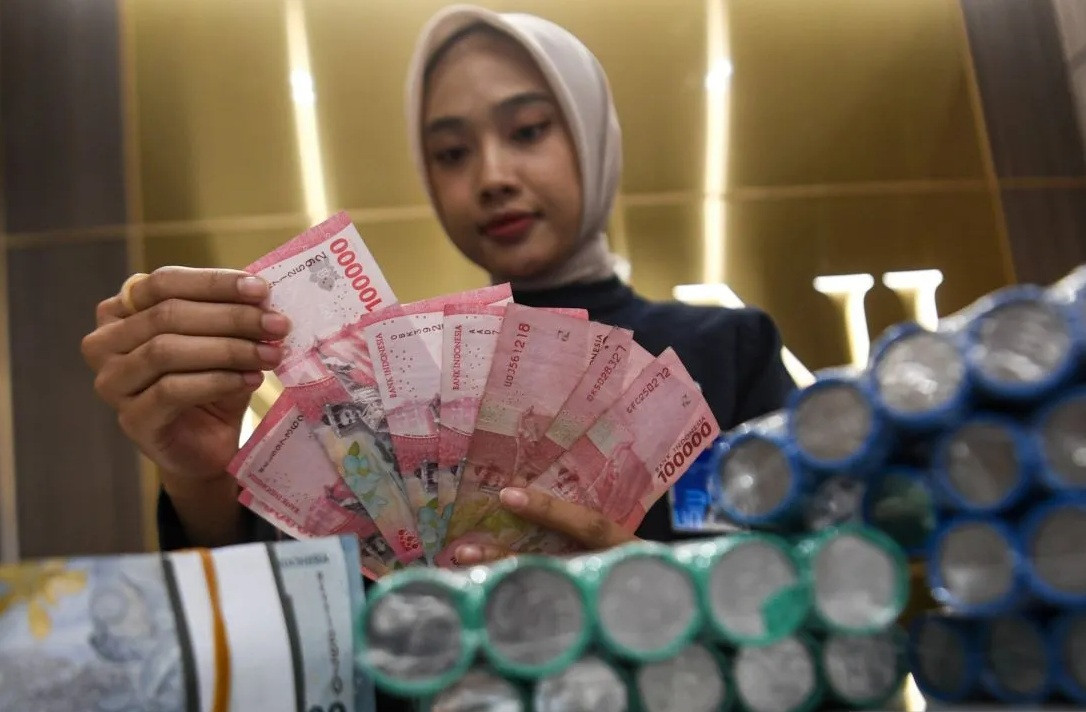 A teller counts rupiah banknotes at the BNI Pasar Baru branch in Central Jakarta on Oct. 27, 2025. (Antara/Muhammad Adimaja)
I
ndonesian banking liquidity has tightened in 2026, although system-wide buffers remain adequate and above regulatory thresholds. The pressure is increasingly visible in daily liquidity conditions, with Indonesia Overnight Index Average (INDONIA) rising from around 4 percent to 6.6 percent during the second quarter.
This tightening reflects a combination of elevated global uncertainty, intermittent capital outflows, higher foreign-currency demand and domestic policy measures aimed at maintaining rupiah stability.
Domestic intermediation has also remained strong. As of July 2026, bank lending grew by 13.58 percent year-on-year (yoy), outpacing third-party fund growth of 11.21 percent. Consequently, the Loan-to-Deposit Ratio increased from 85.4 percent to 88.38 percent at the end of 2025.
With credit expanding faster than deposits, banks have become more dependent on higher-cost deposits, wholesale funding, repo facilities and active liquidity management.
At the same time, Bank Indonesia’s stabilization measures, including foreign-exchange intervention, a relatively firm interest-rate stance and the issuance of BI Rupiah Securities (SRBI), have helped contain pressure on the rupiah but may temporarily absorb its liquidity. Government cash operations have also contributed to fluctuations in the distribution of liquidity across banks.
Together, these developments have made liquidity more expensive and increasingly segmented, even though aggregate conditions remain manageable.

Smaller external liquidity buffer
External-sector developments are likely to provide less support to domestic liquidity. We expect export growth to slow from 6.1 percent yoy in 2025 to 2.5 percent in 2026, while imports are projected to increase by around 11.8 percent. As a result, the trade surplus could narrow from approximately US$41 billion to $19.7 billion.
A smaller trade surplus implies a more limited supply of export proceeds that can be converted into rupiah and placed in the banking system.
Import pressure became increasingly visible in the second quarter of 2026. Imports reached approximately $75.9 billion, rising by around 26 percent yoy, driven partly by an 85 percent increase in oil and gas imports amid elevated energy prices. This contributed to a trade deficit of around $2 billion during the quarter. Foreign-exchange payments by energy companies can also reduce rupiah deposits as funds are converted and transferred overseas.
Fiscal dynamics and government cash operation can also influence liquidity. Government spending accelerated in July 2026 and should generally provide support to banking liquidity as funds are transferred to households, suppliers and contractors. As of July, government expenditure reached Rp 1.97 quadrillion, an increase of 18.2 percent yoy and equivalent to 51.2 percent of the full-year budget.
Meanwhile, tax revenue reached around Rp 1.22 quadrillion ($110.3 billion) as of July, increasing by 23.7 percent yoy. Stronger revenue collection supports fiscal sustainability, but it may temporarily reduce private-sector liquidity, particularly with the rising postponement of tax refunds.
Furthermore, the planned withdrawal of part of the government’s fund placement fund may warrant attention, particularly in terms of timing. A sizeable withdrawal toward the end of December could coincide with tax payments, corporate settlements, import financing and other seasonal cash requirements, potentially leading to a temporary tightening in liquidity conditions.
Higher for longer global rates
Liquidity conditions improved somewhat entering the third quarter, but the outlook toward year-end remains challenging. Geopolitical tensions continue in the Middle East and the Russia-Ukraine conflict, keeping global risk sentiment fragile and energy prices relatively elevated.
Global interest rates are also likely to remain relatively high. The Federal Reserve raised the Fed Funds Rate (FFR) by 25 basis points to 3.75 percent-4 percent at its September 2026 meeting, marking the first increase since 2023. The median FFR projection for the end of 2026 was revised to 4.1 percent, leaving room for another rate increase. The projection for end-2027 was also raised to 4.1 percent, reinforcing expectations of a higher-for-longer rate environment.
With the BI-Rate currently at 5.75 percent, the spread against the upper bound of the FFR stands at around 175 basis points. A further 25 basis point Fed hike would narrow the spread to approximately 150 basis points. This could limit Bank Indonesia’s room to ease and may require a higher domestic interest-rate profile to preserve the attractiveness of rupiah-denominated assets.
Persistently high United States interest rates would also keep US Treasury yields elevated, potentially limiting capital flows to emerging markets and placing upward pressure on domestic bond yields. These conditions would eventually feed into bank funding costs through higher deposit rates, wholesale funding costs and lending rates.
Managing year-end liquidity cycle
Year-end is typically associated with larger corporate cash outflows. This is increasingly relevant because bank deposits have become more concentrated among large depositors. Deposits above Rp 5 billion grew by 17.3 percent yoy and accounted for around 58 percent of total deposits, while individual deposits increased by only 2.8 percent.
This concentration makes liquidity more sensitive to decisions by a relatively small number of large corporate and institutional depositors. Three major sources of year-end cash outflows warrant particular attention.
First, tax payments and tax deposits generally increase ahead of the fiscal year end, temporarily transferring funds from corporate bank accounts to the government.
Second, payments to suppliers and vendors, along with capital expenditure realization, tend to accelerate before the financial year end. Corporates may also draw down previously approved but undisbursed loan facilities, which still represent around 25 percent of total facilities.
Third, import payments for Christmas and New Year inventories and Ramadan 2027 preparations could raise foreign currency demand. External debt repayments, particularly amid a stronger US dollar, may add to these requirements.
Against this backdrop, continued policy coordination will be essential to ensure that liquidity remains adequate to support productive financing and sustain Indonesia’s economic momentum into 2027.
*****
The writer is an economist at Bank Mandiri