The Jakarta Post
Please Update your browser
Your browser is out of date, and may not be compatible with our website. A list of the most popular web browsers can be found below.
Just click on the icons to get to the download page.


Popular Reads
Top Results
No results found. Please check your search term and try again
Can't find what you're looking for?
View all search results
Popular Reads
Top Results
No results found. Please check your search term and try again
Can't find what you're looking for?
View all search resultsDecade-long study reveals whale shark Indonesia hotspots
The research published Thursday fills in critical gaps in knowledge about the endangered species, and builds the case for increased protection of the Indonesian bays that the species flocks to, scientists said.
Change text size
Gift Premium Articles
to Anyone
Share the best of The Jakarta Post with friends, family, or colleagues. As a subscriber, you can gift 3 to 5 articles each month that anyone can read—no subscription needed!
 Set as preferred source
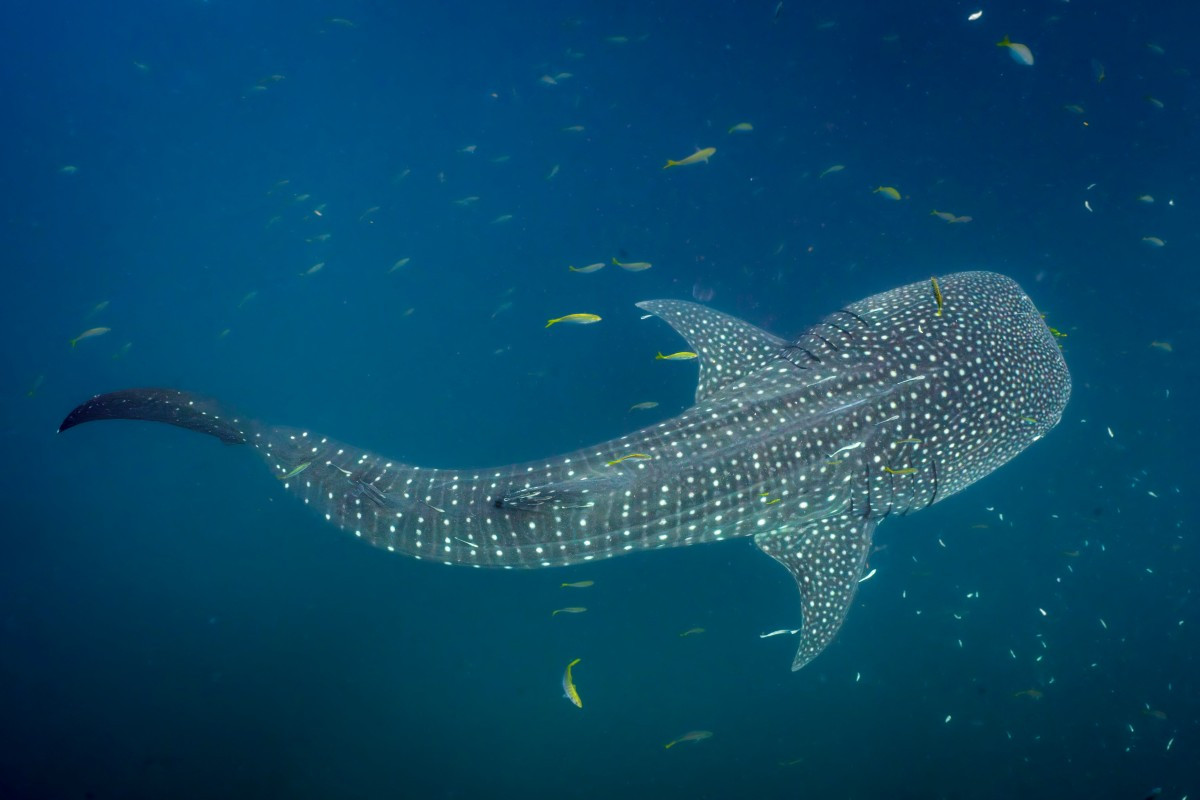 This handout photo by Jonathan Irish for Conservation International taken on March 19, 2023 and released on April 29, 2026 shows a whale shark in the waters off Raja Ampat Islands in Southwest Papua. A decade-long study tracking dozens of whale sharks off Indonesia's coast has revealed the secrets of their migrations and two hotspots where they gather year-round. (AFP/Conservation International /Jonathan Irish)
A
decade-long study tracking dozens of whale sharks off Indonesia's coast has revealed the secrets of their migrations and two hotspots where they gather year-round.
The research published Thursday fills in critical gaps in knowledge about the endangered species, and builds the case for increased protection of the Indonesian bays that the species flocks to, scientists said.
Whale sharks, which are a type of shark, not whale, face threats including pollution, tourism and vessel strikes.

While their speckled skin and stunning size make them instantly recognizable and a tourist draw, little was known about how the species moved between well-established gathering points.
Researchers in Indonesia aimed to change that by tagging Indo-Pacific whale sharks, which represent about 60 percent of the species, and tracing their movements.
Over a decade, they tagged 70 whale sharks at sites in Indonesia. Some were tracked for nearly three years.
"We could actually map or identify many variations of whale shark movement," said Mochamad Iqbal Herwata Putra, the study's lead author.
"The whale sharks that we tagged moved through (waters of) 13 different countries as well as the high seas," he told AFP.
The research, published in the Frontiers in Marine Science journal, also revealed that two bays in Indonesia host whale sharks year-round, rather than seasonally as previously thought.
"This is very unique," said Putra, focal species conservation senior manager at NGO Konservasi Indonesia.
While most "aggregation sites" for whale sharks are believed to be seasonal gathering points, Cenderawasih Bay off Indonesia's Papua province and Saleh Bay in Sumbawa are "like home for them", Putra said.
A combination of protection from predators and high availability of food such as krill make the bays crucial hotspots, with some evidence they may also function as nurseries.
Cenderawasih Bay is already protected as a national park, and its remote location has helped temper mass tourism.

But Saleh Bay is both popular with visitors and in a region with growing corn production on land and aquaculture at sea.
Both these industries can produce pollution -- include pesticide runoff and sedimentation -- that impacts water quality and whale sharks.
Putra noted that Indonesia recorded dozens of whale shark strandings in recent years. Pollution and interactions with fishing vessels are believed to be among the causes.
Konservasi Indonesia is working with the government to establish the country's first whale shark-specific marine protected area in Saleh Bay, which Putra said he hoped would come into effect this year.


More from The Weekender

Of cats and writers
After 19 years, a beloved cat leaves behind more than memories: he survives in a family’s lore, two novels, and the peculiar bond between writers and their feline muses.

The girl I chose to forget
Growing up complicated a childhood love of Indonesia. Years later, an old song offers one young writer a way back: not to innocence, but to a more difficult kind of belonging.

A year after Affan: The anger that stayed
A year after Affan Kurniawan’s death, the fury that spilled into Jakarta’s streets has not disappeared. It has settled into other forms: exhaustion, distrust and a lingering sense that nothing has really changed.