The Jakarta Post
Please Update your browser
Your browser is out of date, and may not be compatible with our website. A list of the most popular web browsers can be found below.
Just click on the icons to get to the download page.


Popular Reads
Top Results
No results found. Please check your search term and try again
Can't find what you're looking for?
View all search results
Popular Reads
Top Results
No results found. Please check your search term and try again
Can't find what you're looking for?
View all search results‘Names in our Veins’: Two generations, one inherited history
Artworks by FX Harsono and Vincent Ruijters trace erased names, mass violence and ancestral memory across the Chinese-Indonesian diaspora.
Change text size
Gift Premium Articles
to Anyone
Share the best of The Jakarta Post with friends, family, or colleagues. As a subscriber, you can gift 3 to 5 articles each month that anyone can read—no subscription needed!
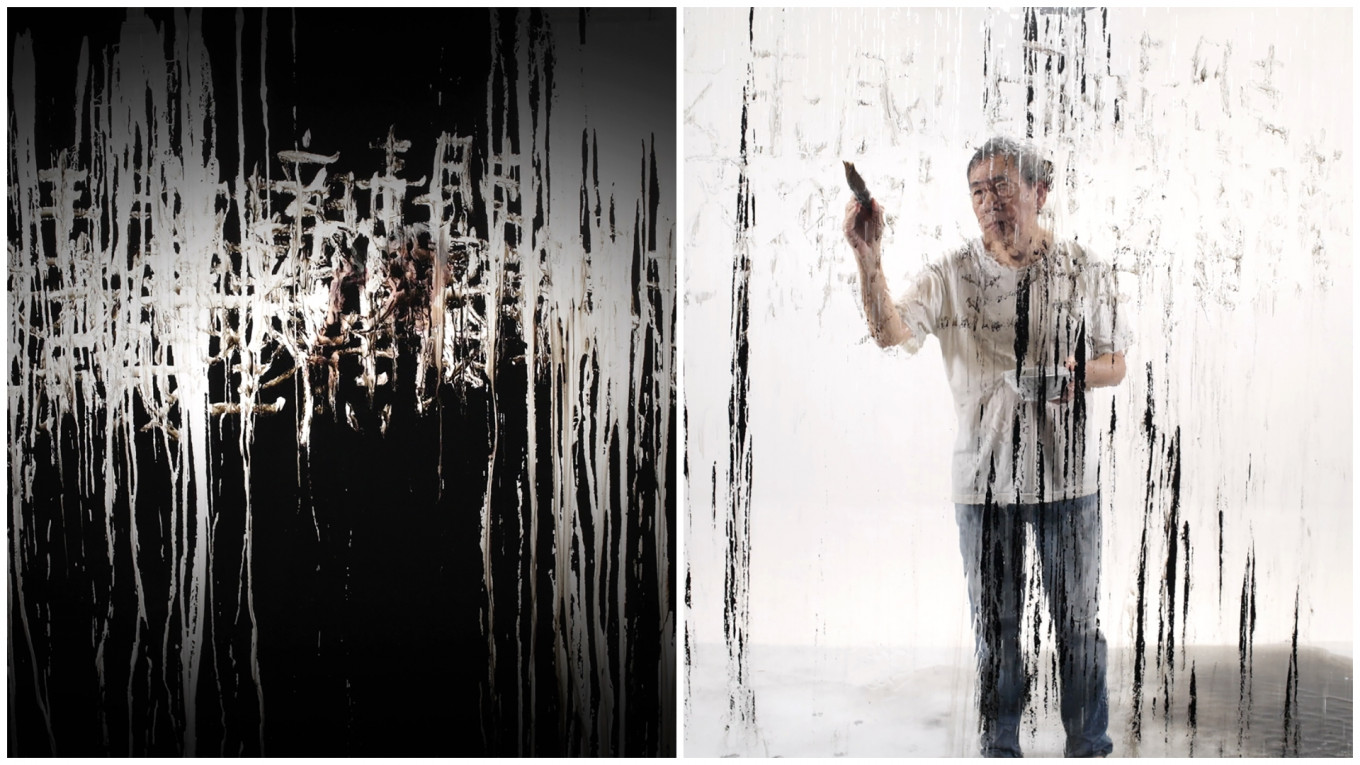 Writing through darkness: A combination of images shows "Writing in the Dark Rain" (2025), a single-channel video work by FX Harsono in which the artist writes against a dark backdrop streaked with paint. The work is part of Names in Our Veins, on display from Sept. 3 to Jan. 3, 2027, at the Stedelijk Museum Amsterdam in the Netherlands. (Courtesy of FX Harsono/-)
A
t a time when advanced contemporary art is trying to imagine “other futures”, Buro Stedelijk within the Stedelijk Museum Amsterdam, the Netherlands, instead looks back to history and the human condition.
Brought together by Malaysian-born, internationally recognized curator Jo-Lene Ong, Names in our Veins brings together two generations of artists from the Chinese-Indonesian diaspora: seminal Indonesian artist FX Harsono (b. 1949, Blitar) and Dutch internationally recognized contemporary multimedia and intermedia installation artist Vincent Ruijters (b. 1988, The Hague).
Their works are prompted by an intrinsic desire for honest clarity in confronting questions of authentic identity and humanity within the Chinese-Indonesian experience, discrimination in the case of Harsono and ancestral memory in Ruijters’ work.
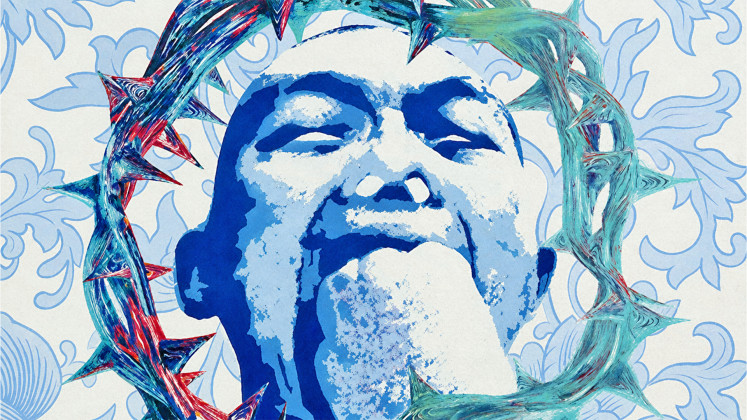
While Harsono’s works confront state politics, erased Chinese names and mass graves he witnessed firsthand, Ruijters speaks from a double-diaspora perspective in the Netherlands.
The exhibition displays three of Harsono’s videos: “Writing in the Rain” (2011), “Writing in the Dark Rain” (2025) and “Rewriting on the Tomb”, as well as “Pilgrimage to History”.
Harsono’s “Writing in the Rain” shows him relentlessly trying to write his Chinese name against a glass plate, only for it to be washed away each time by downpours of rain. The work is metaphorical of how any sign of Chinese culture during the Suharto regime was countered.
But whatever happens, his name cannot be erased. It emerges and is documented in 2025 in “Writing in the Dark Rain”, in which Harsono wipes away black paint from glass to reveal his name.
More from The Weekender
A passport to the kingdom of the sick
A breast cancer diagnosis, a journey to the kingdom of the sick and a determination to describe what lies there without metaphor, euphemism or the word “fight.”

The weight of time
Richard Mille’s newest ultralight timepiece pares down haute horlogerie to its mechanical necessities, proving that sophistication often comes from knowing what to leave out.
At this wellness retreat, your poo is everybody’s business
Ayurvedagram promises balance through ancient Ayurvedic practices. For four days, I surrendered my schedule, my modesty and, almost, my digestive tract.