The Jakarta Post
Please Update your browser
Your browser is out of date, and may not be compatible with our website. A list of the most popular web browsers can be found below.
Just click on the icons to get to the download page.


Popular Reads
Top Results
No results found. Please check your search term and try again
Can't find what you're looking for?
View all search results
Popular Reads
Top Results
No results found. Please check your search term and try again
Can't find what you're looking for?
View all search resultsBetween Multatuli’s legacy and modern politics
Three decades after documenting life in Lebak, Dutch writer and visual storyteller Arjan Onderdenwijngaard returned to explore how the district has changed, and whether the power structures Multatuli criticized ever truly disappeared.
Change text size
Gift Premium Articles
to Anyone
Share the best of The Jakarta Post with friends, family, or colleagues. As a subscriber, you can gift 3 to 5 articles each month that anyone can read—no subscription needed!
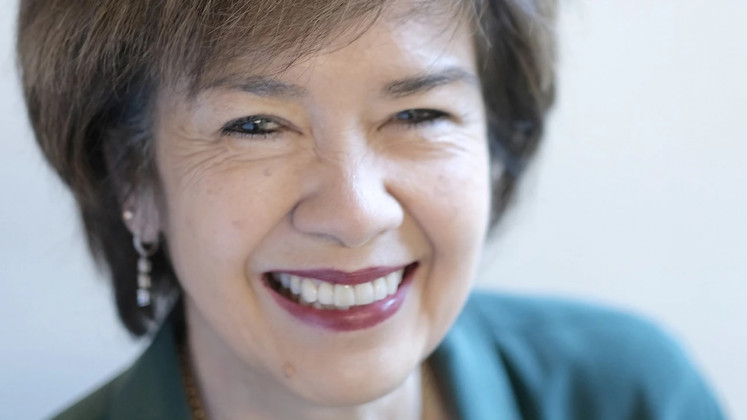
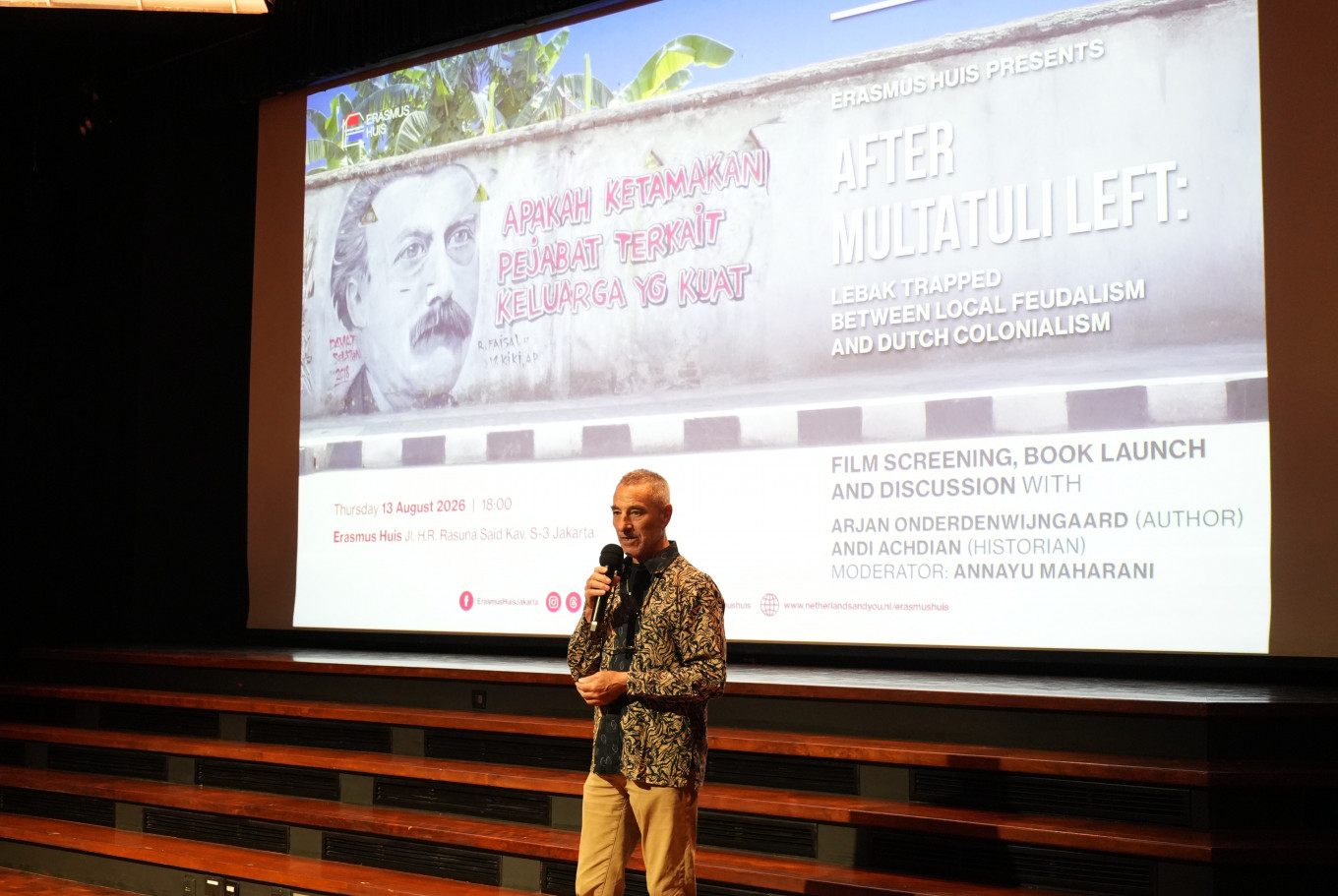 Revisiting Multatuli: Dutch visual storyteller and writer Arjan Onderdenwijngaard speaks on Aug. 13, 2026, ahead of a screening of After Multatuli Left at Erasmus Huis in Jakarta. (Courtesy of Erasmus Huis/-)
T
hirty-two years after filming the lives of people in Badur, a small village in Lebak, Banten, Dutch visual storyteller and writer Arjan Onderdenwijngaard returned to see what had changed.
His return became the starting point for After Multatuli Left, a documentary directed by Yogi D. Sumule, and Lebak, Kota Multatuli: Terjebak antara Feodalisme Lokal dan Kolonialisme Belanda (Lebak, the City of Multatuli: Trapped Between Local Feudalism and Dutch Colonialism), a book by Onderdenwijngaard examining social and cultural changes in Lebak and how Multatuli’s ideas have resonated across generations.
Eduard Douwes Dekker, better known by his pen name Multatuli, was a Dutch colonial official who spent several months as assistant resident of Lebak in the 1850s. After clashing with the colonial administration over its treatment of indigenous people, he resigned and later wrote Max Havelaar, a novel that exposed oppression and corruption under the Cultivation System in the Dutch East Indie

The film and book were presented at Erasmus Huis in Jakarta at a recent screening, book launch and discussion featuring Onderdenwijngaard and historian Andi Achdian.
Onderdenwijngaard first visited Badur in 1987, when he filmed the daily lives of its residents. In 2019, he returned to find some familiar faces and see how their lives had changed.
Rasif, one of the people featured in the film, had once lived in a traditional wooden house. After years of hard work, he was able to build a brick house, a modest but tangible sign of economic improvement, Onderdenwijngaard said during the discussion.
But the improvement was uneven.
More from The Weekender

Siapa Anda? Mengapa Anda?
What begins as a small grammatical curiosity becomes a larger question about language, culture and the way we understand ourselves in relation to others - and, ultimately, about what we risk losing in a world increasingly impatient with reflection, ambiguity and the humanities.
A passport to the kingdom of the sick
A breast cancer diagnosis, a journey to the kingdom of the sick and a determination to describe what lies there without metaphor, euphemism or the word “fight.”

The weight of time
Richard Mille’s newest ultralight timepiece pares down haute horlogerie to its mechanical necessities, proving that sophistication often comes from knowing what to leave out.