The Jakarta Post
Please Update your browser
Your browser is out of date, and may not be compatible with our website. A list of the most popular web browsers can be found below.
Just click on the icons to get to the download page.


Popular Reads
Top Results
No results found. Please check your search term and try again
Can't find what you're looking for?
View all search results
Popular Reads
Top Results
No results found. Please check your search term and try again
Can't find what you're looking for?
View all search resultsIndonesia on alert after Australia bird flu detection
Change text size
Gift Premium Articles
to Anyone
Share the best of The Jakarta Post with friends, family, or colleagues. As a subscriber, you can gift 3 to 5 articles each month that anyone can read—no subscription needed!
 Set as preferred source
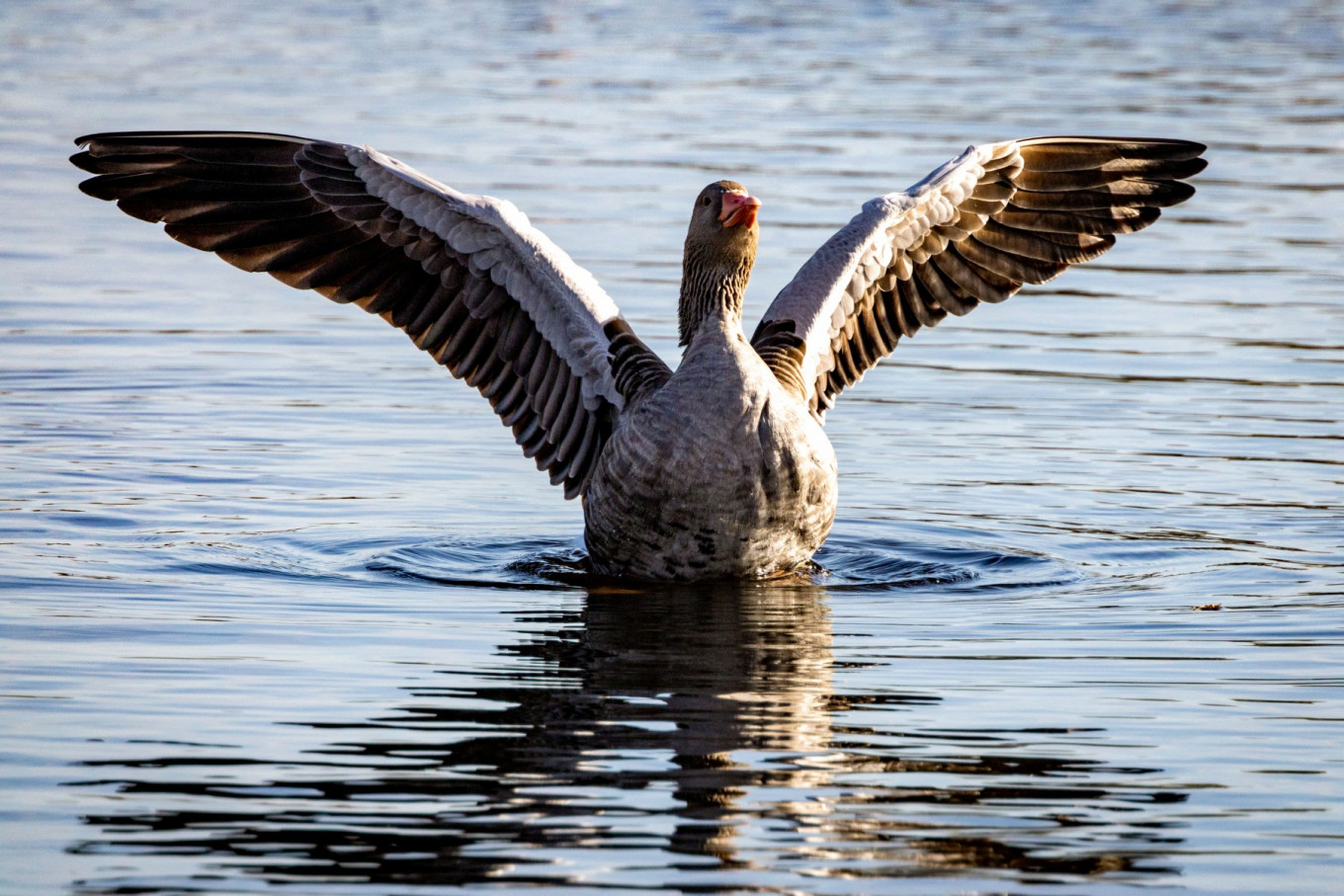 A migrating wild goose spreads its wings on Oct. 29, 2025, in wetlands near Linum, eastern Germany. The eastern federal state of Brandenburg and other federal states, authorities have recorded the largest outbreak of bird flu in wild birds to date. The epidemic, which is unprecedented in its scale, mainly affects cranes, whose autumn migration is currently at its peak. A significant increase in deaths and rapid spread in Central Europe and along the migration route to Spain is therefore to be expected. (AFP/Odd Andersen)
T
he detection of the highly pathogenic H5N1 bird flu virus in wild birds on mainland Australia has raised concerns across the Asia-Pacific, with experts urging Indonesia to strengthen surveillance and biosecurity to prevent cross-border transmission.
Australia, the last continent previously free of the deadly avian influenza virus, confirmed its first H5N1 case on Saturday after a migratory seabird was found sick in Esperance, Western Australia.
Authorities have since stepped up surveillance after two more infected wild birds were detected by Wednesday, one in Western Australia and another in South Australia, heightening concerns over the potential impact on the country's poultry industry.
Bird flu can cause mass deaths among wild birds and poultry. Although human infections remain rare, outbreaks have led to the culling of hundreds of millions of birds worldwide, disrupting food supplies and driving up prices.
Following the detection, Ingham's, one of Australia's largest poultry producers, locked down its breeder farms in Western Australia and restricted nonessential access as a precaution. Australian authorities, however, stressed that the country remains free of avian influenza in commercial poultry.
The confirmed cases have prompted neighboring countries to step up vigilance. Papua New Guinea, Australia’s largest export market for poultry products, had earlier imposed restrictions on Australian poultry imports, according to Australia’s Department of Agriculture, Fisheries and Forestry.

Read also: Australia ramps up bird flu testing as Papua New Guinea blocks poultry imports