The Jakarta Post
Please Update your browser
Your browser is out of date, and may not be compatible with our website. A list of the most popular web browsers can be found below.
Just click on the icons to get to the download page.


Popular Reads
Top Results
No results found. Please check your search term and try again
Can't find what you're looking for?
View all search results
Popular Reads
Top Results
No results found. Please check your search term and try again
Can't find what you're looking for?
View all search resultsTrial begins for ex-minister Yaqut in haj corruption case
The trial of former religious affairs minister Yaqut Cholil Qoumas began on Tuesday at the Jakarta Corruption Court, with prosecutors accusing him of abusing his authority in the management of the haj quota three years ago to enrich himself, ministry officials and private travel agencies.
Change text size
Gift Premium Articles
to Anyone
Share the best of The Jakarta Post with friends, family, or colleagues. As a subscriber, you can gift 3 to 5 articles each month that anyone can read—no subscription needed!
 Set as preferred source
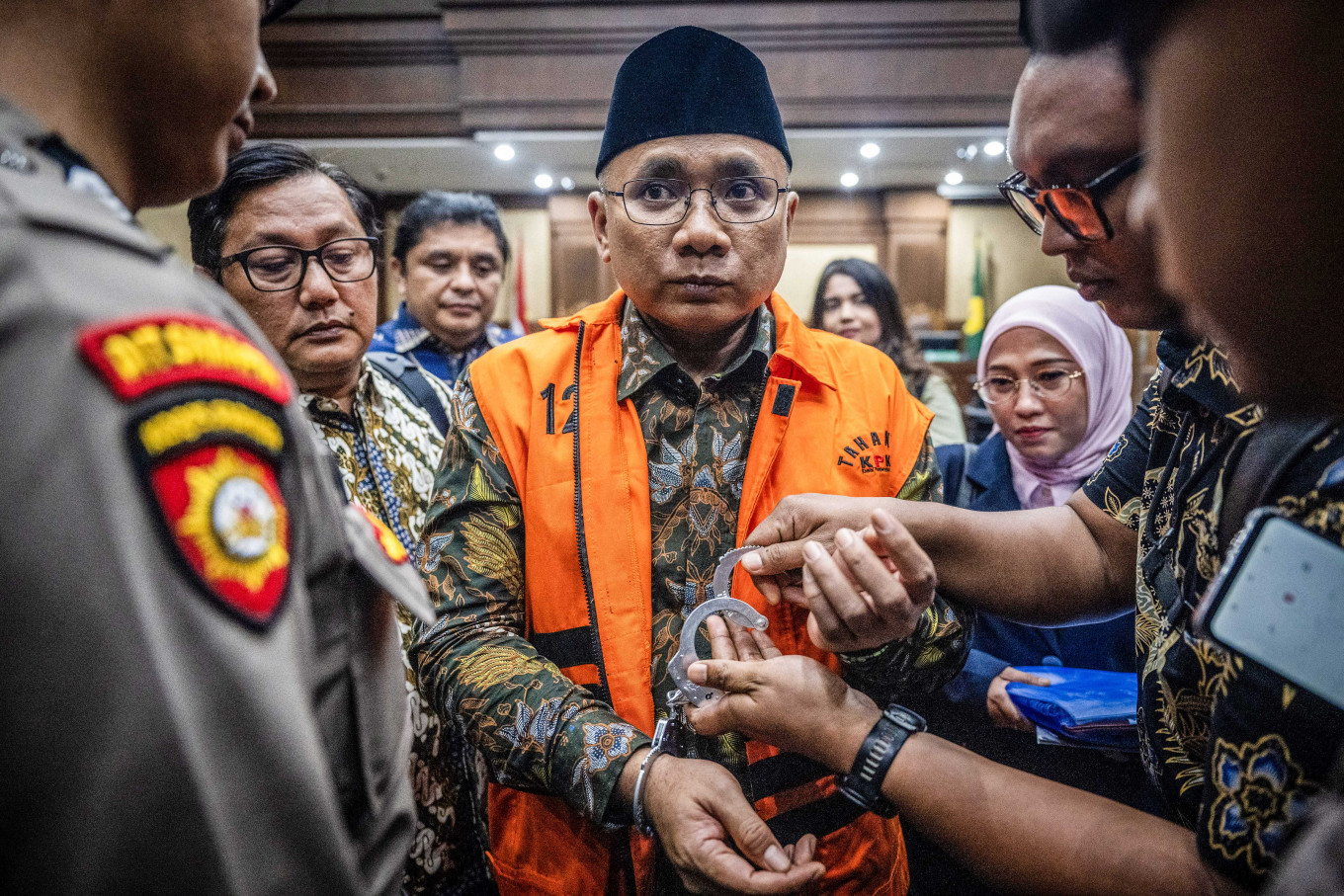 Graft defendant Yaqut Cholil Qoumas (center) is handcuffed on Tuesday, Aug. 11, 2026, after a court hearing to read the indictment in a Haj quota corruption case at the Jakarta Corruption Court. Corruption Eradication Commission (KPK) prosecutors accused the former religious affairs minister of causing Rp 622 billion (US$38.6 million) in state losses. (Antara/Bayu Pratama S)
T
he trial of former religious affairs minister Yaqut Cholil Qoumas began on Tuesday at the Jakarta Corruption Court, with prosecutors accusing him of abusing his authority in the management of haj quota three years ago to enrich himself, ministry officials and private travel agencies.
Prosecutors from the Corruption Eradication Commission (KPK) alleged that Yaqut had abused his authority when distributing the extra spots for 2023 and 2024 haj seasons equally between the state-subsidized regular haj and the special haj programs, even though the prevailing law caps the latter to 8 percent.
The exclusive plan offers a shorter waiting period in exchange for a higher price tag and is managed by private travel agencies.
For the 2023 and 2024 haj pilgrimage, Indonesia received an extra allotment for 8,000 and 20,000 from Saudi Arabia, respectively, on top of the annual national quota of 221,000.
With a limited haj quota each year for Indonesia’s 250 million Muslim population, pilgrims typically have to wait for years to perform the pilgrimage, with a longer period for the highly-demanded regular plans.
In the indictment, prosecutors said Yaqut allegedly colluded with Ismail Adham, operations director of Maktour travel agency, and Asrul Aziz Taba, who chairs Kesthuri, an association of private travel agencies organizing special haj programs, to increase the additional quota for travel providers above the prescribed cap.

The scheme effectively allowed travel agencies to gain more from the trips they sold and offered shorter wait times for pilgrims in exchange for what the prosecutors described as additional “acceleration fees”.