The Jakarta Post
Please Update your browser
Your browser is out of date, and may not be compatible with our website. A list of the most popular web browsers can be found below.
Just click on the icons to get to the download page.


Popular Reads
Top Results
No results found. Please check your search term and try again
Can't find what you're looking for?
View all search results
Popular Reads
Top Results
No results found. Please check your search term and try again
Can't find what you're looking for?
View all search resultsRats, drought compound woes for Central Java farmers
Authorities said the surge in the rat population was partly driven by a prolonged dry season, which has allowed dense scrub to grow and provide shelter for the pests.
Change text size
Gift Premium Articles
to Anyone
Share the best of The Jakarta Post with friends, family, or colleagues. As a subscriber, you can gift 3 to 5 articles each month that anyone can read—no subscription needed!
 Set as preferred source
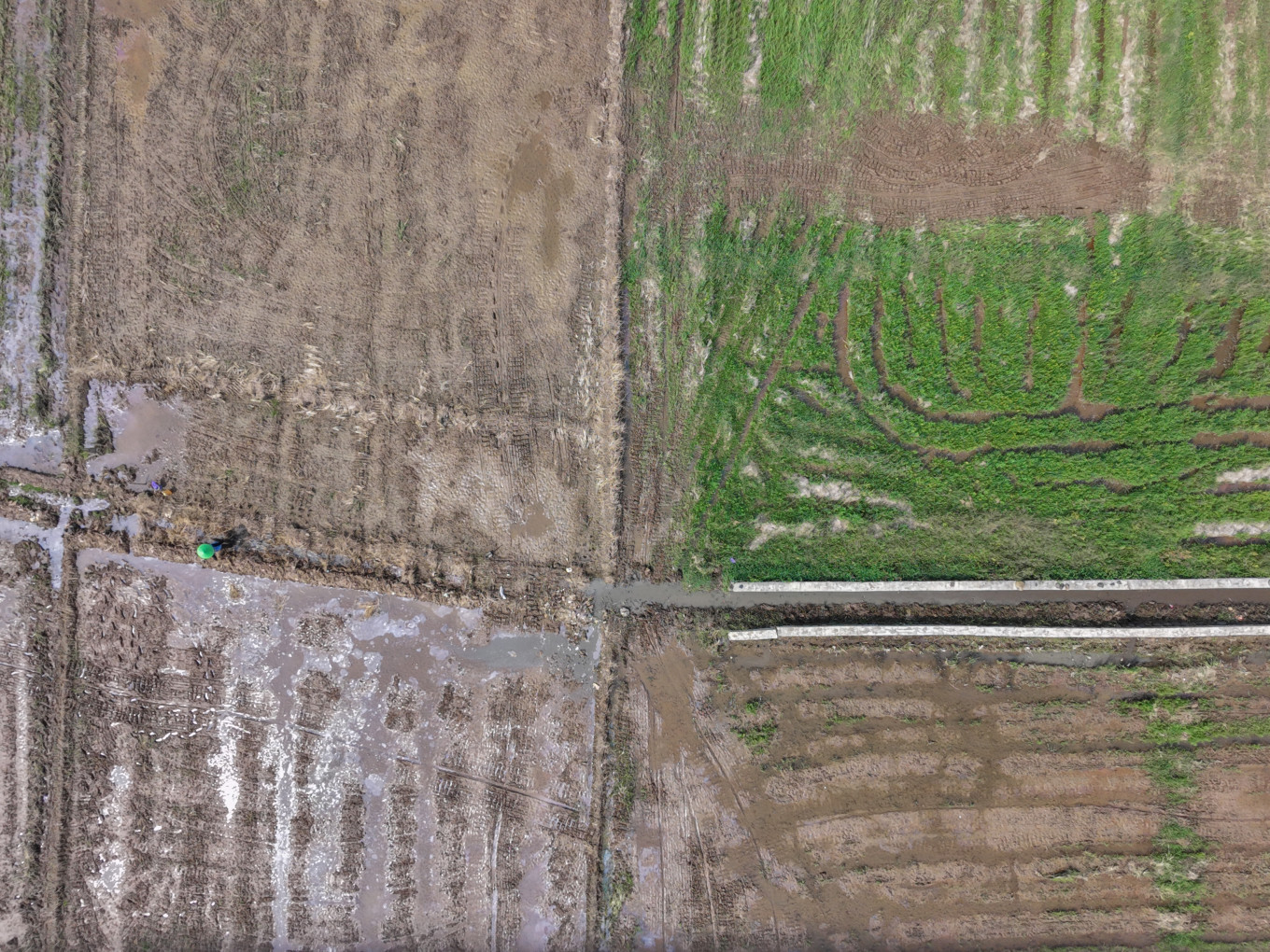 Be prepared: Farmers loosen soil using water flow from an irrigation canal on May 19 in Batang regency, Central Java. Agriculture Minister Andi Amran Sulaiman has said the government is allocating around Rp 5 trillion (US$282.28 million) for irrigation programs and the distribution of superior seeds to address potential drought caused by the upcoming El Niño weather system. (Antara/Harviyan Perdana Putra)
A
n extreme drought coupled with a surge in rat population is threatening farmers across Central Java with widespread crop losses, as the pests destroy staple crops and increasingly attack vegetables and fruit grown in fields and household gardens.
Rat infestations are damaging rice, corn, chillies, shallots, eggplant, tomatoes and fruit trees, according to local authorities.
In Semarang, rat infestations have affected about 1,050 hectares of rice fields, putting rice yields at risk.
Moh Edy Sukarno, head of the Semarang Agriculture, Fisheries and Food Agency, said authorities have taken several measures to contain the infestation, including clearing weeds around rice-field embankments, organizing mass rat hunts and encouraging farmers to plant simultaneously. The efforts, however, have so far failed to curb the attacks significantly.
"We have also built about 100 owl houses in affected rice fields to encourage owls, natural predators of rats, to return. But the programme has not been effective because wild owl populations have declined sharply," Edy said on Sunday, as quoted by Kompas.com.
Authorities said the surge in the rat population was partly driven by a prolonged dry season, which has allowed dense scrub to grow and provide shelter for the pests.

The decline of natural predators such as snakes and owls, due to hunting and habitat loss, has further disrupted the ecosystem, allowing rat populations to grow unchecked.