The Jakarta Post
Please Update your browser
Your browser is out of date, and may not be compatible with our website. A list of the most popular web browsers can be found below.
Just click on the icons to get to the download page.


Popular Reads
Top Results
No results found. Please check your search term and try again
Can't find what you're looking for?
View all search results
Popular Reads
Top Results
No results found. Please check your search term and try again
Can't find what you're looking for?
View all search resultsAs forests fragment, arboreal bridges offer orangutans a lifeline
Habitat fragmentation limits orangutan movement between populations, potentially reducing genetic exchange and raising the risk of inbreeding, with implications for the species’ long-term survival.
Change text size
Gift Premium Articles
to Anyone
Share the best of The Jakarta Post with friends, family, or colleagues. As a subscriber, you can gift 3 to 5 articles each month that anyone can read—no subscription needed!
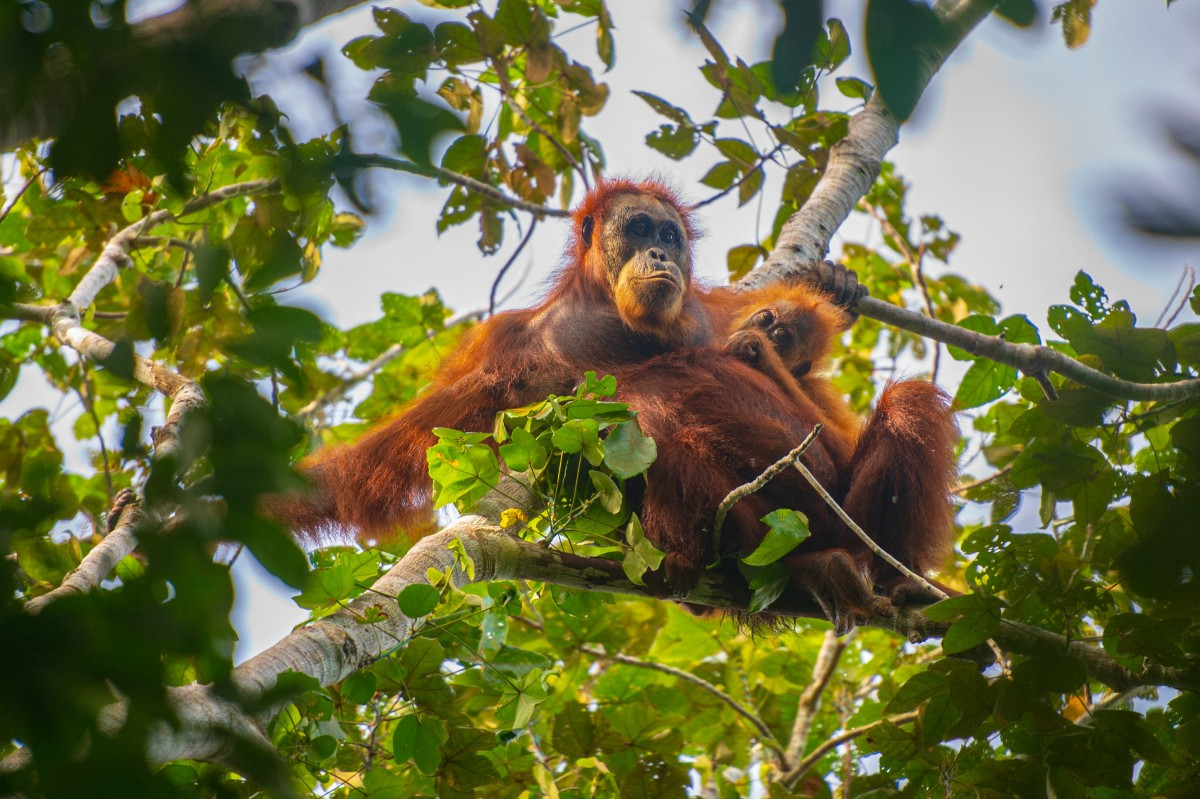 This undated handout photograph taken by the Orangutan Information Centre and released on June 10, 2026 shows the Tapanuli orangutans over a tree in the Batang Toru forest in Indonesia's North Sumatra. Climate change-fueled landslides wiped out nearly one in 10 remaining members of the world's rarest great ape species on Sumatra island, scientists said on June 10. (AFP/Handout/Orangutan Information Centre )
M
anmade arboreal bridges are emerging as a conservation tool to reconnect fragmented habitats for orangutans, as the critically endangered great apes face growing threats from infrastructure development, deforestation and climate change.
In the forests of Sumatra and Borneo, the only natural habitats of Sumatran, Tapanuli and Bornean orangutans, shrinking forests and expanding roads and settlements have increasingly isolated populations.
Habitat fragmentation limits orangutan movement between populations, potentially reducing genetic exchange and raising the risk of inbreeding, with implications for the species’ long-term survival.
At a discussion hosted by the National University in Jakarta on Thursday, conservationists said protecting orangutans should go beyond preserving forests and include ecological corridors that allow the tree-dwelling great apes to move across fragmented landscapes.
“Wildlife rescue cannot rely solely on protecting conservation areas. It must also include restoring connectivity between habitats through ecological corridors, supported by canopy bridges in areas where natural connectivity is no longer possible,” said Didik Prasetyo, director of the university’s Center for Forest and Wildlife Management Studies.
Read also: Sumatran, Tapanuli orangutan populations down nearly 20%, Forestry Ministry says

In North Sumatra, the Batang Toru forest is bisected by the Batang Toru river, with settlements and roads cutting across the landscape. Infrastructure development and deforestation have eventually reduced the forest cover and fragmented wildlife populations.