The Jakarta Post
Please Update your browser
Your browser is out of date, and may not be compatible with our website. A list of the most popular web browsers can be found below.
Just click on the icons to get to the download page.


Popular Reads
Top Results
No results found. Please check your search term and try again
Can't find what you're looking for?
View all search results
Popular Reads
Top Results
No results found. Please check your search term and try again
Can't find what you're looking for?
View all search resultsCentral Java seeks more power over free meals program after string of mass poisonings
Central Java has recorded 77 food poisoning incidents linked to the free meals program since the start of the year, affecting 13,390 people.
Change text size
Gift Premium Articles
to Anyone
Share the best of The Jakarta Post with friends, family, or colleagues. As a subscriber, you can gift 3 to 5 articles each month that anyone can read—no subscription needed!
 Set as preferred source
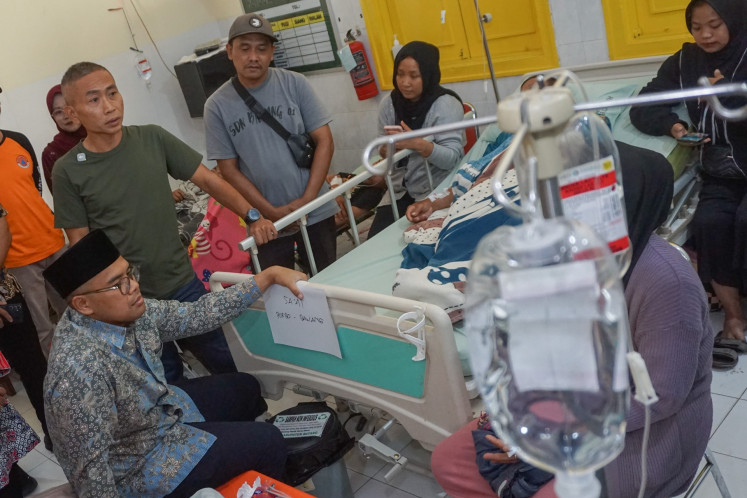
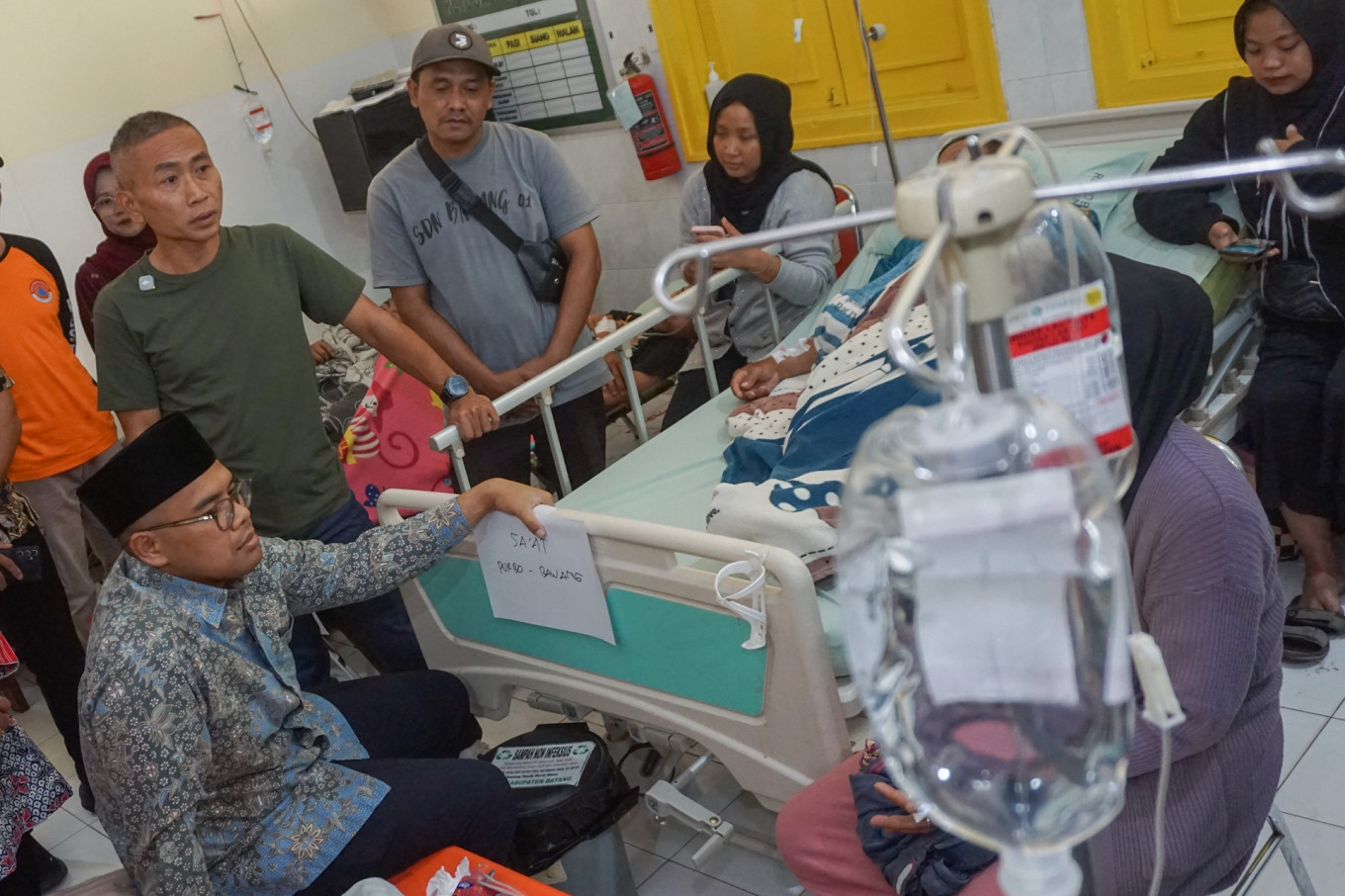 House of Representatives lawmaker Yoyok Riyo Sudibyo (top, left) of the NasDem Party and Batang regent Faiz Kurniawan (bottom, left) visit a patient on Thursday at the Kalisari Regional General Hospital (RSUD) in Batang regency, Central Java who was hospitalized after suffering from food poisoning from eating a meal package distributed under the free nutritious meal program. (Antara/Harviyan Perdana Putra)
C
entral Java’s administration has called for greater authority to oversee kitchens preparing free nutritious meals after food poisoning sickened more than 3,500 students across seven cities and regencies in the province this month.
Central Java Deputy Governor Taj Yasin Maimoen, who heads the local task force overseeing the initiative, said the task force had limited power to supervise kitchens and take action when violations were found.
He urged the National Nutrition Agency (BGN) to give task forces at both the provincial and municipal levels greater authority to strengthen oversight and take preventive measures against food poisoning.
“There were questions about why the Central Java administration could not suspend kitchens found to have violated food-safety rules, shut them down or take other action. After looking into it, we found that the task forces at the provincial and local levels do not have the authority to do so,” Yasin said on Monday, according to Kompas.id.
“We are an extension of the central government, so at the very least, we should be given the authority to take action against kitchens that violate the rules. After all, those who have fallen ill are our residents. If we had that authority, we could take more effective action, including collecting data, issuing warnings and suspending operations,” Yasin added.
Yasin said the task force had no authority to monitor food-safety procedures at free meal kitchens or conduct random inspections. Instead, it could only inspect kitchens after a food poisoning incident.

He said the task force’s responsibilities are to coordinate treatment for victims through local health agencies and to collect and send samples of food and water as well as specimens from victims to laboratories for testing. The findings were then reported to the BGN, which decides what action to take, including any sanctions against the kitchens involved.