The Jakarta Post
Please Update your browser
Your browser is out of date, and may not be compatible with our website. A list of the most popular web browsers can be found below.
Just click on the icons to get to the download page.


Popular Reads
Top Results
No results found. Please check your search term and try again
Can't find what you're looking for?
View all search results
Popular Reads
Top Results
No results found. Please check your search term and try again
Can't find what you're looking for?
View all search resultsExtortion fears threaten govt’s drug rehabilitation drive
Despite a legal framework for rehabilitating drug users instead of imprisoning them, the process is often bypassed on the ground.
Change text size
Gift Premium Articles
to Anyone
Share the best of The Jakarta Post with friends, family, or colleagues. As a subscriber, you can gift 3 to 5 articles each month that anyone can read—no subscription needed!
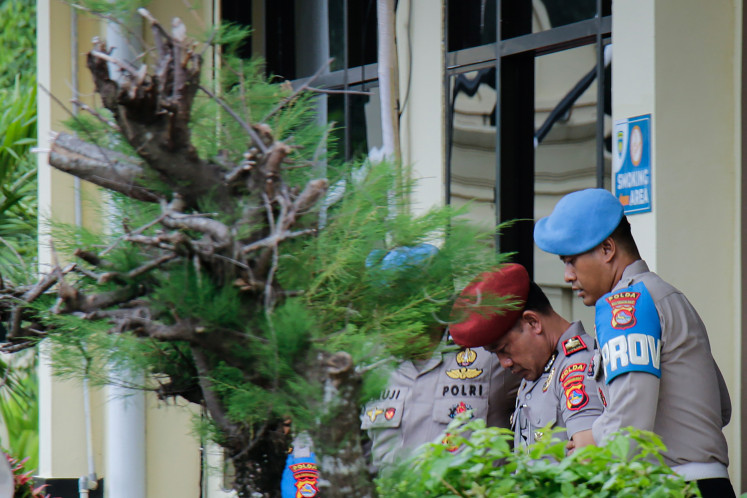
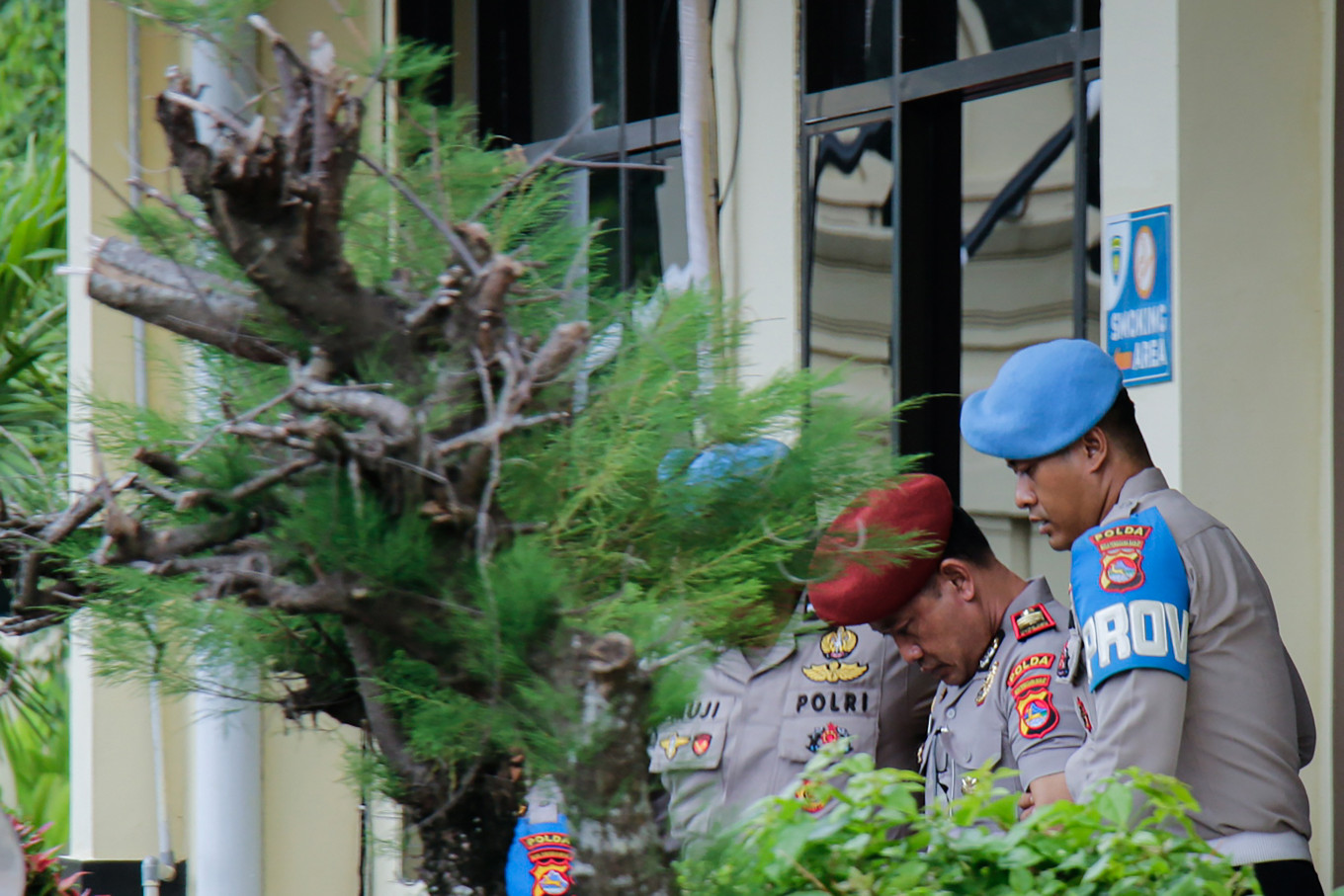 Dragged into drugs: Internal Affairs officers from the West Nusa Tenggara (NTB) Police escort Bima Police narcotics unit chief Adj. Comr. Malaungi (second right) to a detention room on Feb. 9, 2026, after he attended a police ethics hearing over a drug trafficking case at the NTB Police headquarters in Mataram, NTB. (Antara/Dhimas Budi Pratama)
T
he government's plan to expand drug rehabilitation as an alternative to imprisonment faces a deep-rooted crisis of trust, with advocates warning that extortion by law enforcement officers and rehabilitation providers continues to deter users from seeking treatment.
President Prabowo Subianto’s administration has recently renewed its push to combat prison overcrowding through mega-rehabilitation centers, with drug-related offenses accounting for more than half of the country’s prison population, according to Corrections Directorate General data.
The option for treatment instead of imprisonment has long been established by the 2009 Narcotics Law. A 2014 joint decree signed by seven state institutions further established an Integrated Assessment Team (TAT) to recommend rehabilitation or prosecution for those arrested on drug charges.
In practice, however, the assessment step is often bypassed, said Wahyu Khresna, the program manager at the Jakarta-based nonprofit Karisma Foundation providing community-centered rehabilitation.
“There are still many users who get arrested, then ‘negotiations’ happen so that they get into rehabilitation, or are let go by the police,” Wahyu told The Jakarta Post in late October.
While he blamed “rogue” officers for these extortions, Wahyu noted that some institutions enabled the practice to continue, without elaborating further.

The National Narcotics Agency’s (BNN) own officials acknowledge the gap. In an Oct. 10 statement, BNN Deputy for Community Empowerment Aldrin M.P. Hutabarat said many people recommended for rehabilitation by the TAT still faced legal proceedings.