The Jakarta Post
Please Update your browser
Your browser is out of date, and may not be compatible with our website. A list of the most popular web browsers can be found below.
Just click on the icons to get to the download page.


Popular Reads
Top Results
No results found. Please check your search term and try again
Can't find what you're looking for?
View all search results
Popular Reads
Top Results
No results found. Please check your search term and try again
Can't find what you're looking for?
View all search resultsWomen take everyday battles to Jakarta streets
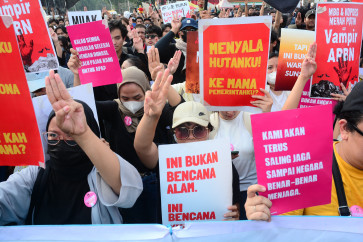
From expensive books and menstrual products to unpaid care work, protesters brought everyday grievances to Jakarta’s streets, demanding an end to inequality, discrimination and systemic injustice.
Change text size
Gift Premium Articles
to Anyone
Share the best of The Jakarta Post with friends, family, or colleagues. As a subscriber, you can gift 3 to 5 articles each month that anyone can read—no subscription needed!
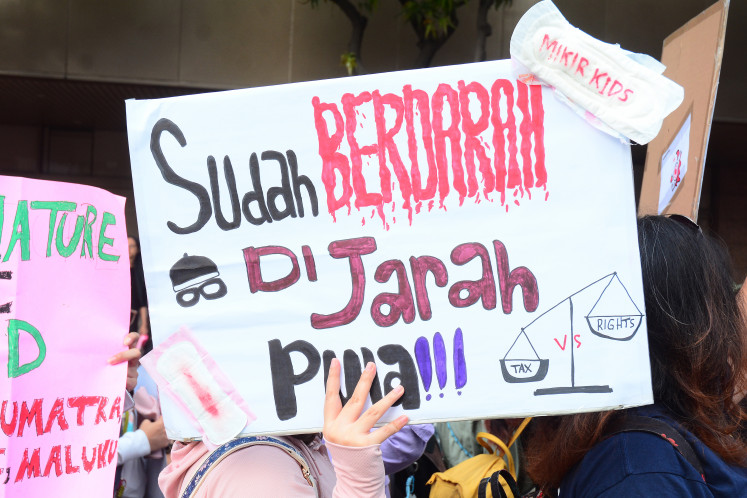
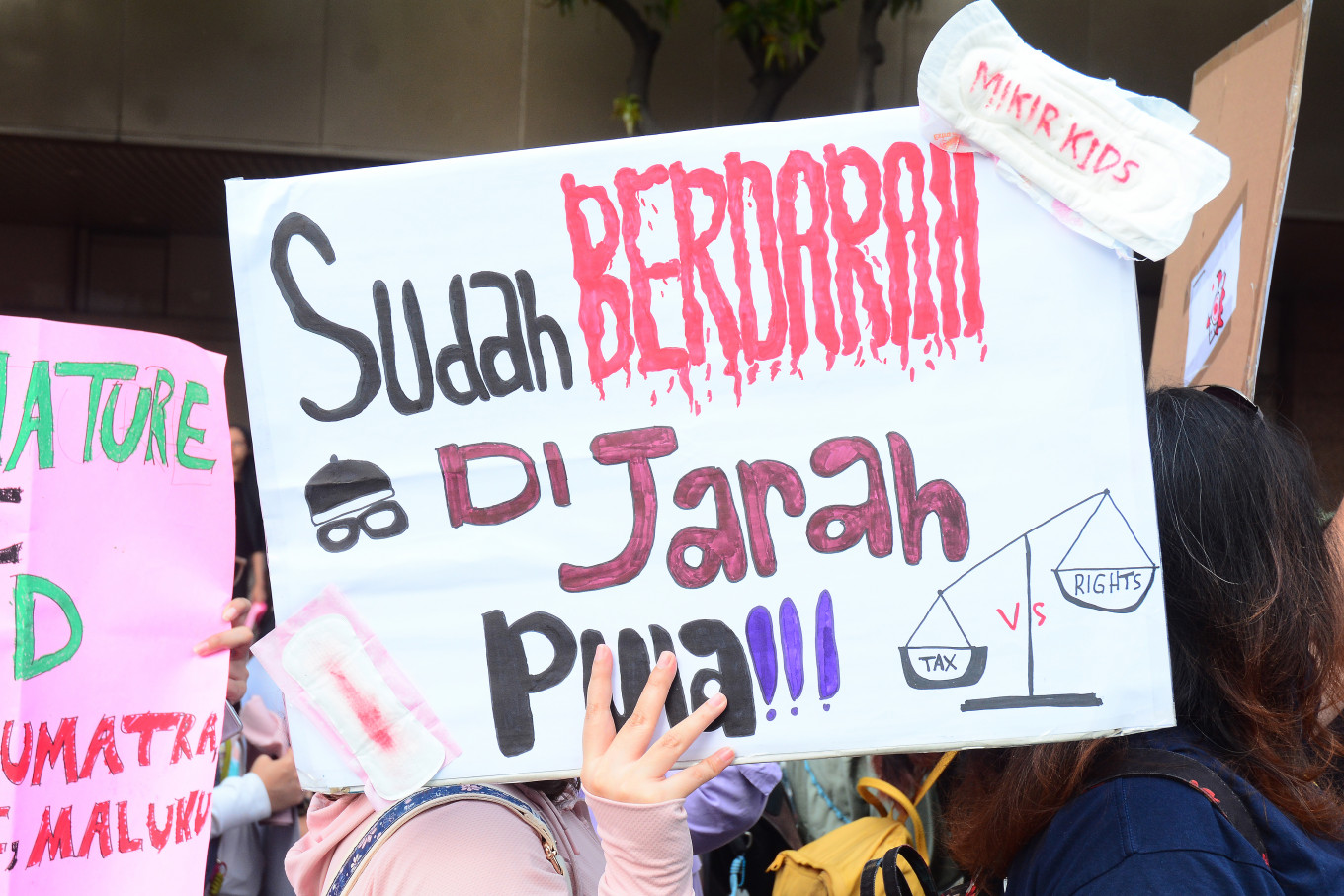 A woman participating in the 2026 Women’s March Jakarta holds a placard reading “Already bleeding, now being exploited” on Nov. 7 to protest the government’s policy of imposing taxes on sanitary pads, a menstrual health essential, during a rally along Jalan MH Thamrin in Central Jakarta. Protesters highlighted concerns that the tax policy would place an additional financial burden on women in meeting their menstrual health needs. (JP/Iqro Rinaldi)
“How can I be a baddie like Dua Lipa if books are so expensive?”
The banner, a reference to the British-Albanian singer’s book club, drew attention at Saturday’s Women’s March in Jakarta, where protesters turned everyday frustrations over the cost of living into calls for greater economic and social justice.
The sign, carried by Tifa, 36, reflected frustration over the widening gap between people’s incomes and the rising cost of everyday necessities. Books can easily cost more than Rp 100,000 (US$5,52) apiece, a significant expense for workers in many parts of the country, where regional minimum wages hover around Rp 2 million a month.
“How can people improve their literacy if buying a book alone means sacrificing, say, one-twentieth of their income?” the private-sector employee told The Jakarta Post during the rally.
The burden, she added, was even heavier for women, who continue to face gender pay gaps. “We feel the high cost of meeting even our most basic needs more keenly.”
The same frustration over the rising cost of living was reflected in protesters’ criticism of the 11 percent value-added tax (VAT) on menstrual products, another recurring theme on banners. Some read, “Apparently even our periods are the state’s business,” while another declared, “I’m paying tax for having a uterus.”

Some protesters also distributed sanitary pads to fellow marchers. Hany Fatihah, 25, who received one, said it was the first time she had witnessed such an initiative, describing it as a gesture of solidarity that also highlighted the high cost of menstrual products.