The Jakarta Post
Please Update your browser
Your browser is out of date, and may not be compatible with our website. A list of the most popular web browsers can be found below.
Just click on the icons to get to the download page.


Popular Reads
Top Results
No results found. Please check your search term and try again
Can't find what you're looking for?
View all search results
Popular Reads
Top Results
No results found. Please check your search term and try again
Can't find what you're looking for?
View all search resultsBiodiesel push risks reviving palm oil deforestation
Change text size
Gift Premium Articles
to Anyone
Share the best of The Jakarta Post with friends, family, or colleagues. As a subscriber, you can gift 3 to 5 articles each month that anyone can read—no subscription needed!
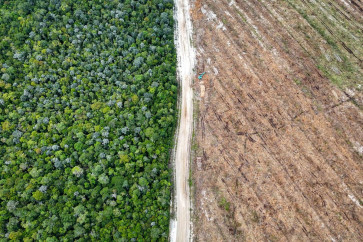
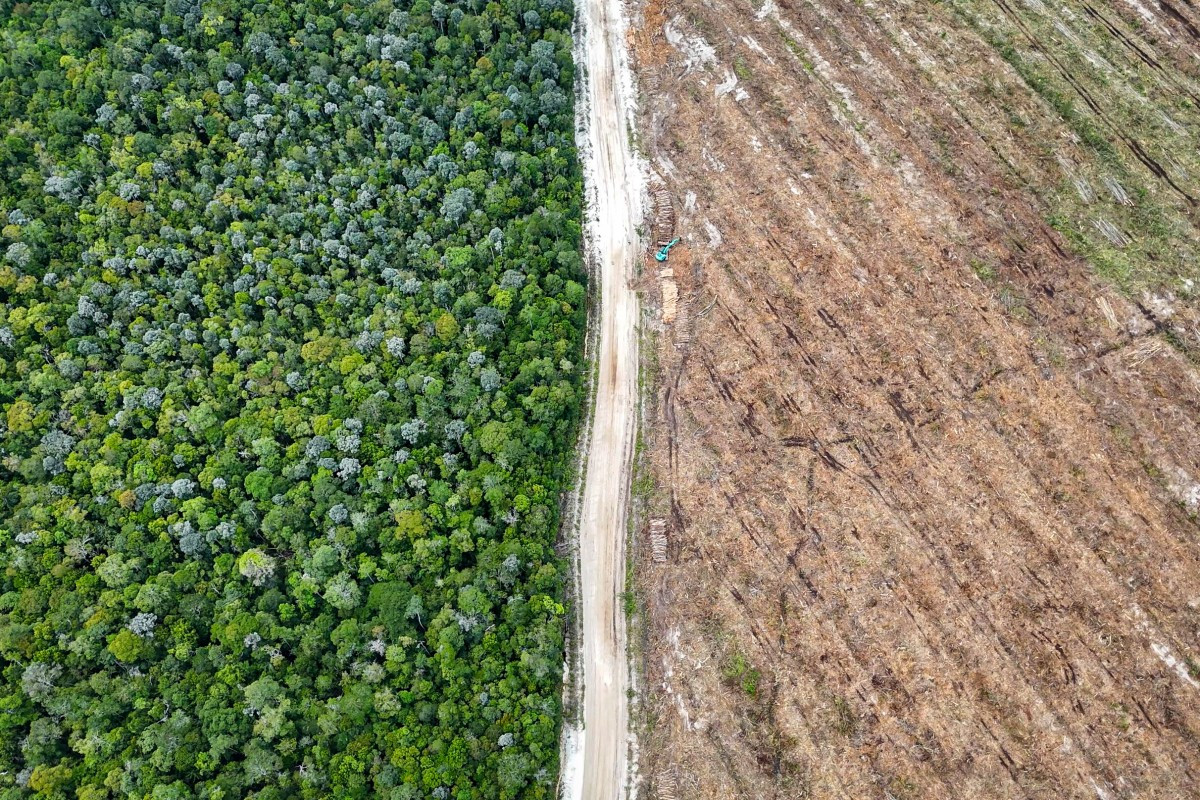 This picture taken on February 11, 2026 shows native forest trees (left) and land cleared and prepared for industrial planting (right) in Lahei Mangkutup, Kapuas regency in Central Kalimantan Province. Vast tracts of Indonesian rainforest home to endangered orangutans have been cleared for plantations supplying a maker of “carbon-neutral“ packaging, an investigation by AFP and The Gecko Project has found. (AFP/Satya Adhi)
I
ndonesia’s push to expand its mandatory palm-based biodiesel blend risks reversing a decade of declining deforestation linked to the commodity, as the government considers converting millions of hectares of “degraded forests” into plantations to achieve energy self-sufficiency.
The government has revived plans to utilize part of its 12.7 million hectares of degraded land and forest for plantations of various commodities that could support its food and energy self-sufficiency ambitions, including oil palm.
The move came particularly to anticipate the rising demand coming from the nationwide rollout of B50 policy in July, requiring fuel distributors to blend 50 percent palm-based biodiesel with conventional fossil diesel.
B50 is part of the government's broader push for energy security, with the Energy and Mineral Resources Ministry also eyeing a mandatory 100 percent biodiesel blend, or B100, in the longer term to boost domestic consumption of crude palm oil (CPO).
Indonesia has been the world's largest palm oil producer since 2007, with the industry supporting millions of livelihoods across roughly 20 million ha of plantations, mostly in Sumatra and Kalimantan, and increasingly in Papua.
But the industry has long faced international scrutiny over its environmental and social costs. Environmental groups have warned that expanding plantations to meet growing biodiesel demand could trigger another wave of deforestation.

Supply chain watchdog Trase recently found that domestic consumption was linked to 67 percent of total palm oil deforestation in 2024, nearly nine times the amount linked to India, Indonesia’s largest foreign market.