The Jakarta Post
Please Update your browser
Your browser is out of date, and may not be compatible with our website. A list of the most popular web browsers can be found below.
Just click on the icons to get to the download page.


Popular Reads
Top Results
No results found. Please check your search term and try again
Can't find what you're looking for?
View all search results
Popular Reads
Top Results
No results found. Please check your search term and try again
Can't find what you're looking for?
View all search resultsThe Indigo river running through civilizations
The word “Citarum” is coined from two words: “Ci” and “Tarum”
Change text size
Gift Premium Articles
to Anyone
Share the best of The Jakarta Post with friends, family, or colleagues. As a subscriber, you can gift 3 to 5 articles each month that anyone can read—no subscription needed!
 Set as preferred source

T
he word “Citarum” is coined from two words: “Ci” and “Tarum”. In Sundanese language, “Ci” means water, while “Tarum” is a type of plant (Indigofera sp.) that produces the color indigo.
Archaeological records show that the civilization of Tarumanegara, the oldest Hindu kingdom in West Java, bloomed along the river in 358 AD.
Starting from a small hamlet built by Jayasinghawarman, it later developed into a kingdom.
The kingdom is located in what is known as the Banten area.
The role of Citarum has been vital since its beginning.
It once became the borderline for two kingdoms: Galuh and Sunda (the other name of Tarumanegara in 670 AD).
In the 15th century, Citarum once again played its political role as the borderline between the Cirebon and Banten sultanate.
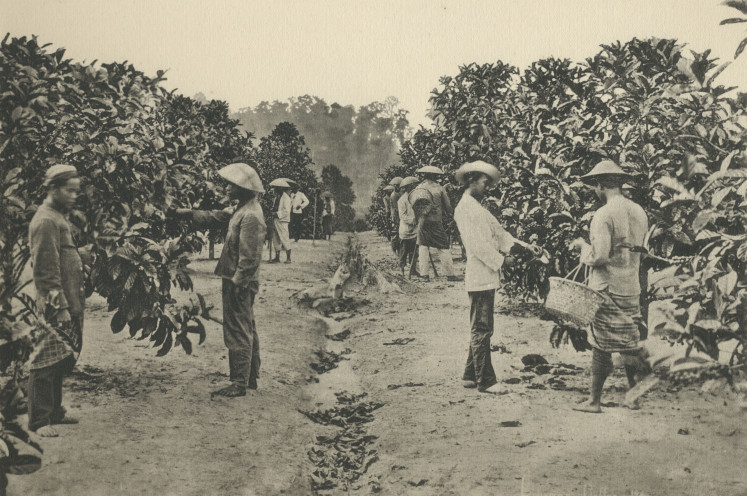
During the Dutch colonial period, Citarum became a transportation route that connected the rural areas with the coastal areas to transport harvests.
There are more than 20 streams that connect with the Citarum River, including Cikapundung, Cibeureum, Ciwidey and Cimahi.
Although Citarum in the past was well preserved, historical records show that the river causes floods.
Therefore, in 1810, then Bandung regent R.A. Wiranatakusuma II relocated the capital of Bandung from Krapyak or Dayeuh Kolot to the current position in central Bandung.
– JP/Tifa Asrianti