TheJakartaPost
Please Update your browser
Your browser is out of date, and may not be compatible with our website. A list of the most popular web browsers can be found below.
Just click on the icons to get to the download page.


Popular Reads
Top Results
No results found. Please check your search term and try again
Can't find what you're looking for?
View all search results
Popular Reads
Top Results
No results found. Please check your search term and try again
Can't find what you're looking for?
View all search resultsPLN awaits gas swap agreement
State electricity utility PT PLN has urged upstream oil and gas regulator BPMigas to finalize a swap agreement to channel natural gas from the Grissik field in South Sumatera to the company’s power plants in Sumatra and West Java
Change text size
Gift Premium Articles
to Anyone
Share the best of The Jakarta Post with friends, family, or colleagues. As a subscriber, you can gift 3 to 5 articles each month that anyone can read—no subscription needed!

S
tate electricity utility PT PLN has urged upstream oil and gas regulator BPMigas to finalize a swap agreement to channel natural gas from the Grissik field in South Sumatera to the company’s power plants in Sumatra and West Java.
PLN senior manager for oil and gas procurement M. Suryadi Mardjoeki said on Tuesday that BPMigas had promised that the drafting of the agreement would be completed this week, by Friday at the latest.
“In addition to PLN and BPMigas, the discussion will involve ConocoPhillips [the operator of the Grissik field], Joint Operation Body PT Pertamina Hulu Energi and Canada-based Talisman [the operator of the Jambi Merang field], state gas distributor PT PGN and PT Transportasi Gas Indonesia [TGI],” he told reporters in a telephone interview.
According to a 2006 contract, PLN was scheduled to acquire additional supply of 65 million standard cubic feet per day (mmscfd) from the Jambi Merang field. However, due to the unavailability of a pipeline network connecting the Jambi Merang field with the Grissik field, where the South Sumatra-West Java pipeline is located, the gas cannot be delivered. The construction of the pipeline is scheduled to be completed in 2014.
The swap agreement was formulated to solve gas shortage problems in PLN’s power plants. The swap mechanism means that PLN will get the 65 mmscfd gas supply from Grissik, while ConocoPhillips’s consumers in Batam and Singapore will get gas from the Jambi Merang field in the neighboring province of Jambi which was previously allocated to PLN.
Of the 65 mmscfd, 25 will be channeled to power plants in Sumatra (10 mmscfd each to the Duri and Rengat power plants in Riau, and 5 mmscfd to the Payo Selincah power plant in Jambi), while the remaining 40 mmscfd will be delivered to the Muara Tawar power plant in Bekasi, West Java.
The Muara Tawar power plant needs between 200 and 300 mmscfd of gas, but only receives between 70 and 100 mmscfd from PGN’s SSWJ pipeline network.
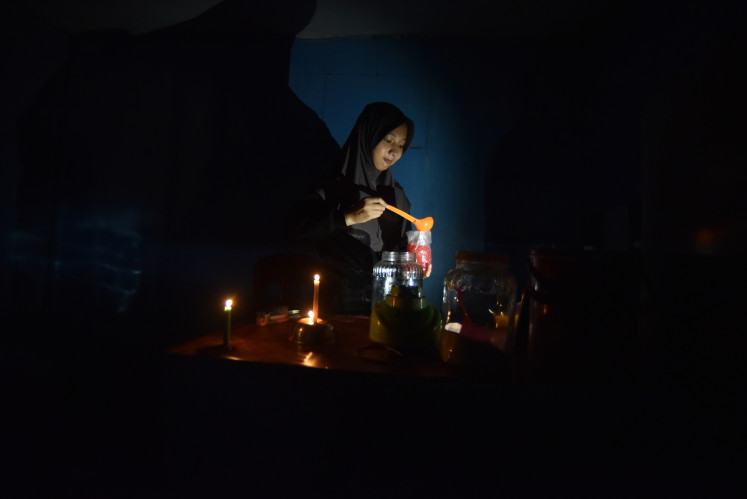
Suryadi said that due to the gas shortfall problems, several areas near the Payo Lincah power plant had to experience power cuts. The power plant badly needed the gas to compensate for the declining power supply from a hydro power plant in the area caused by falling water volume during the dry season.
Separately, BPMigas spokesperson Gde Pradnyana reported that there were several clauses in the swap agreement that had to be amended. However, he promised that the agreement would be finalized “in the very near future”.
“Technically, there is no problem with the agreement. We’re just waiting for the time when the gas can be delivered,” he explained.
The only constraint for the finalization of the agreement was BPMigas having to communicate all matters regarding the agreement to all related parties, Gde said. ConocoPhillips requested that there be liabilities for each party’s rights and obligations.
PLN president director Dahlan Iskan has said the utility needs a total of 1,800 mmscfd of gas supply but has only received some 800 mmscfd.